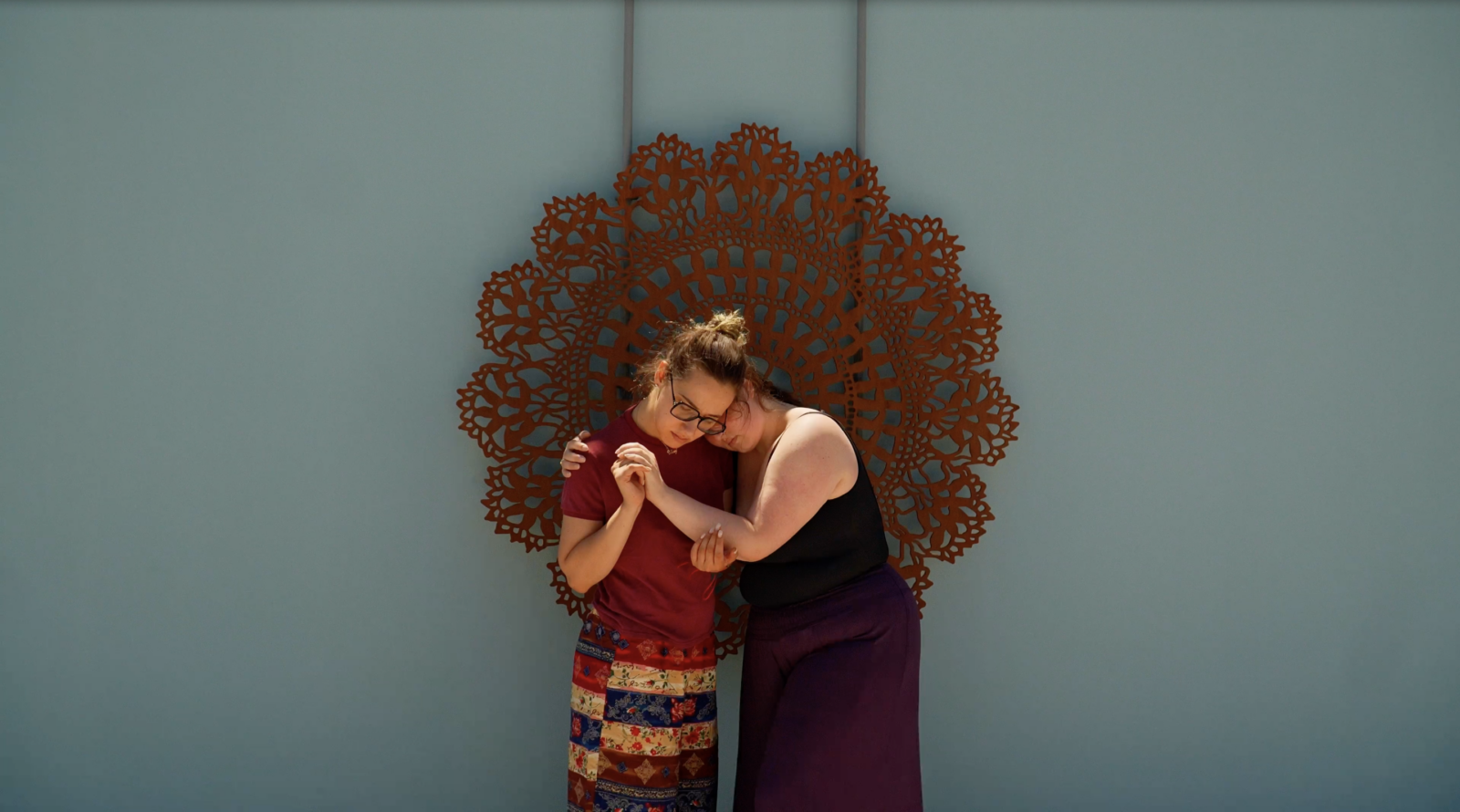
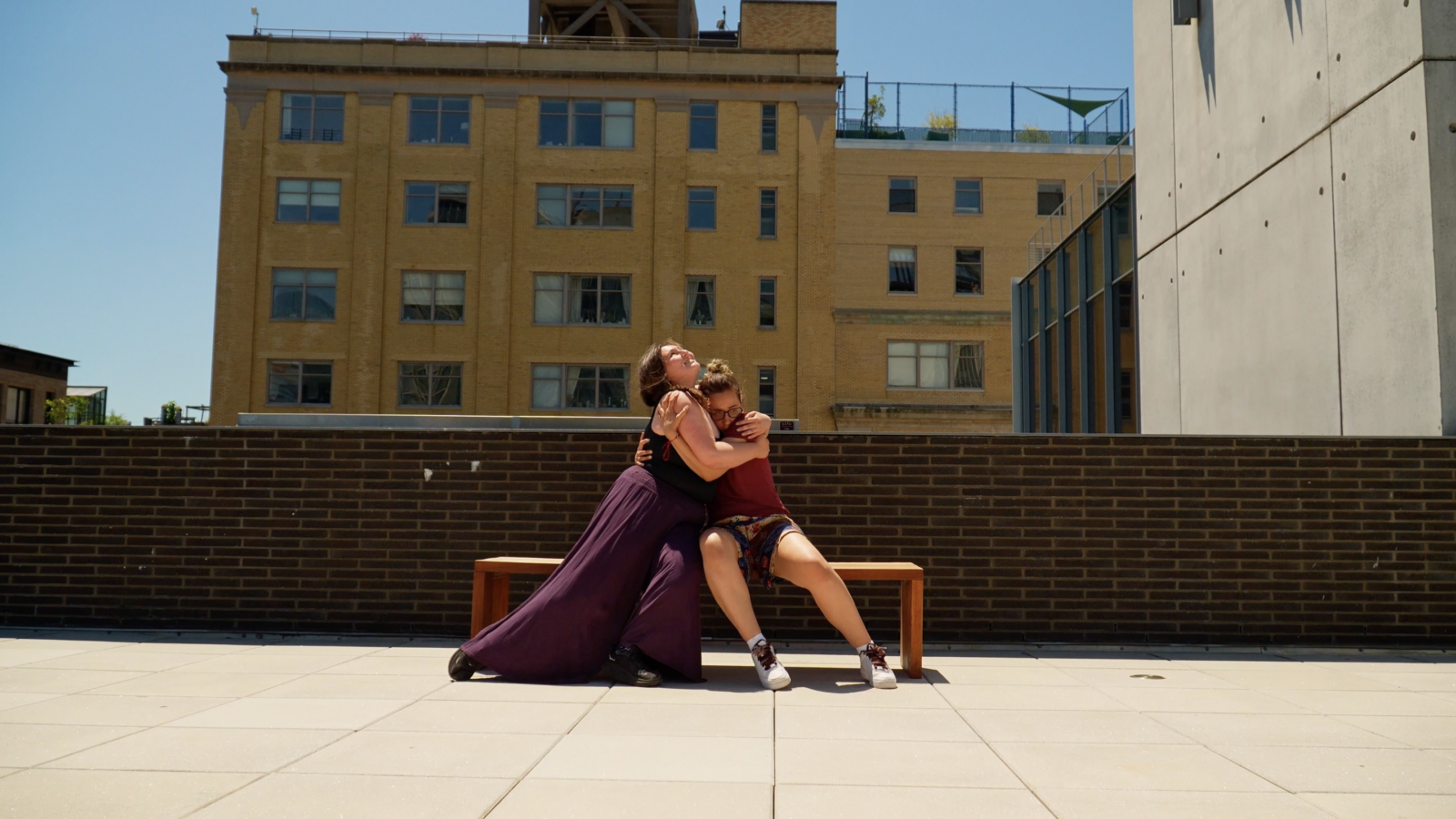
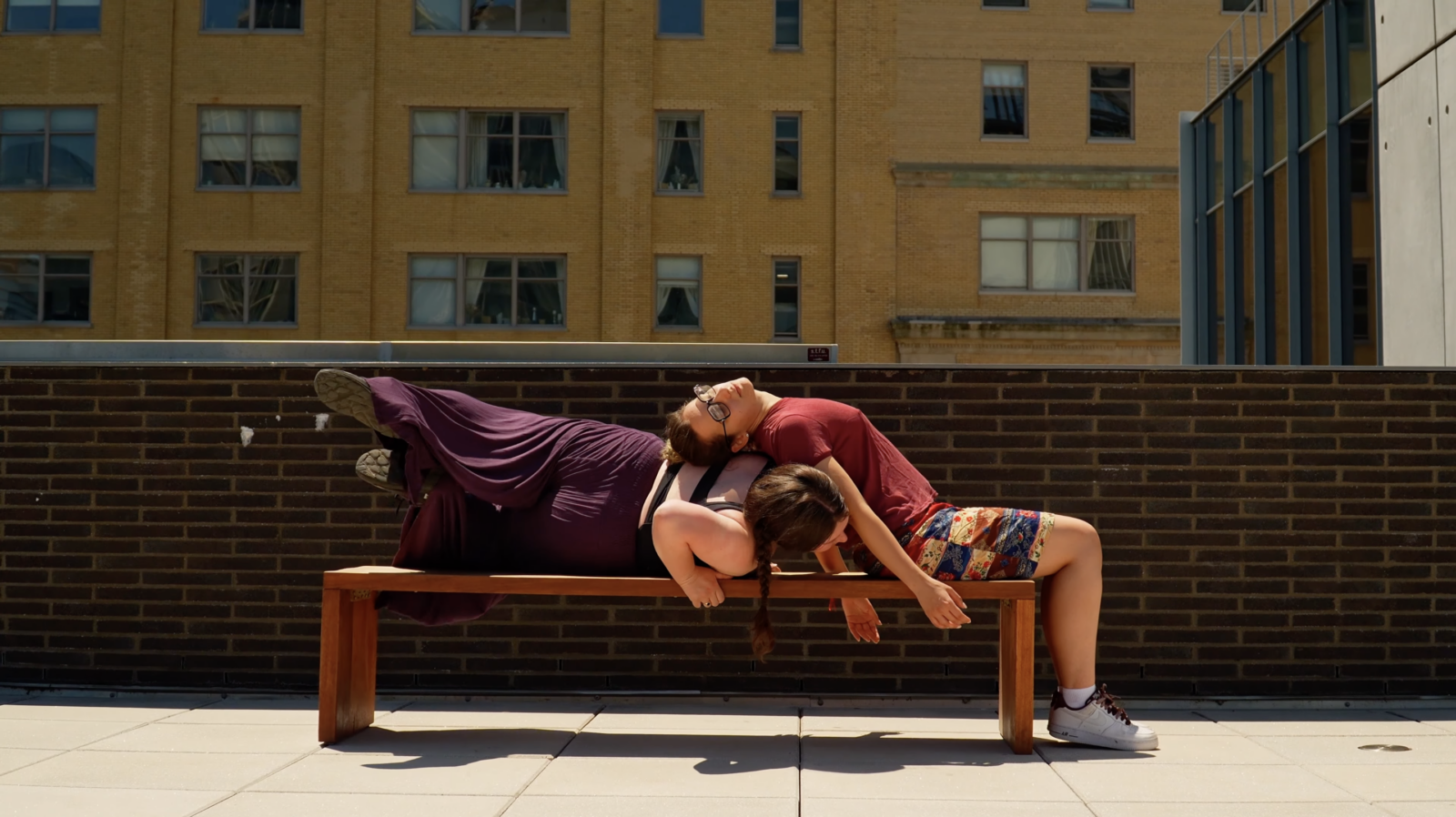
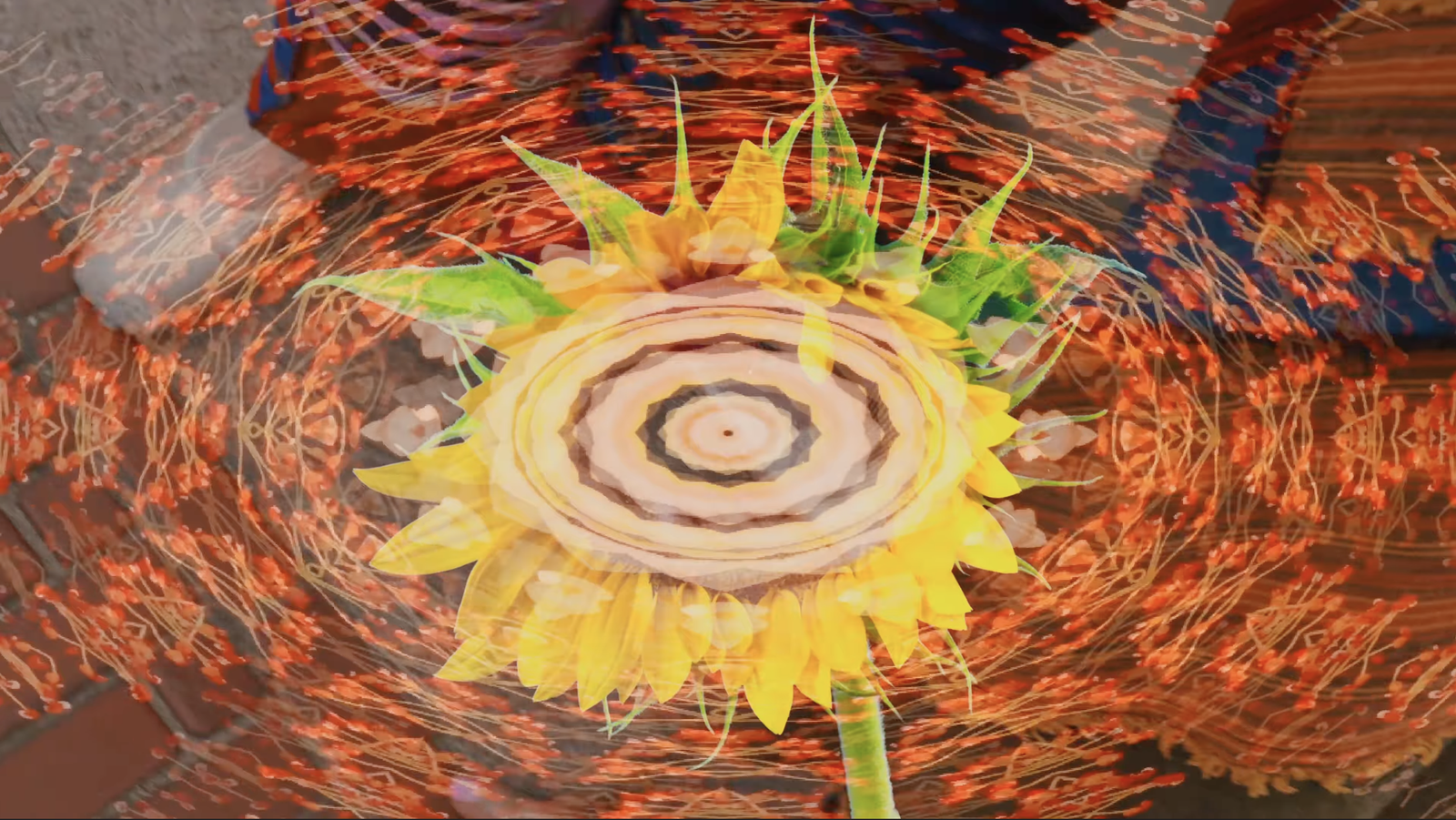
Arose – Stills
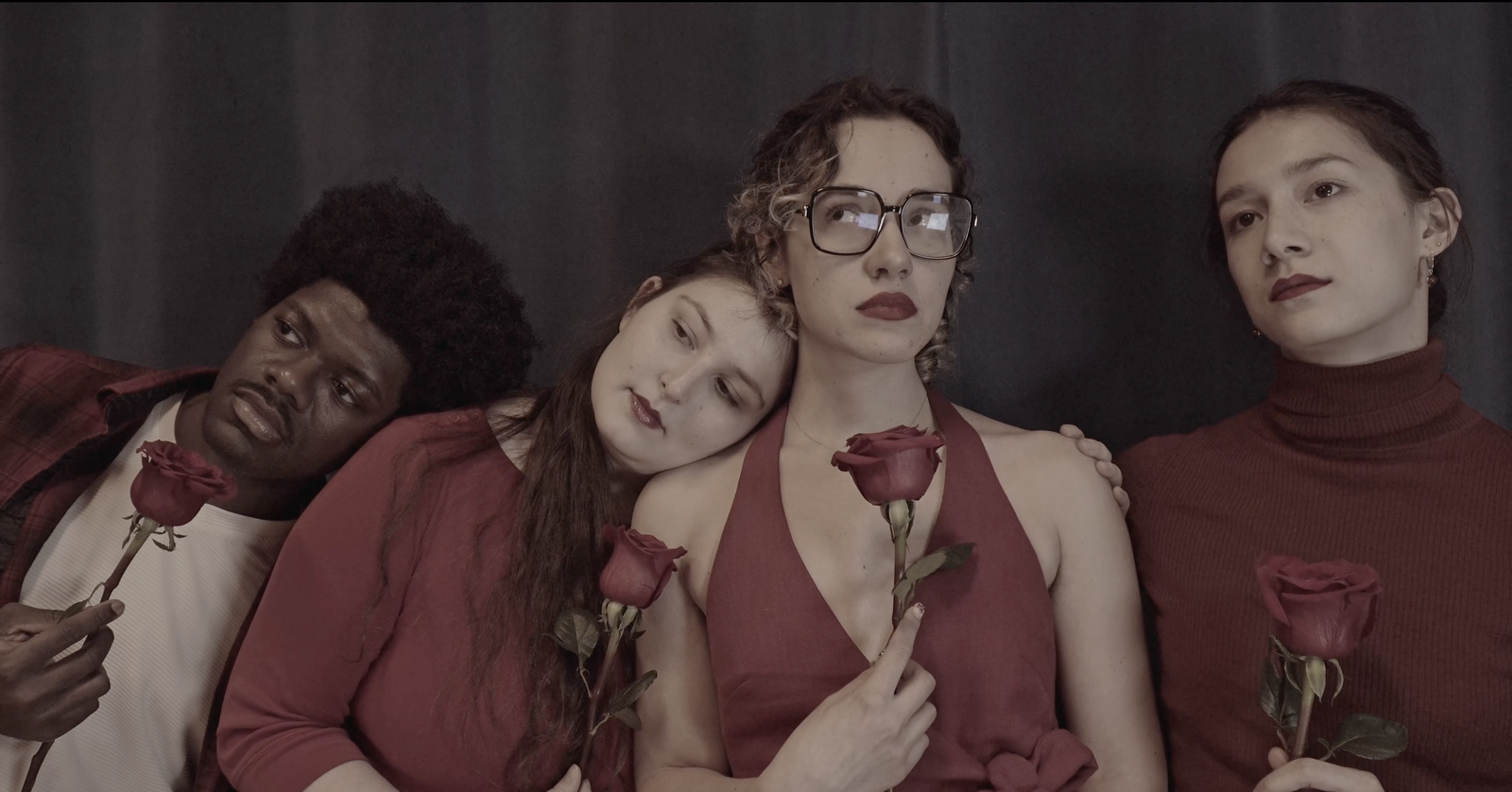
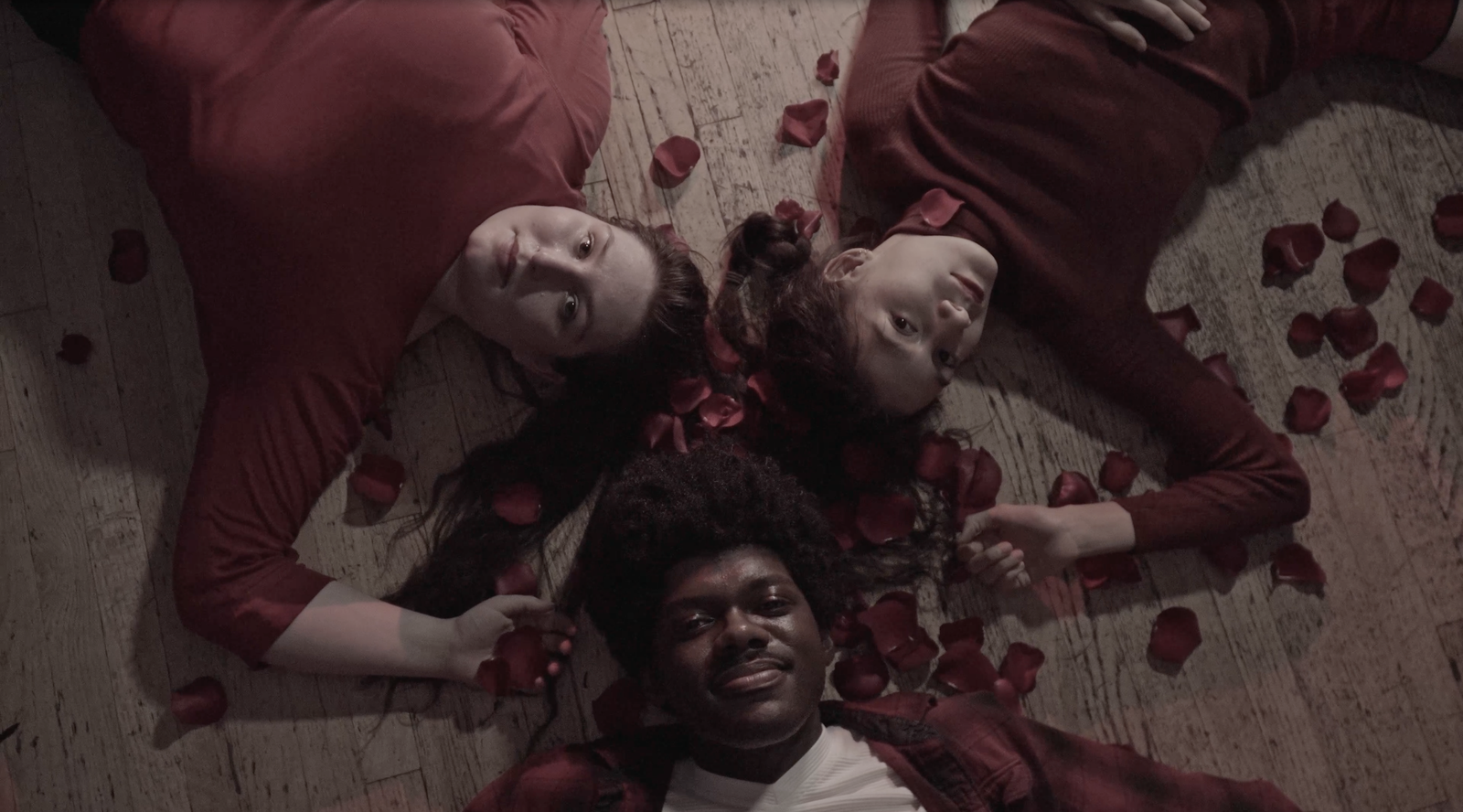
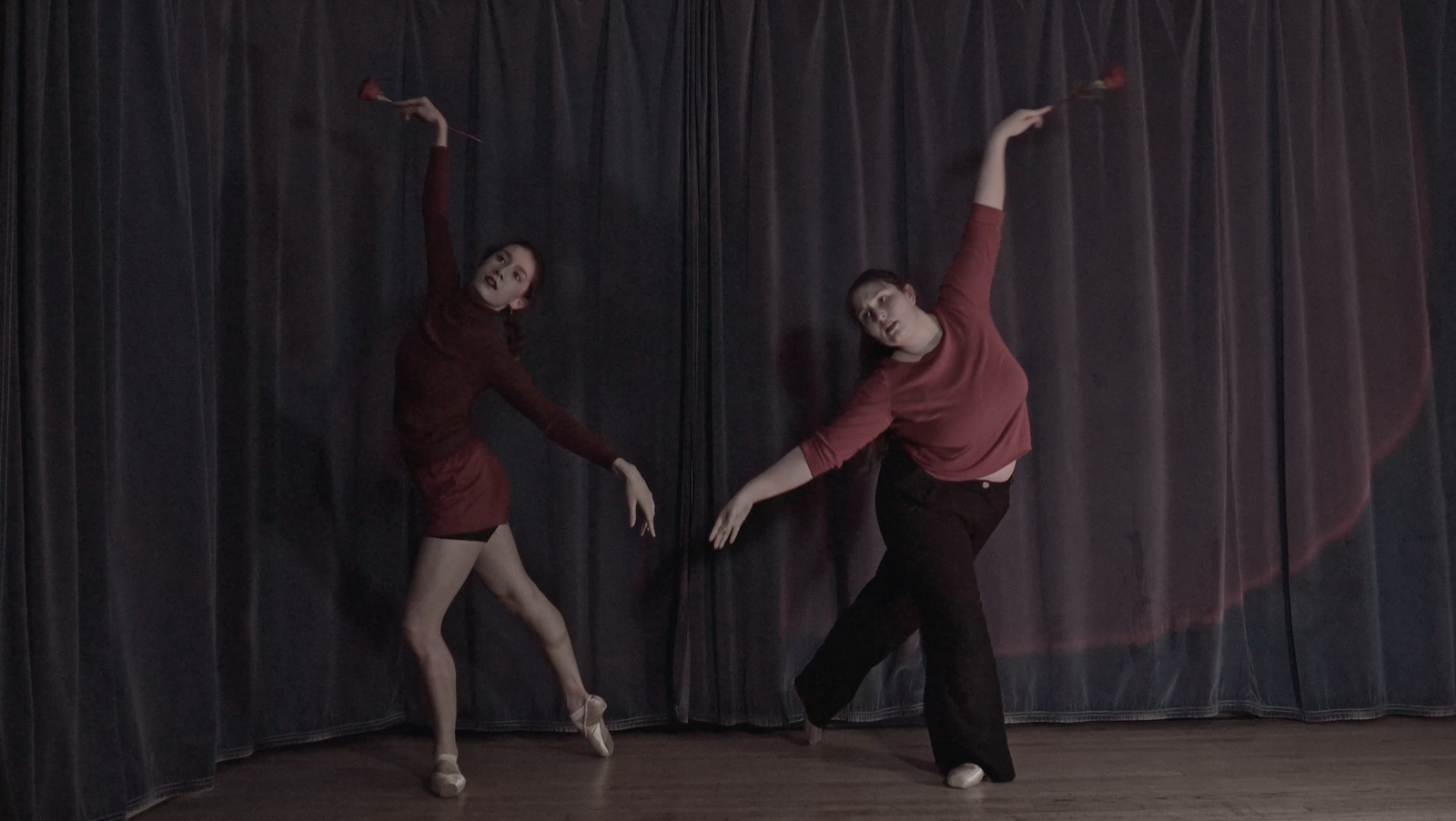
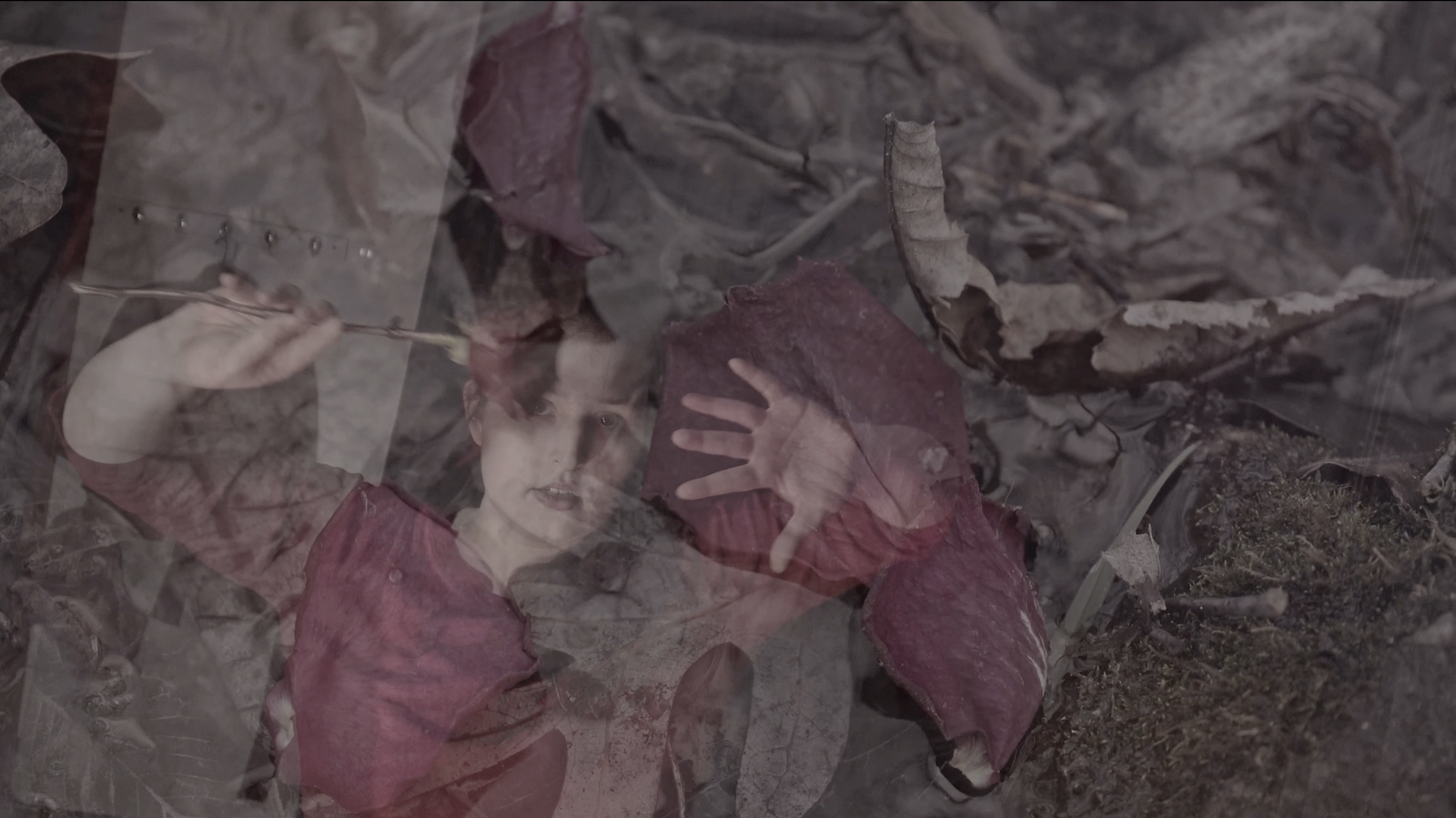
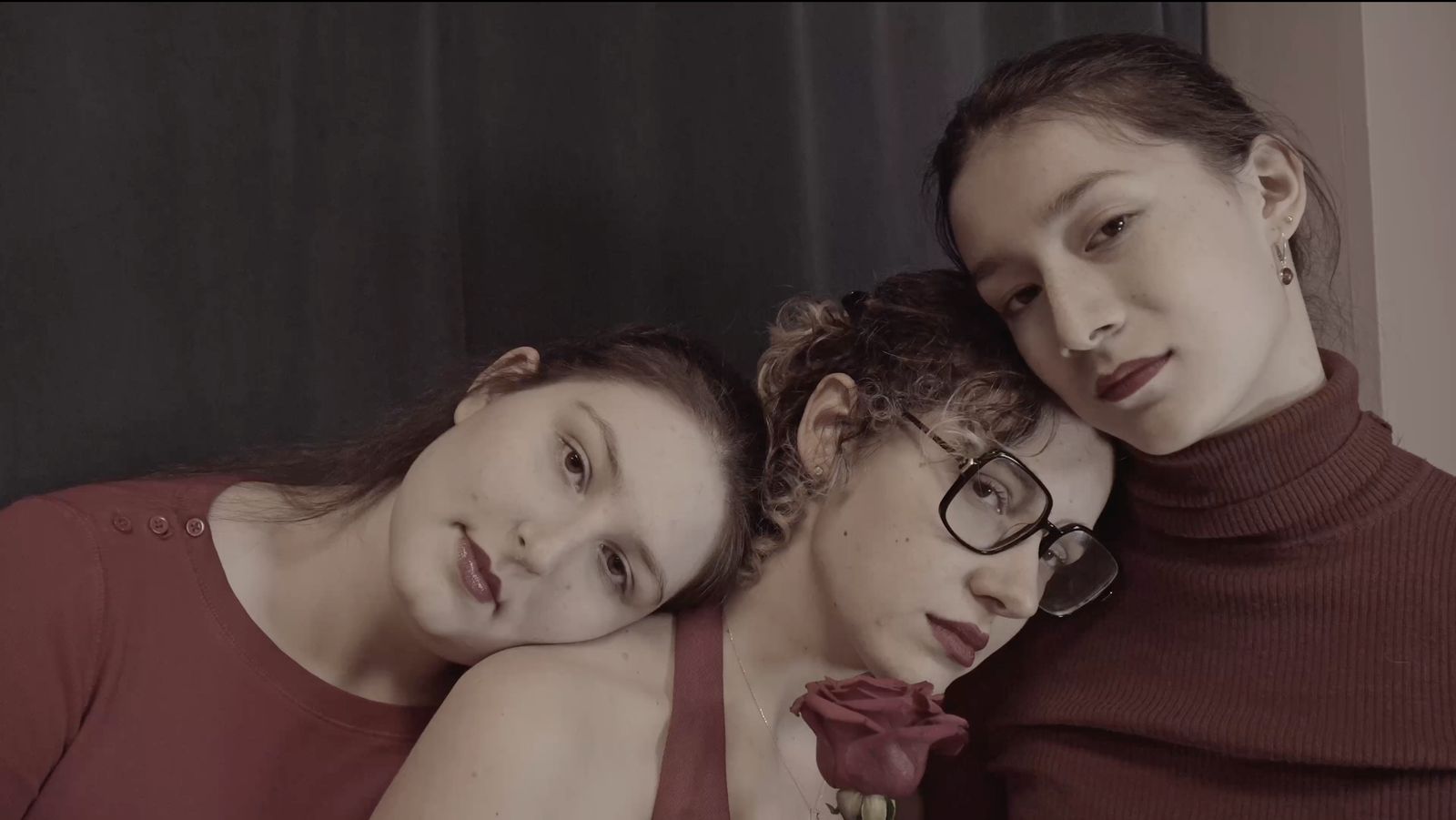
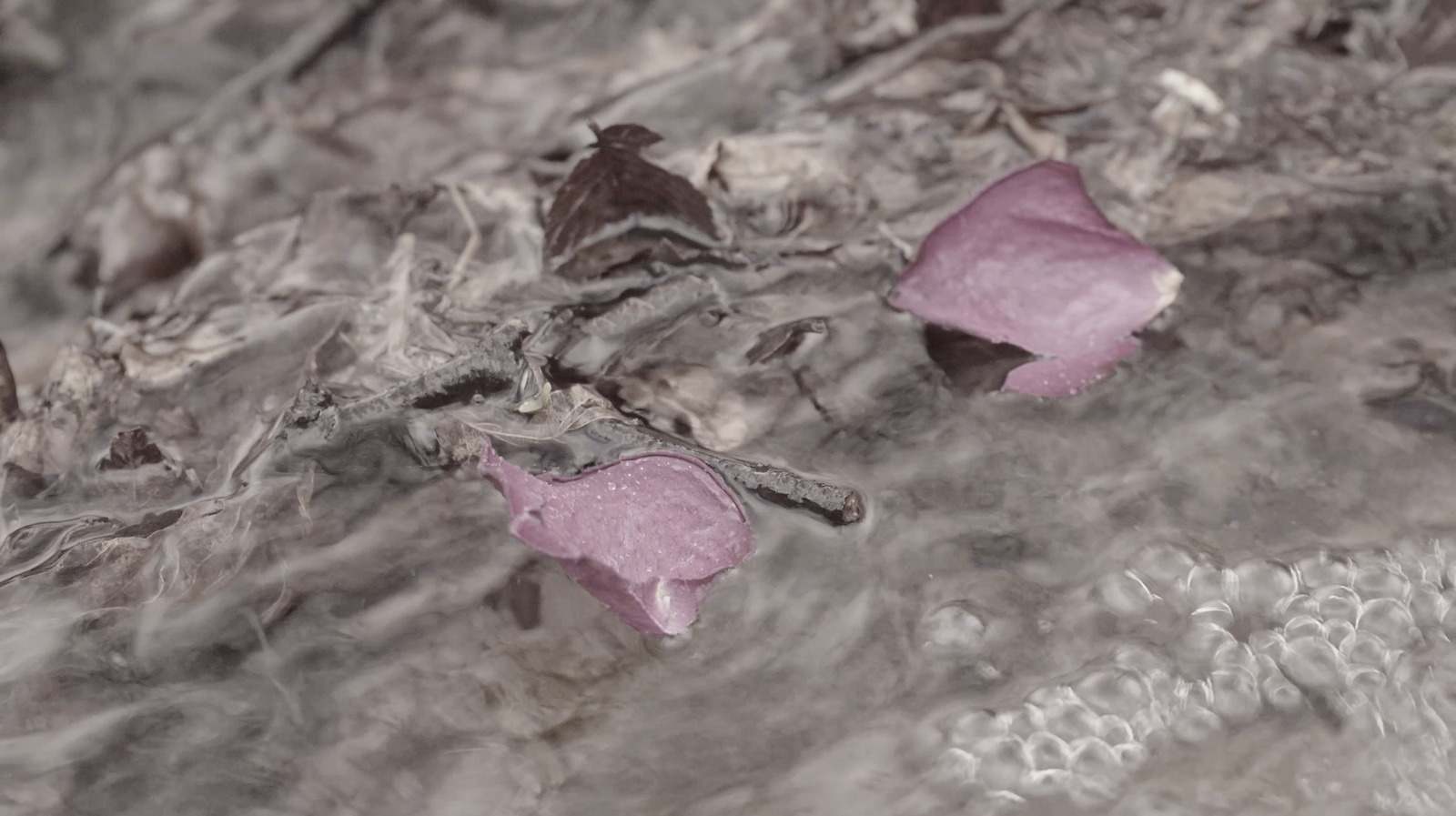
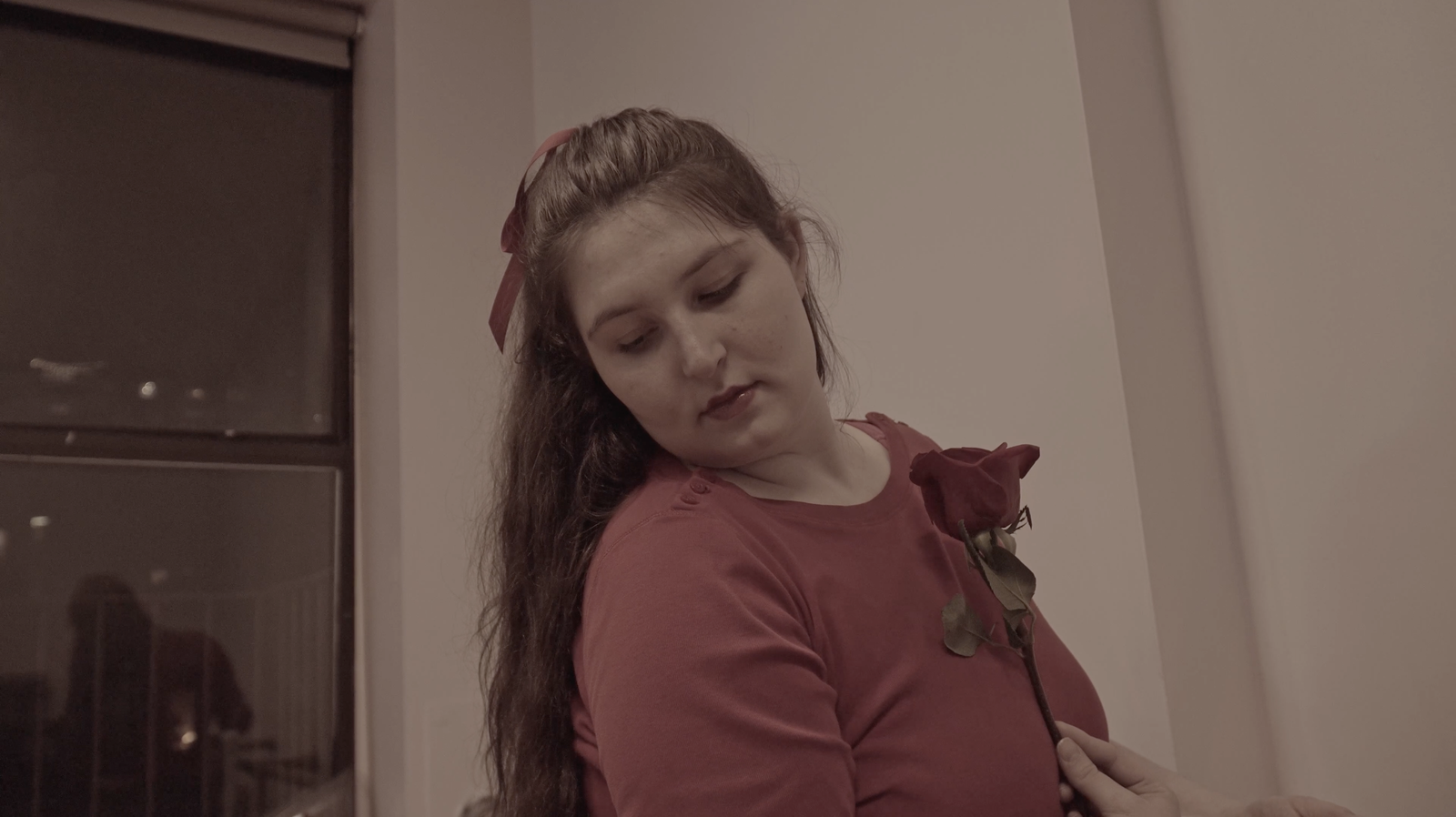
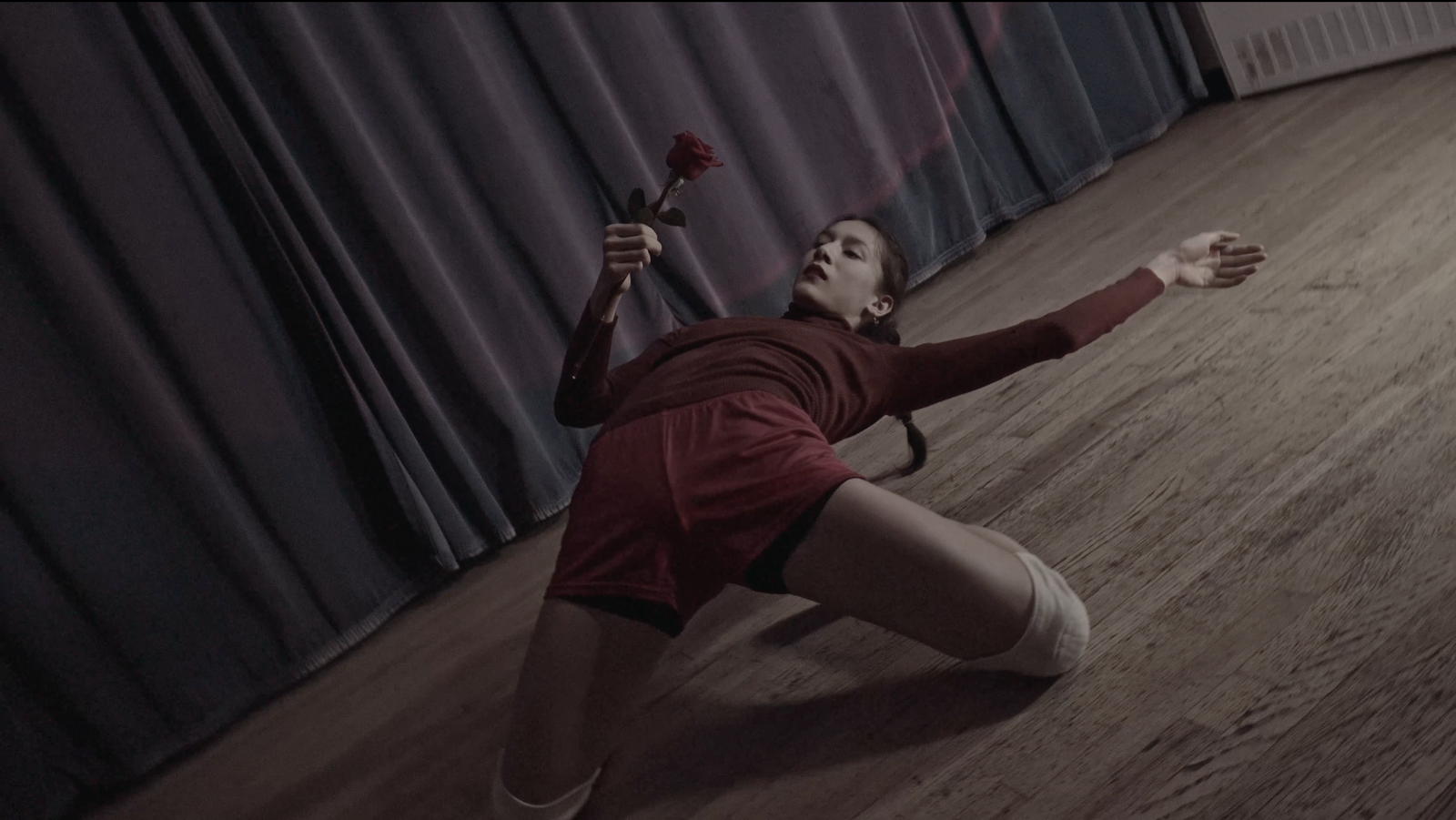
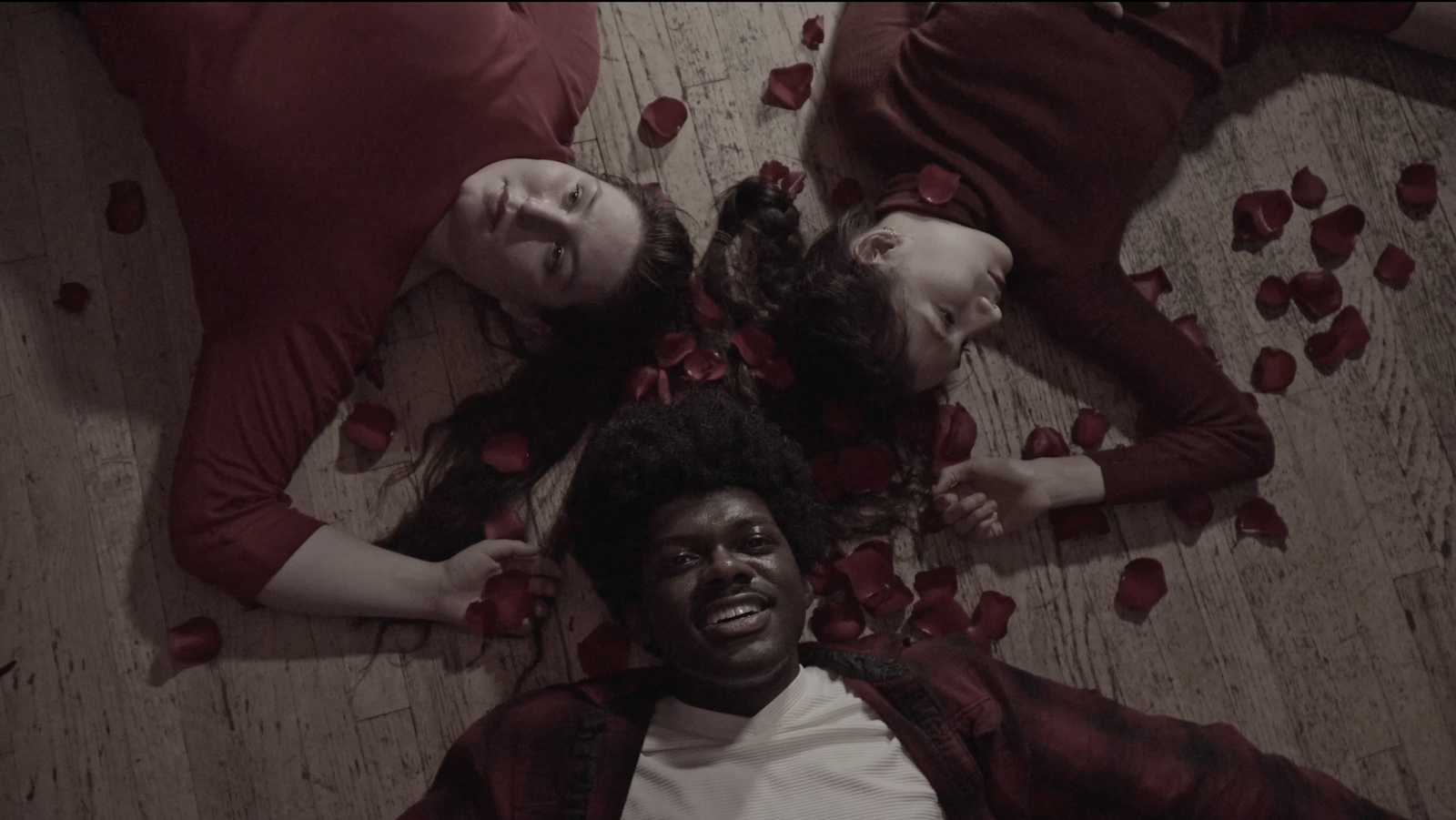
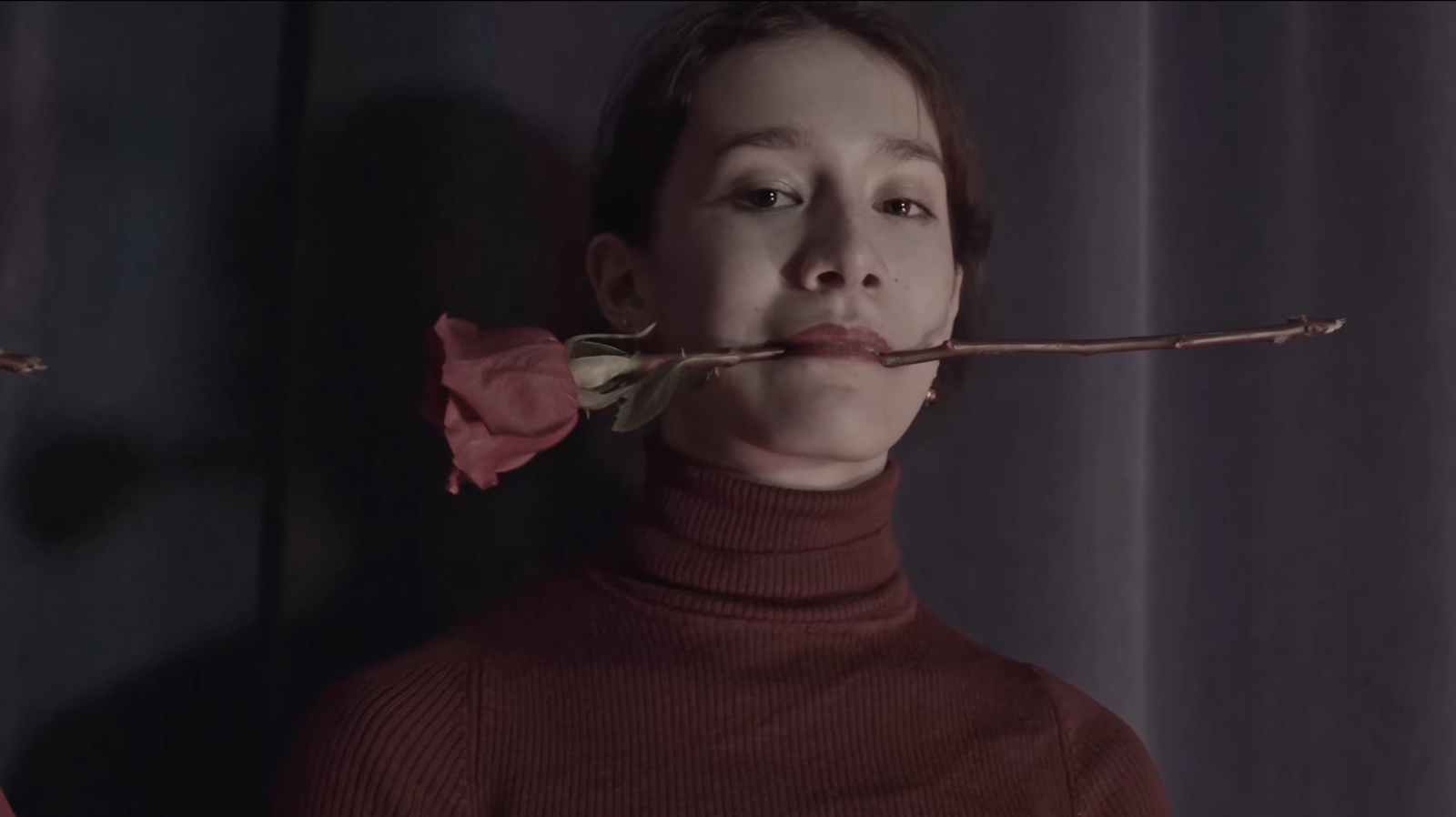
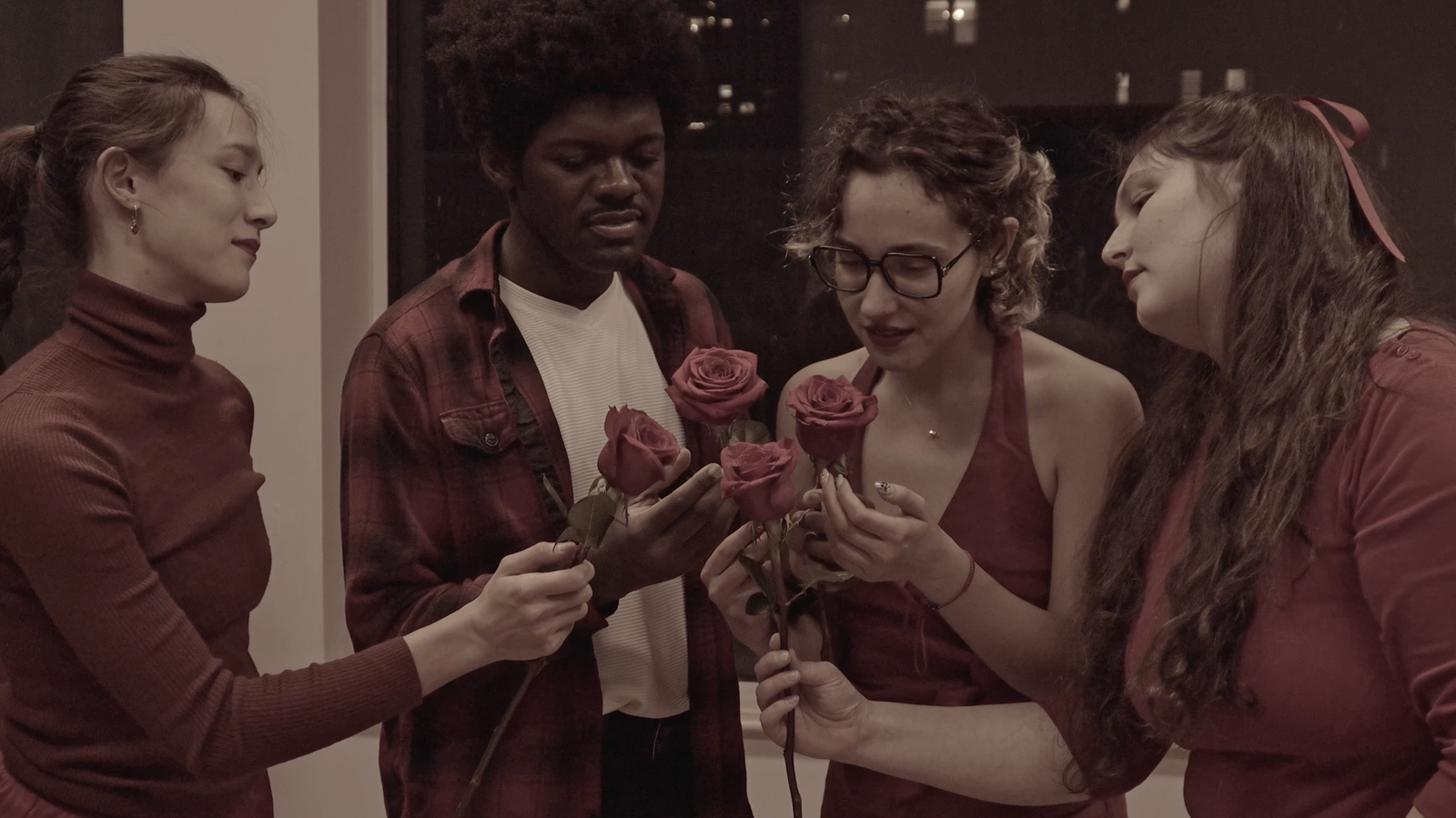
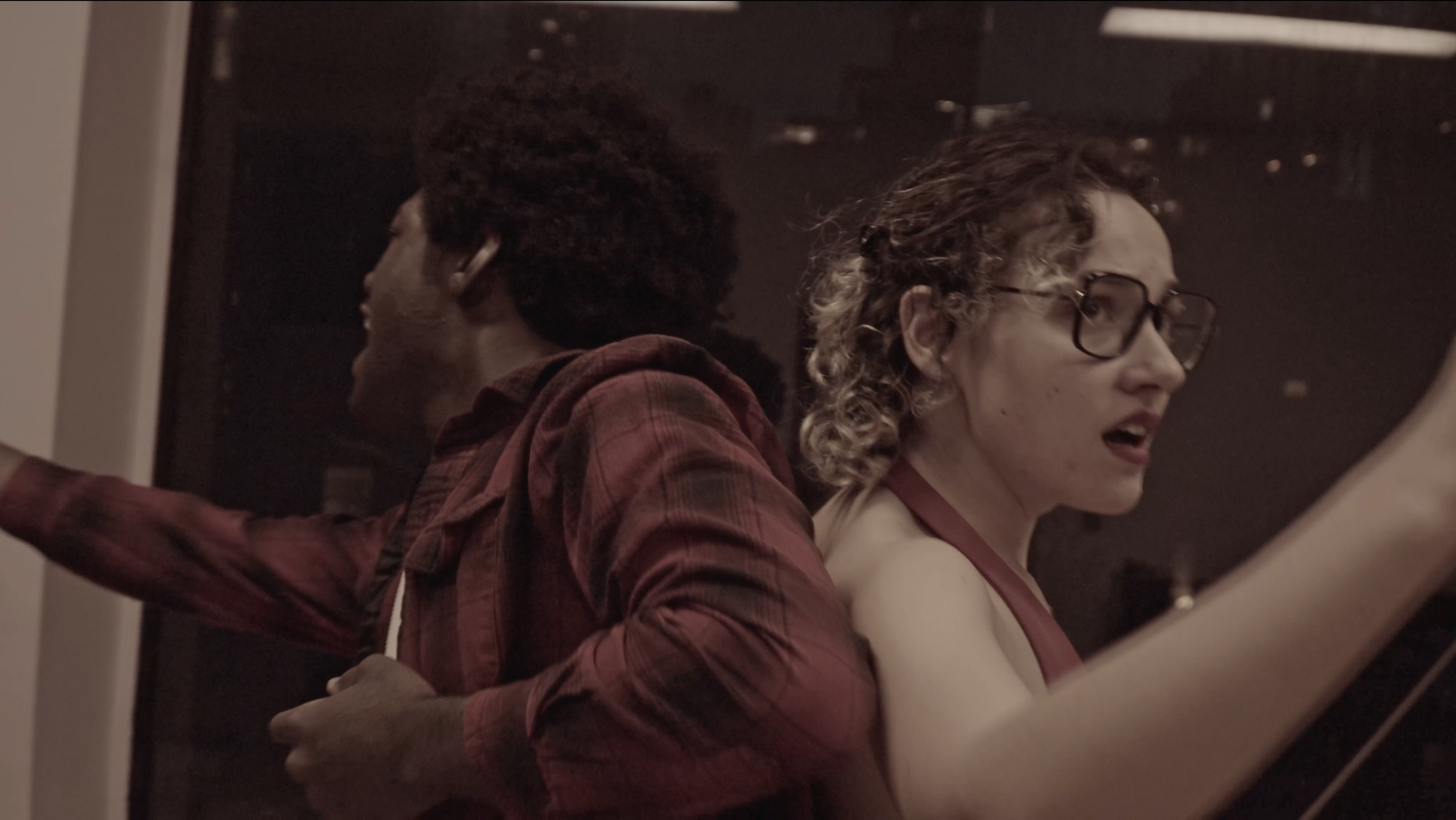
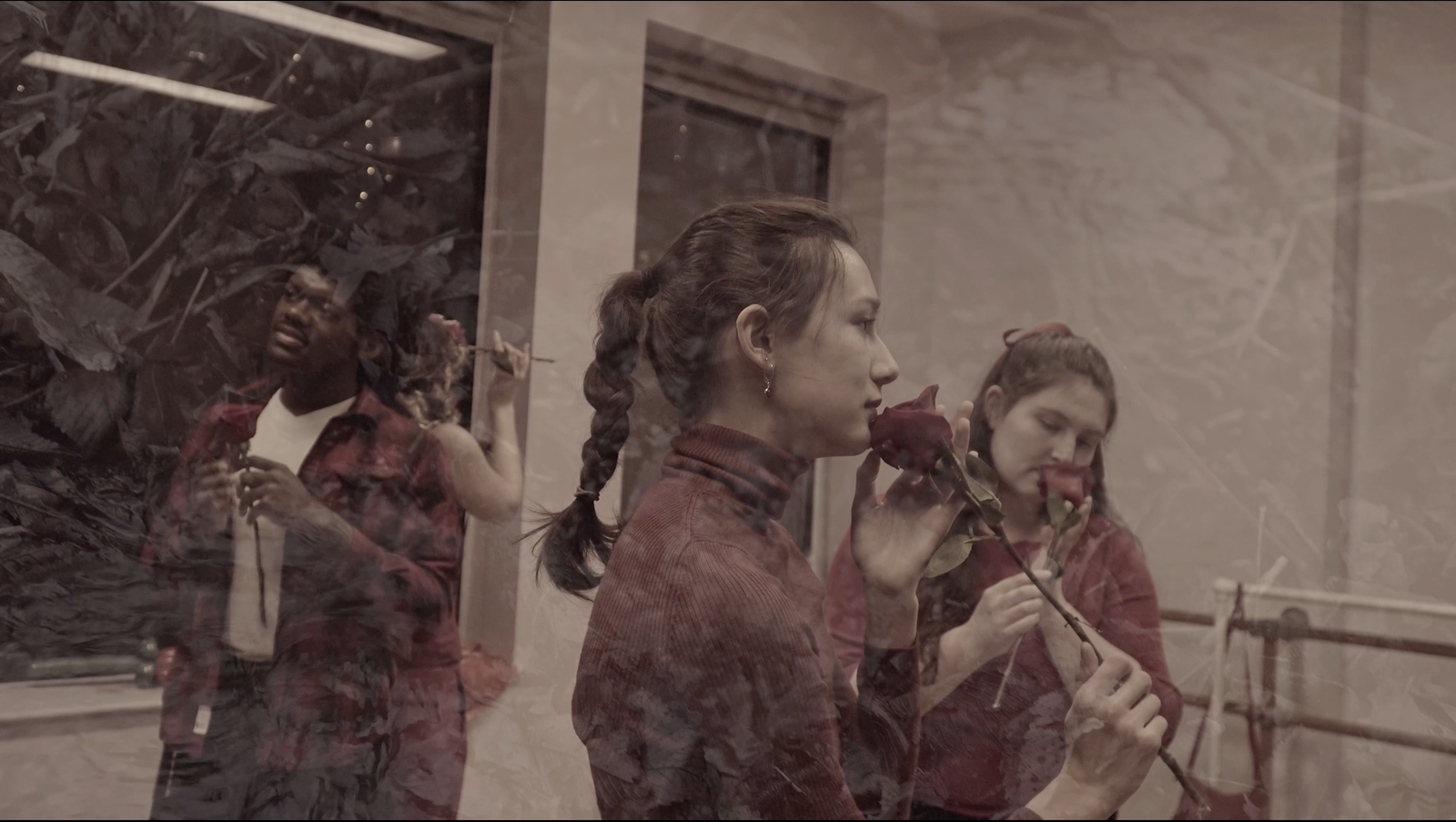
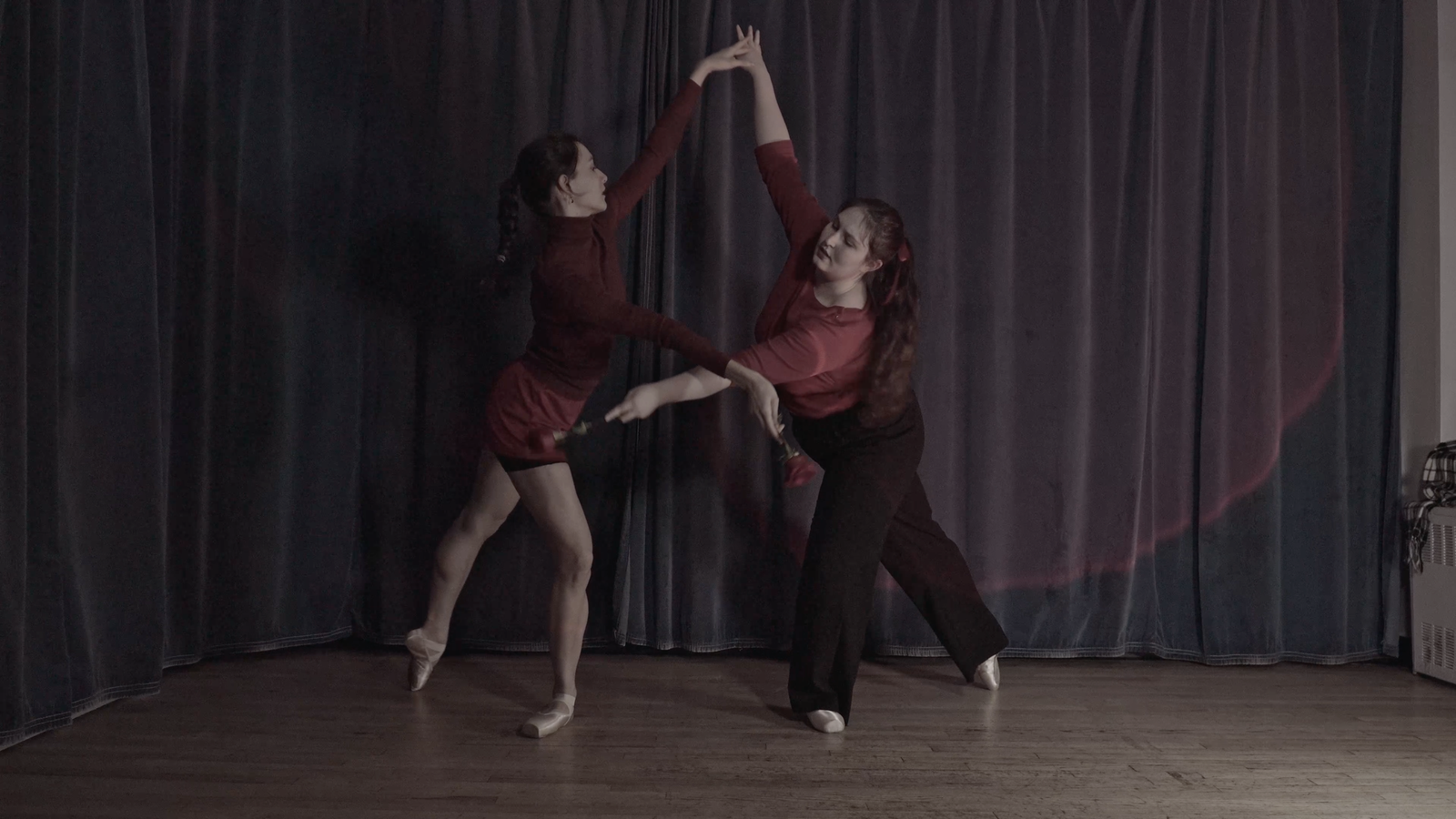
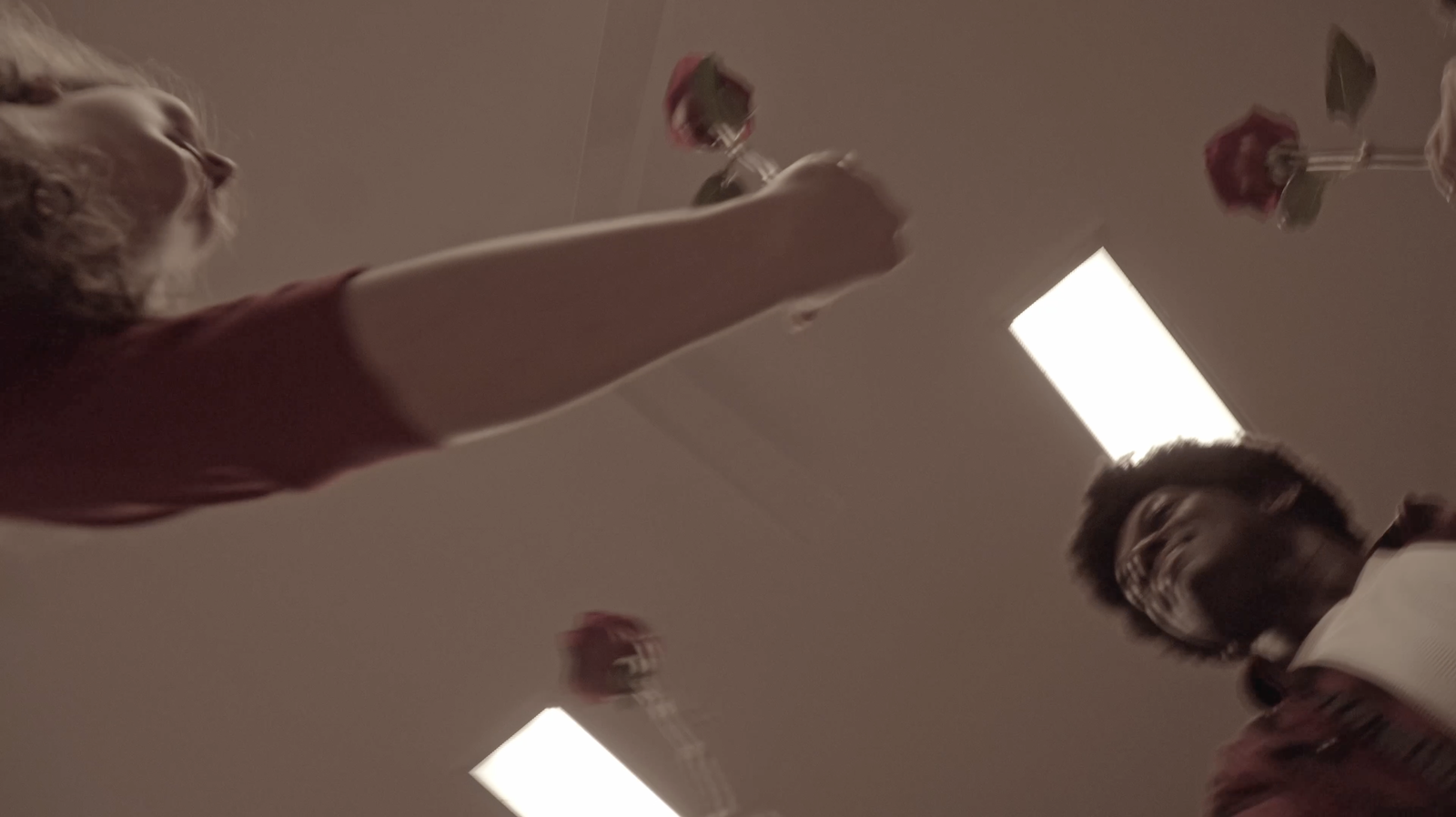
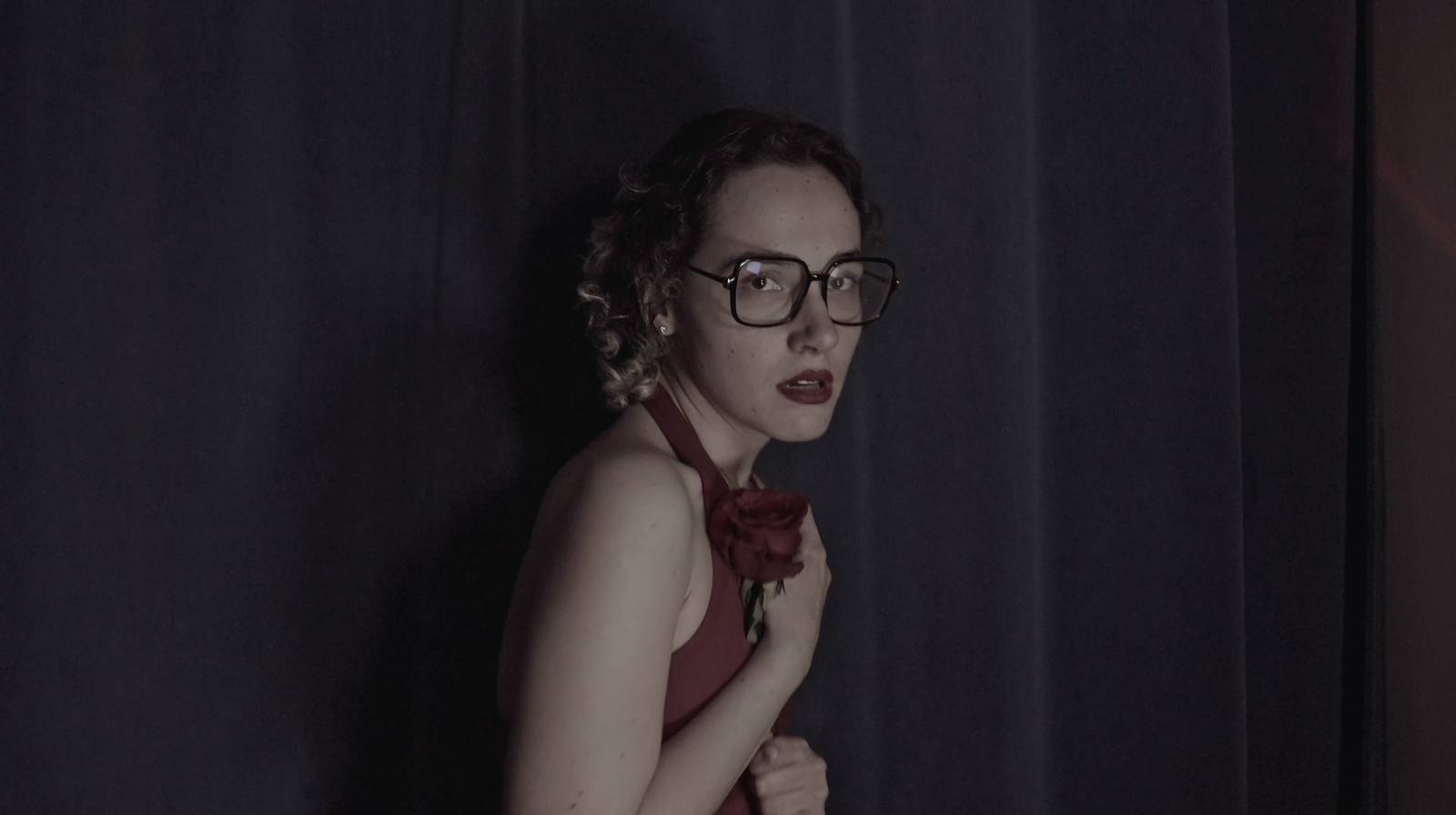
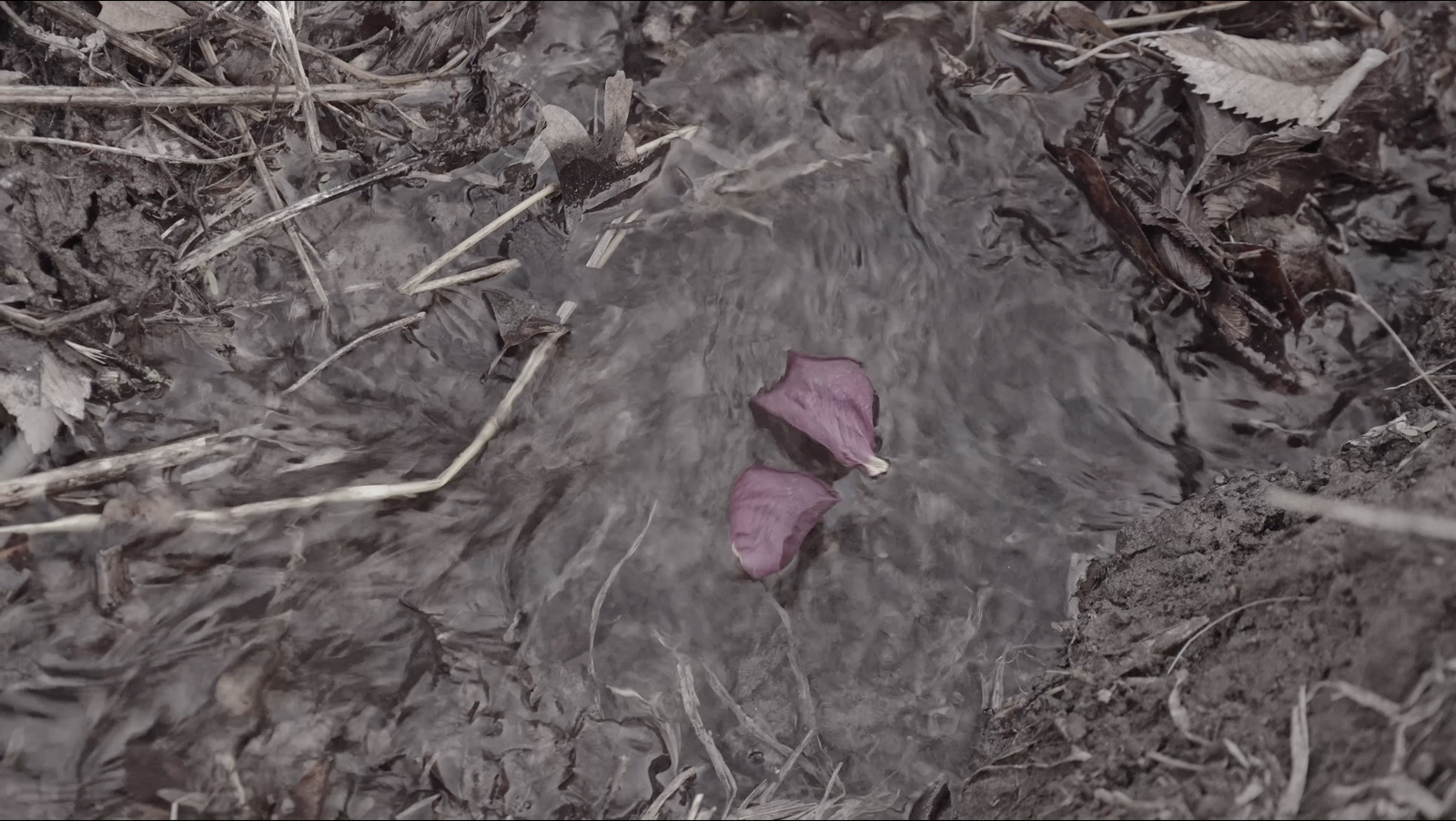
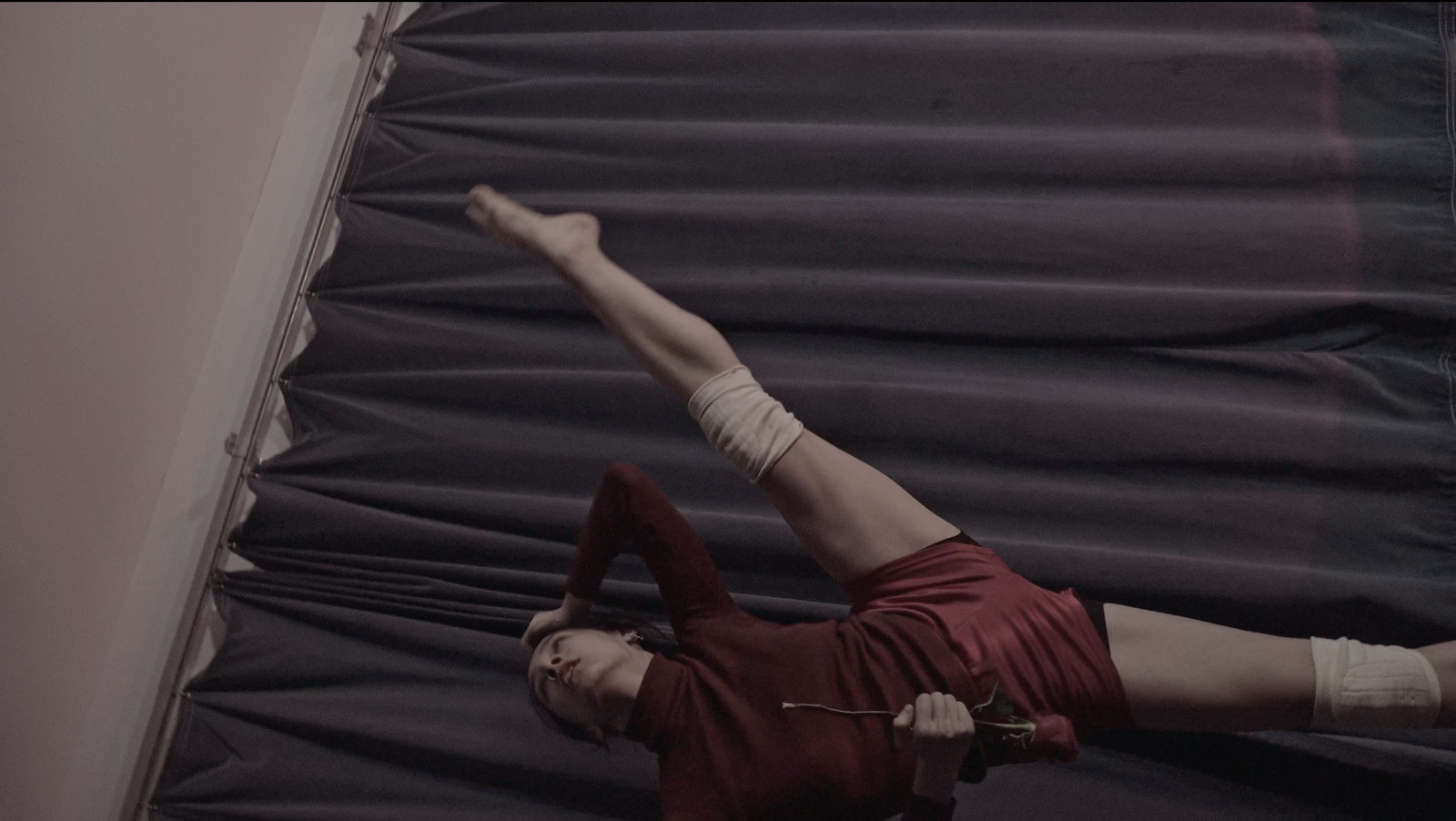
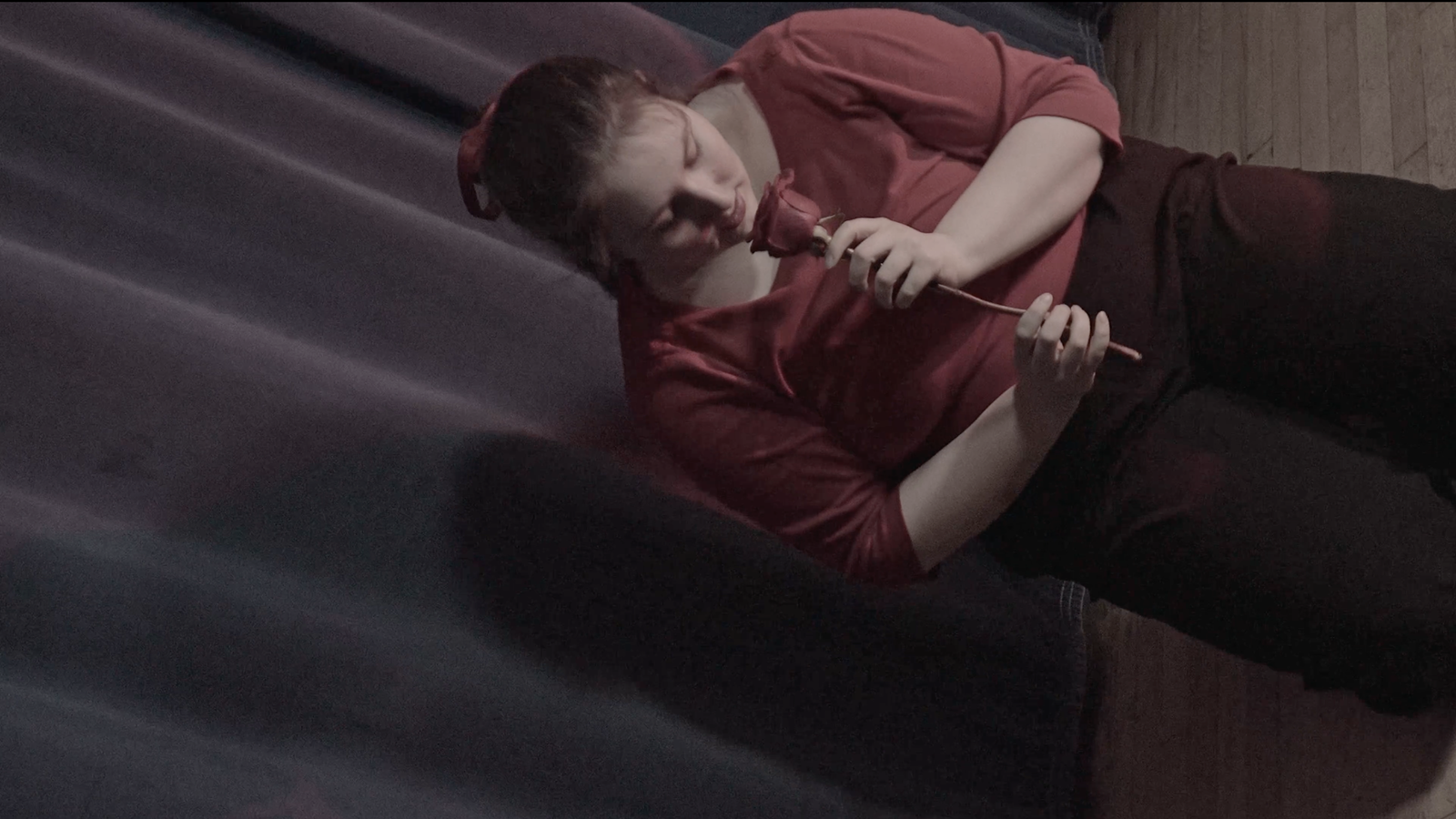
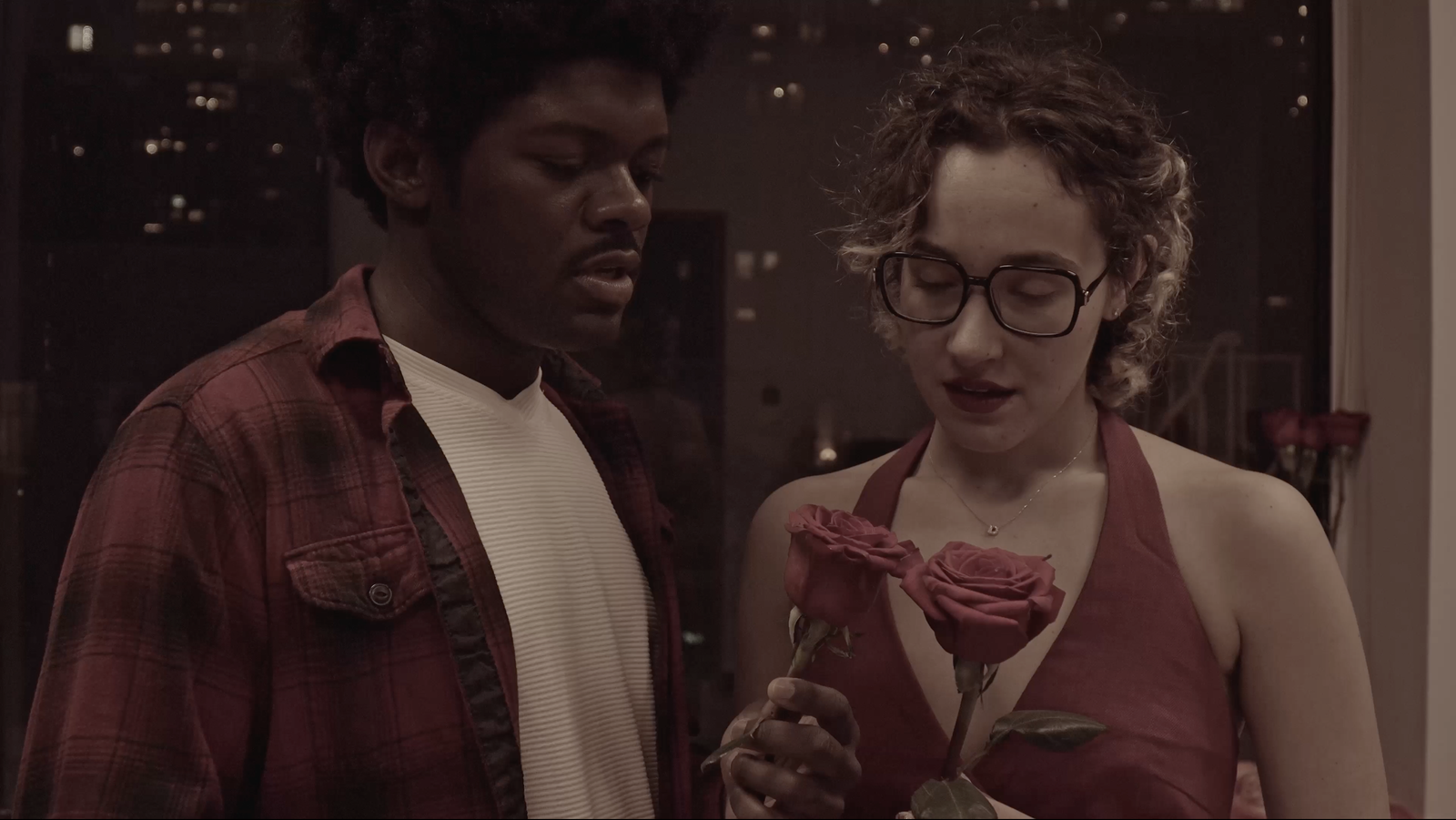
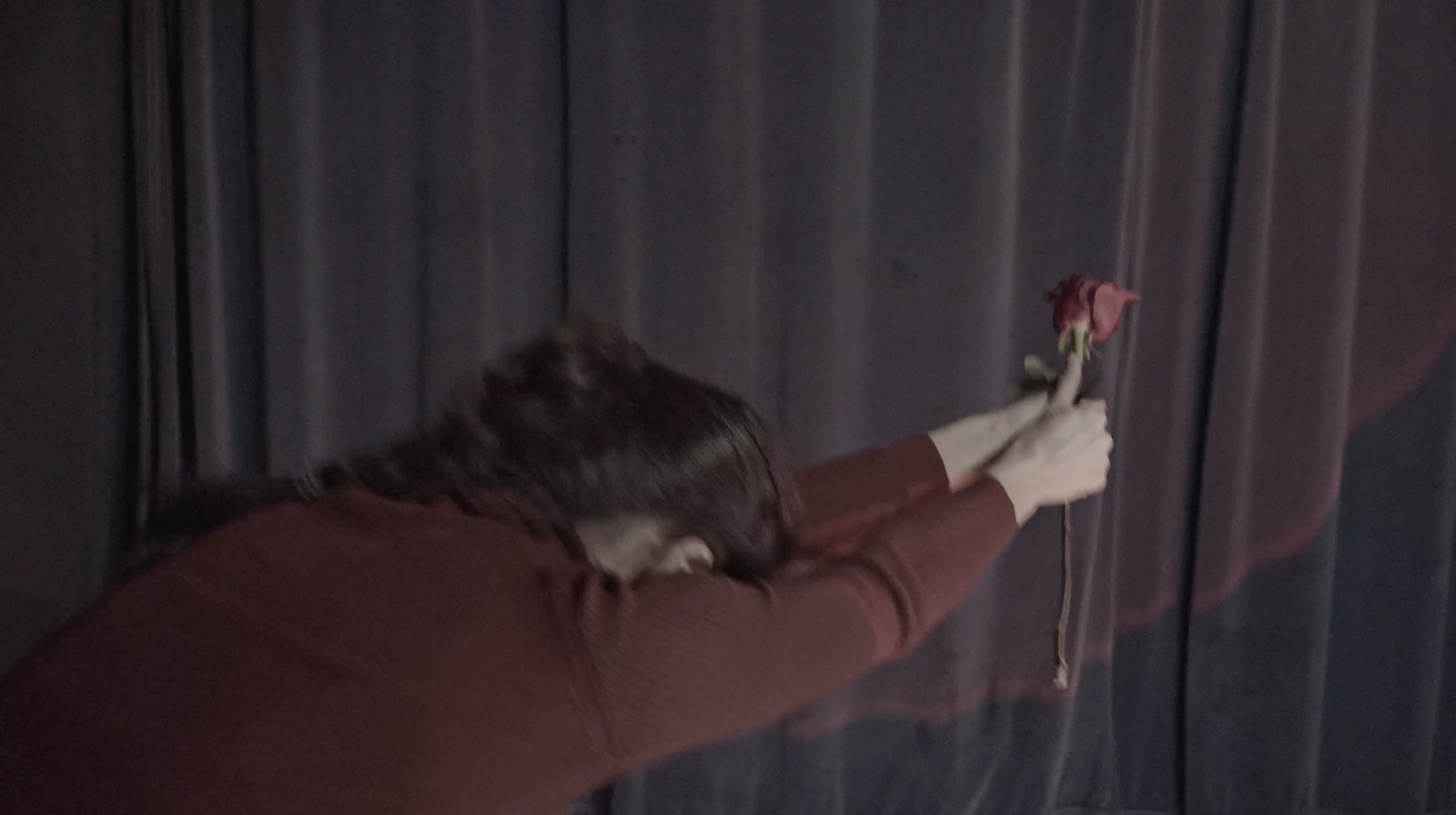
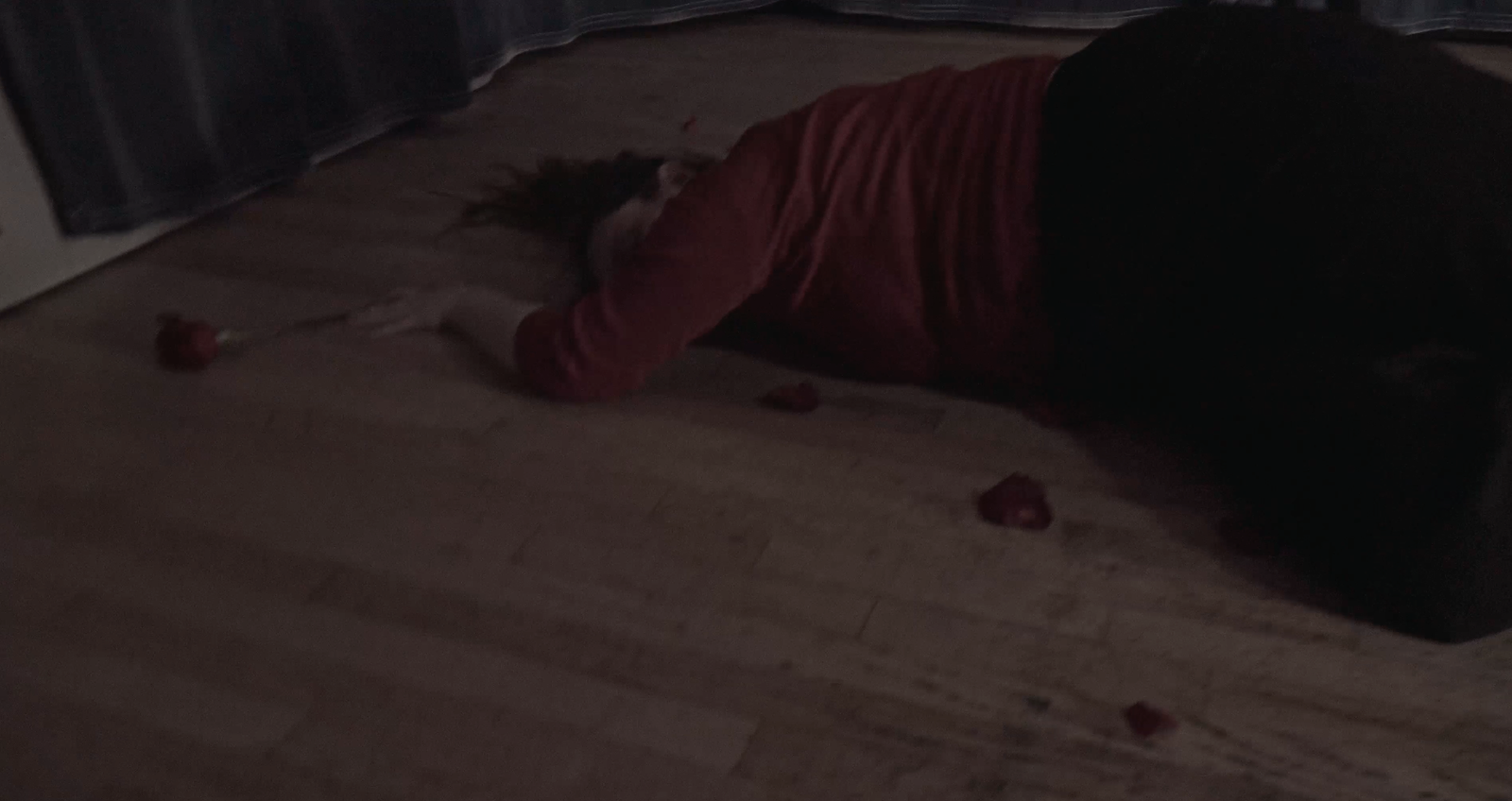
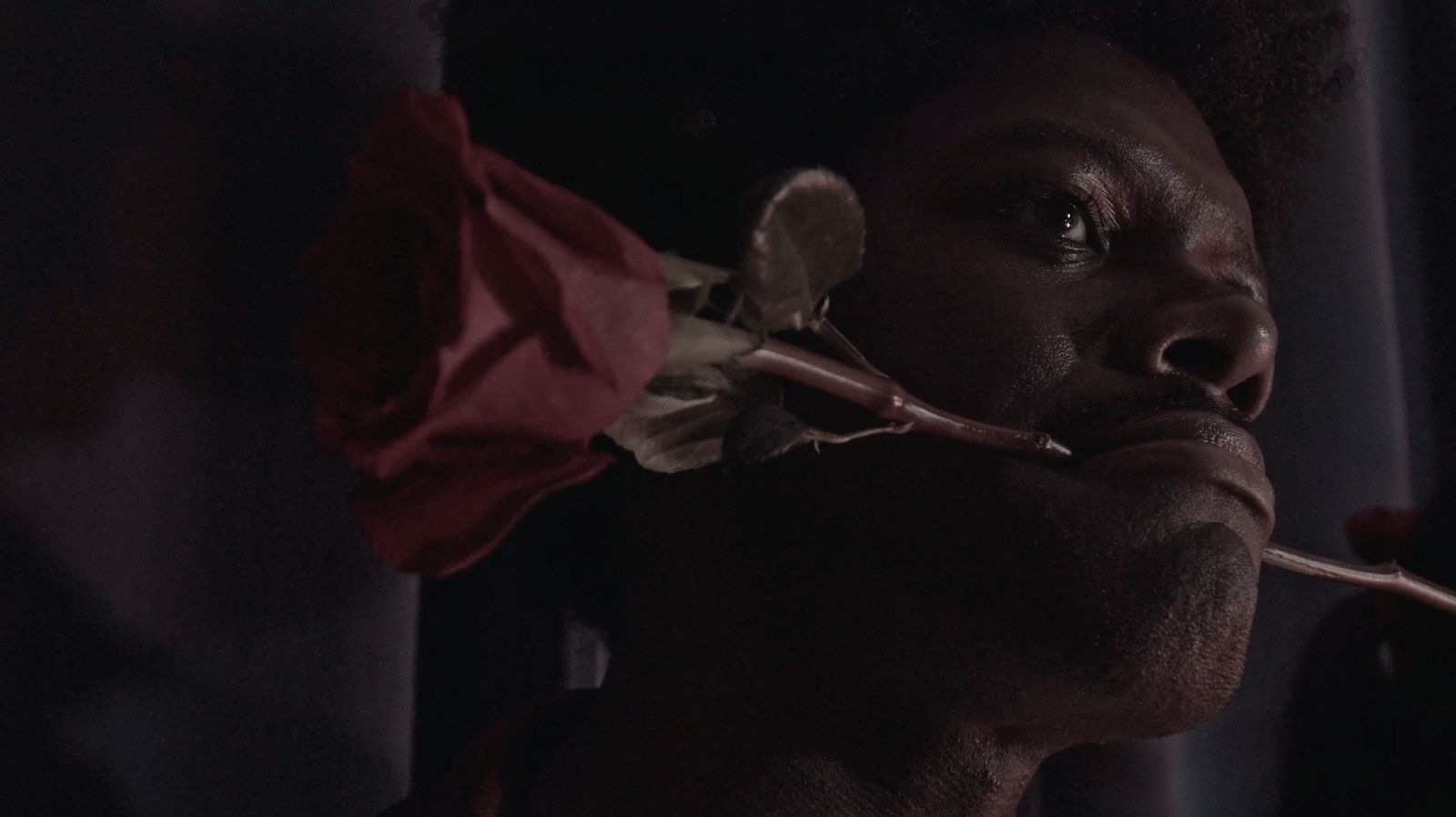
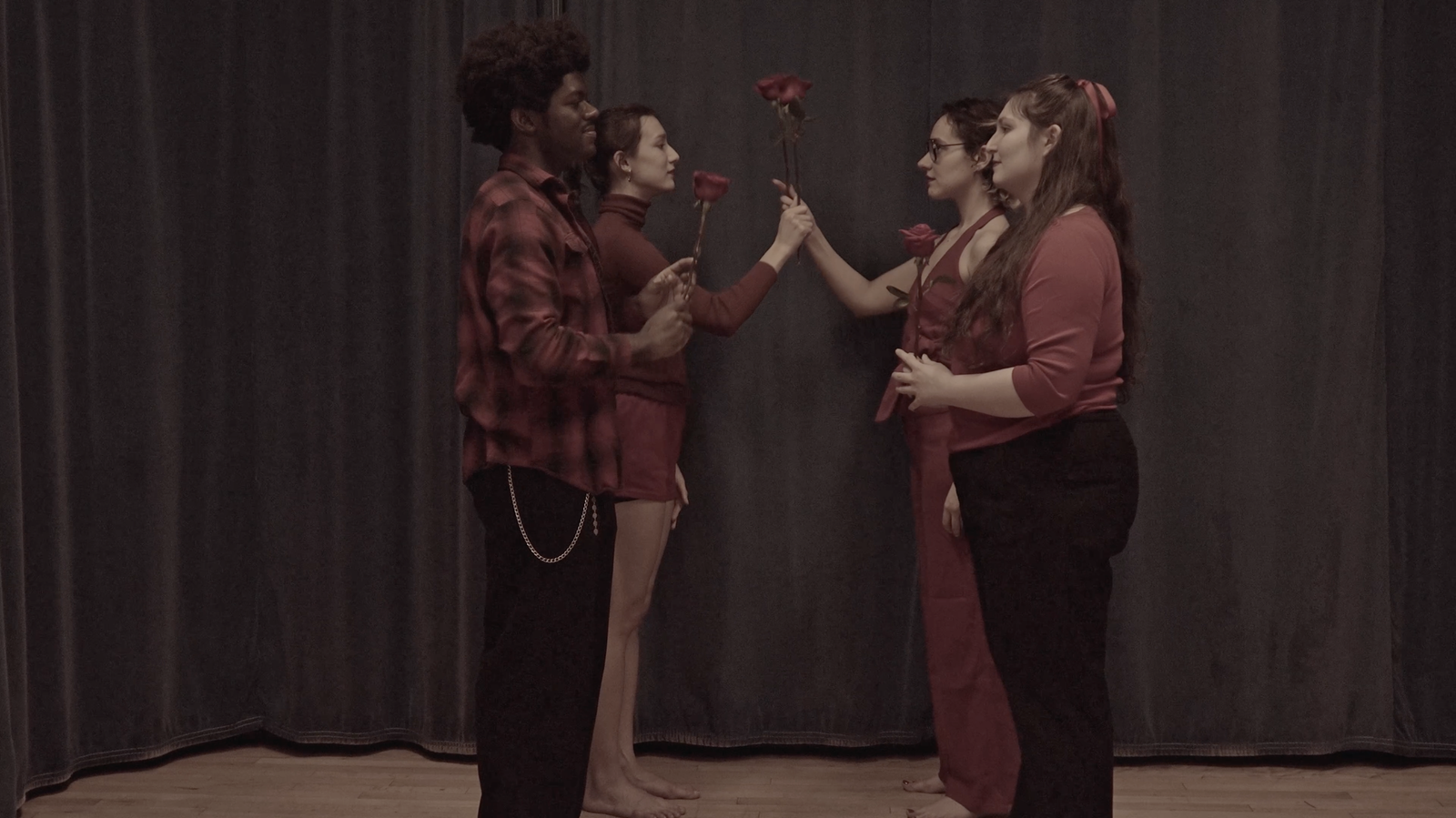
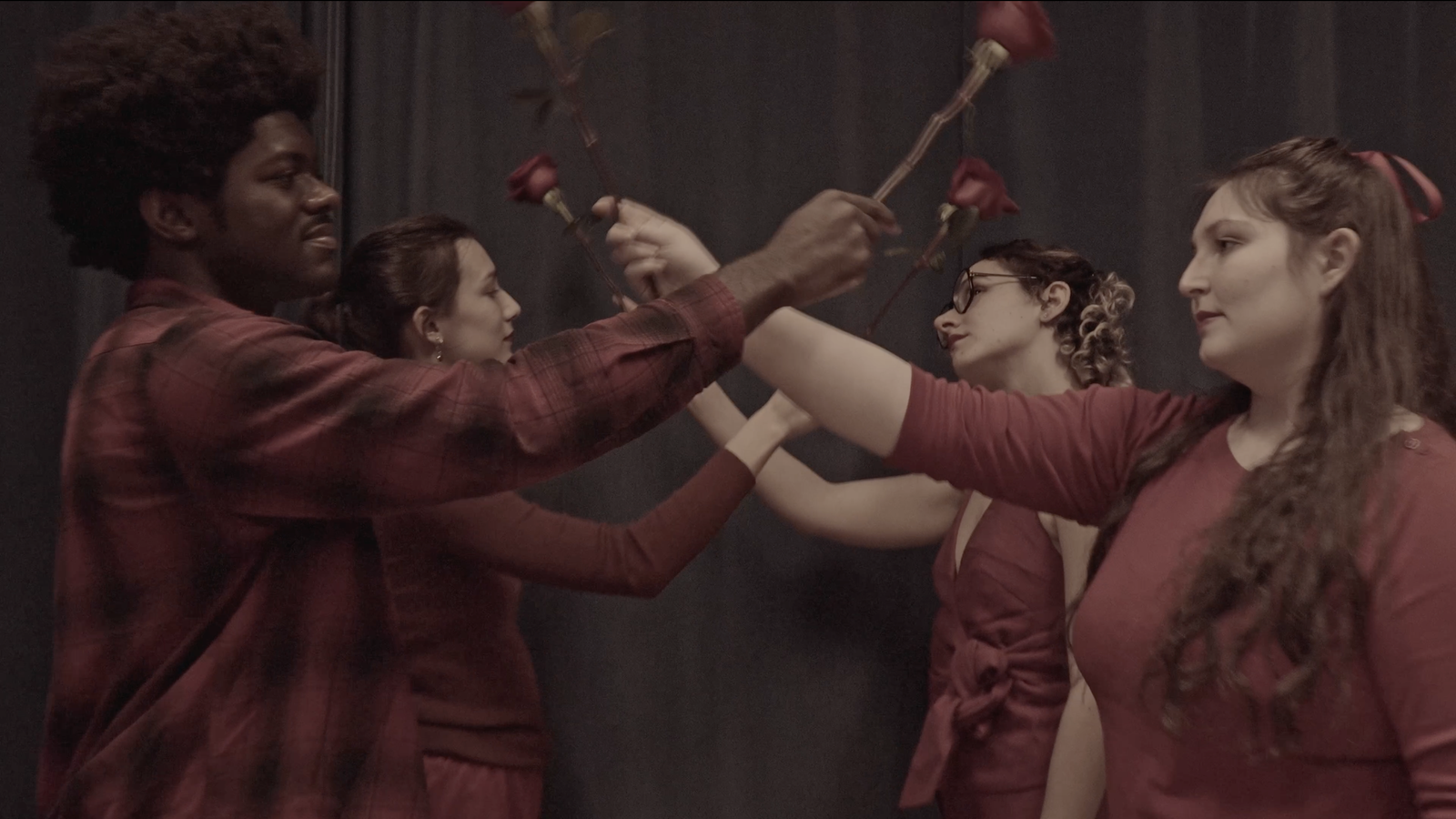
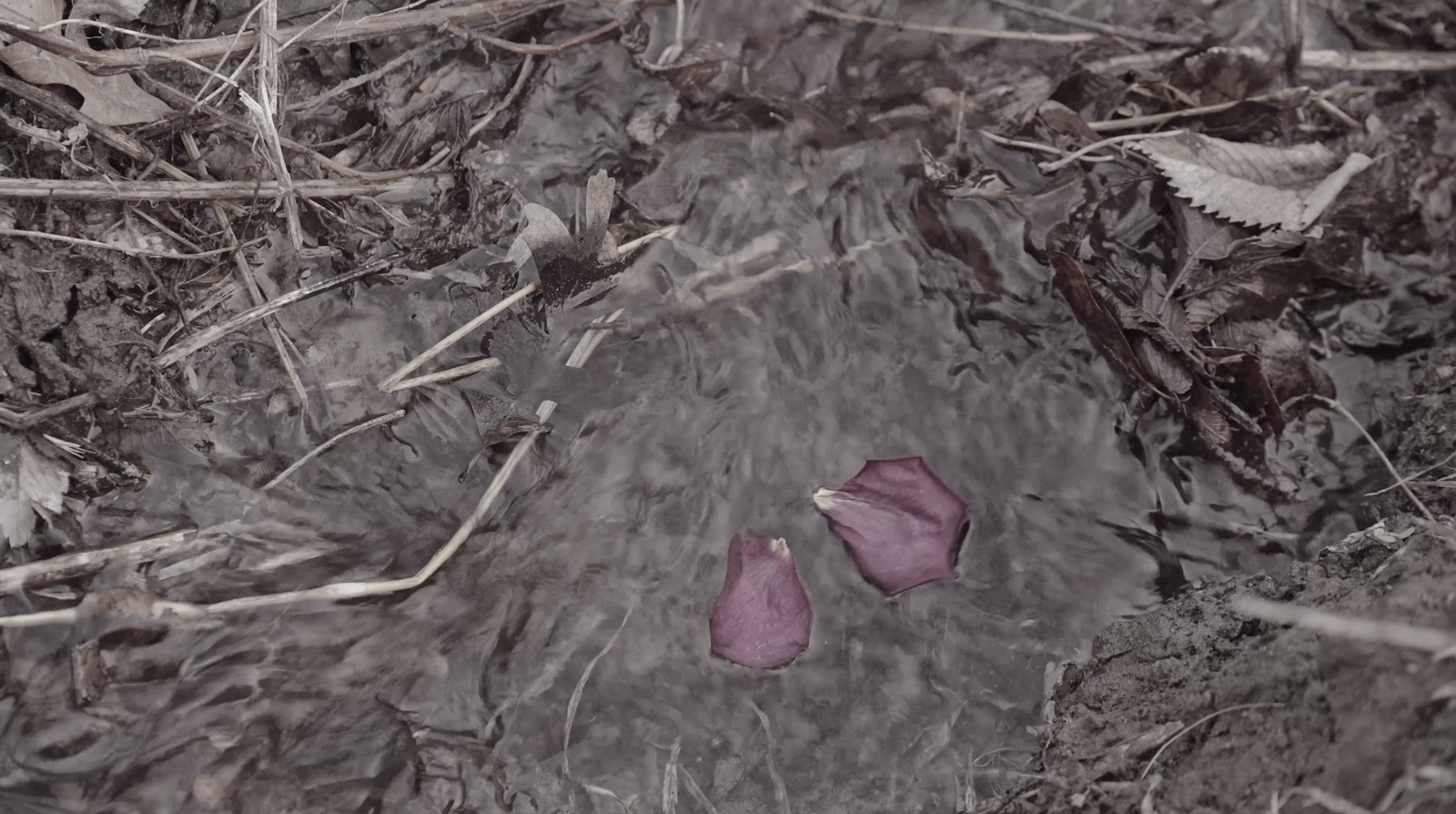
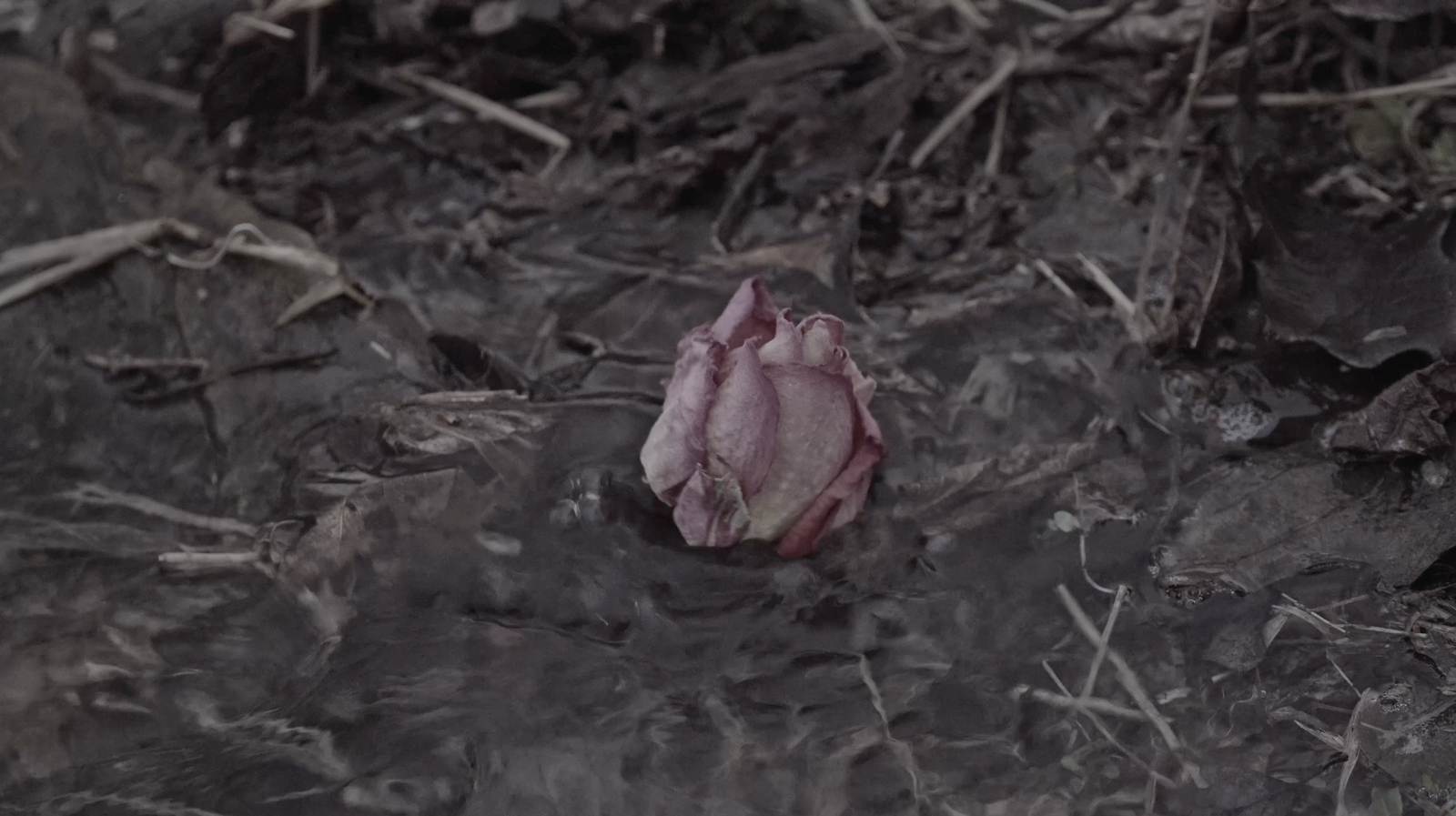
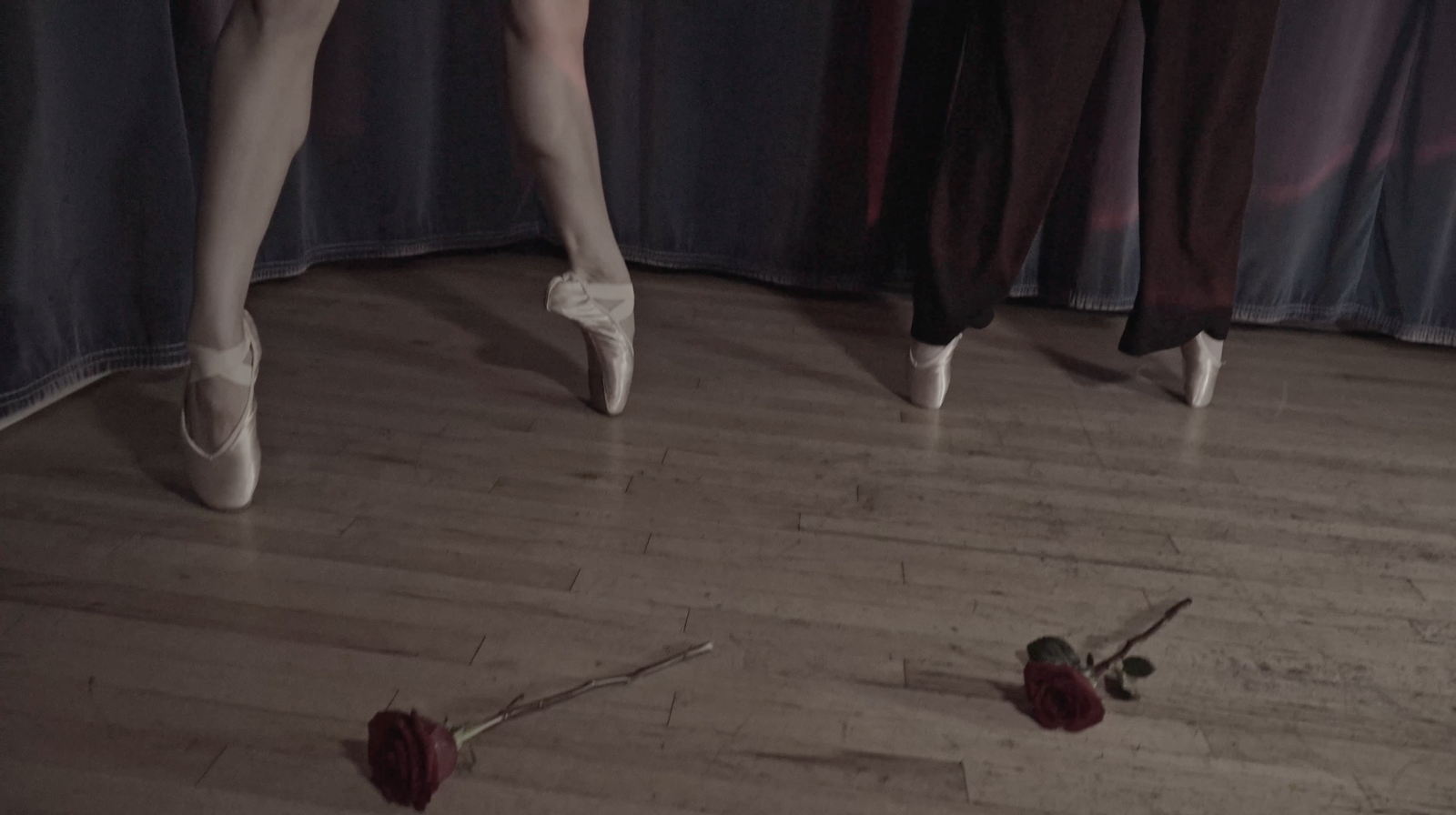
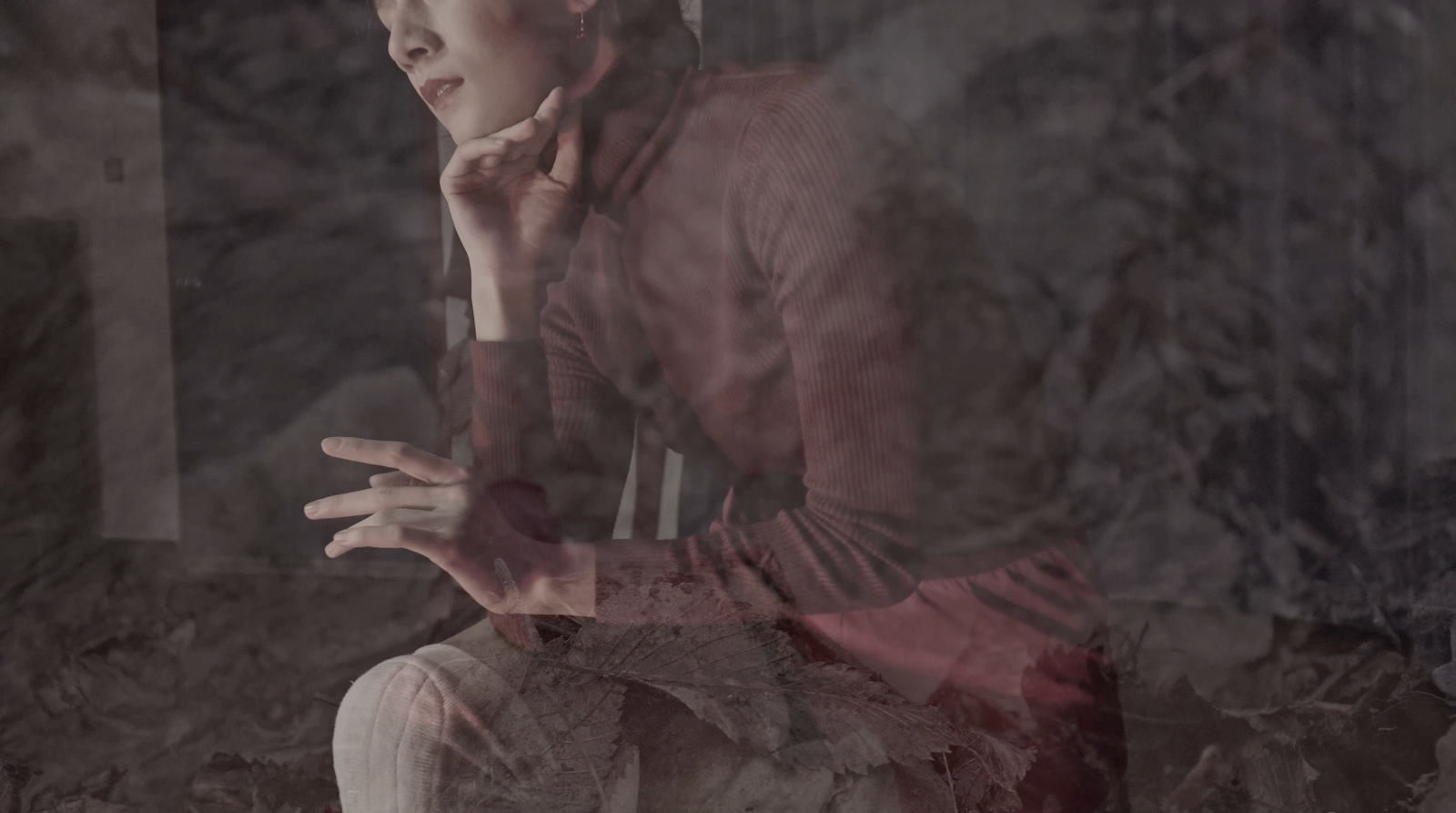
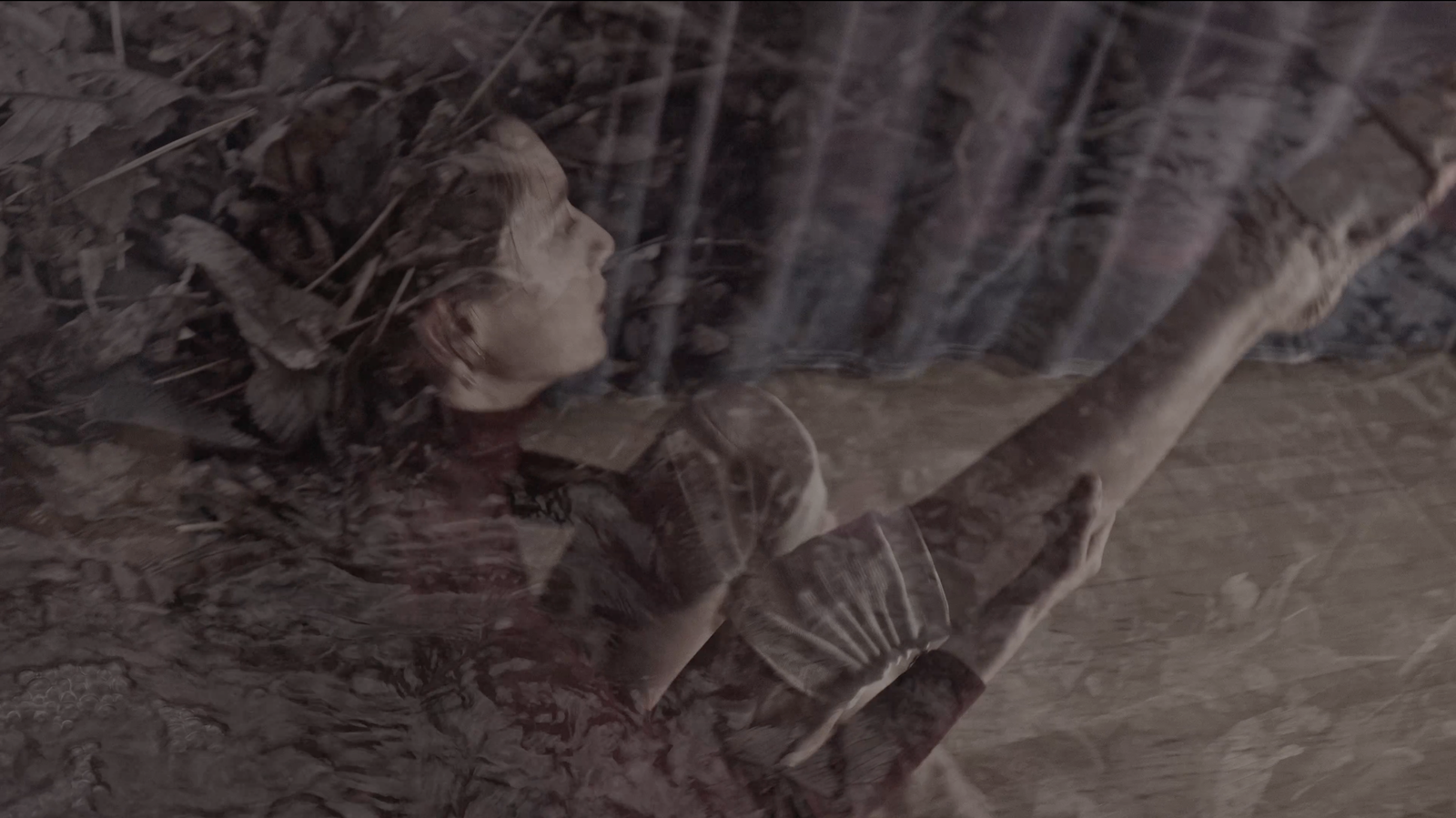
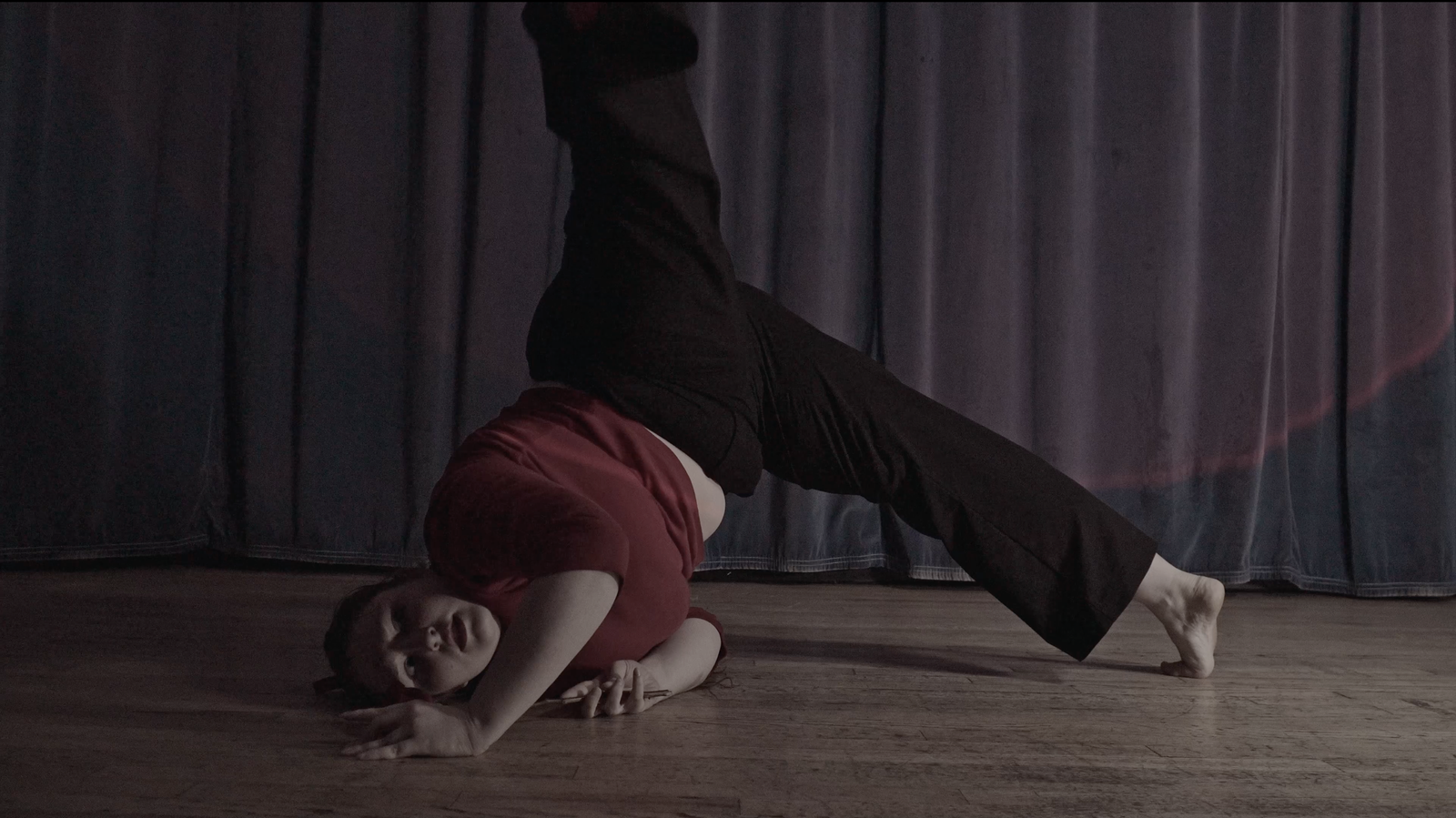
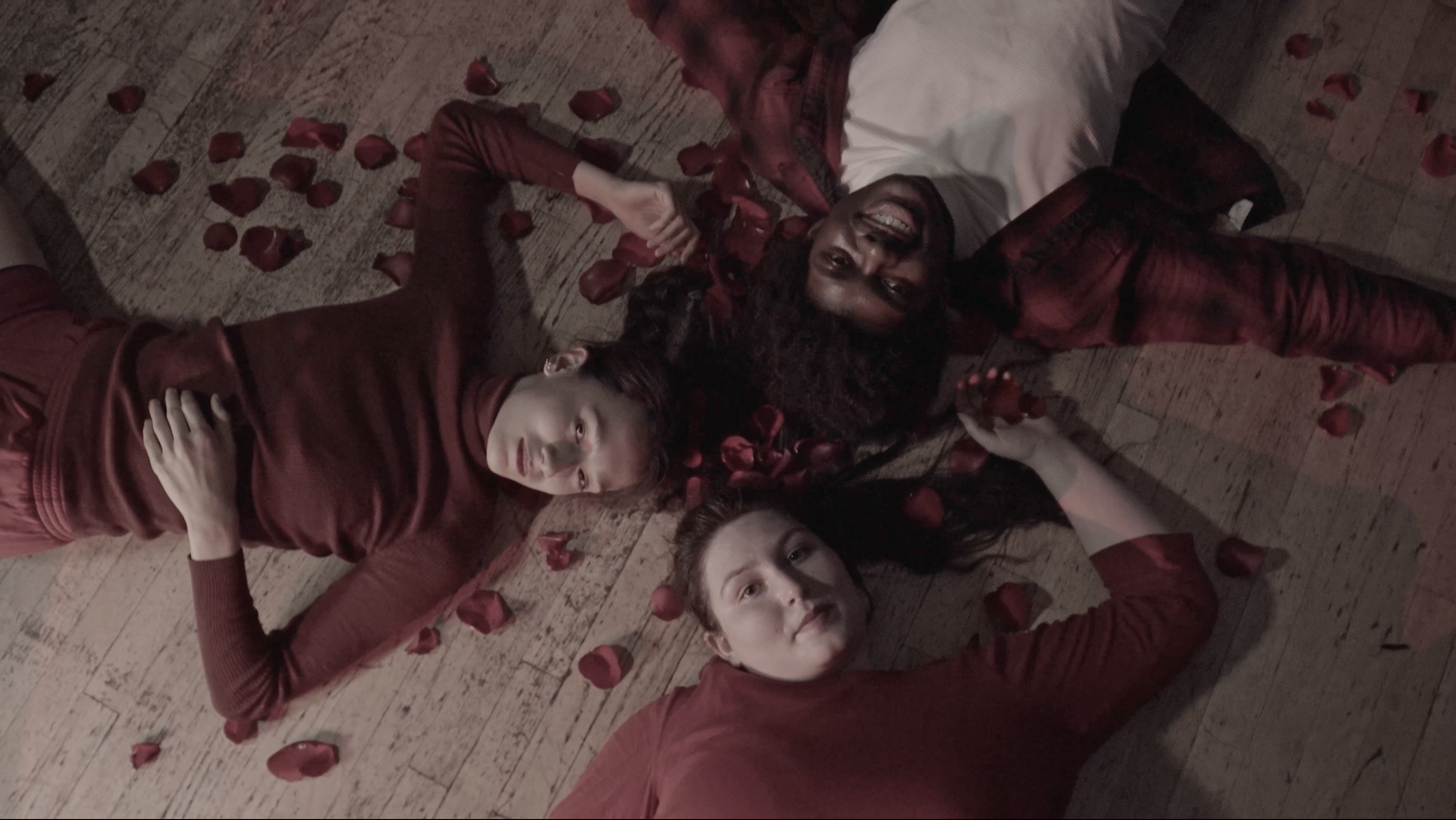
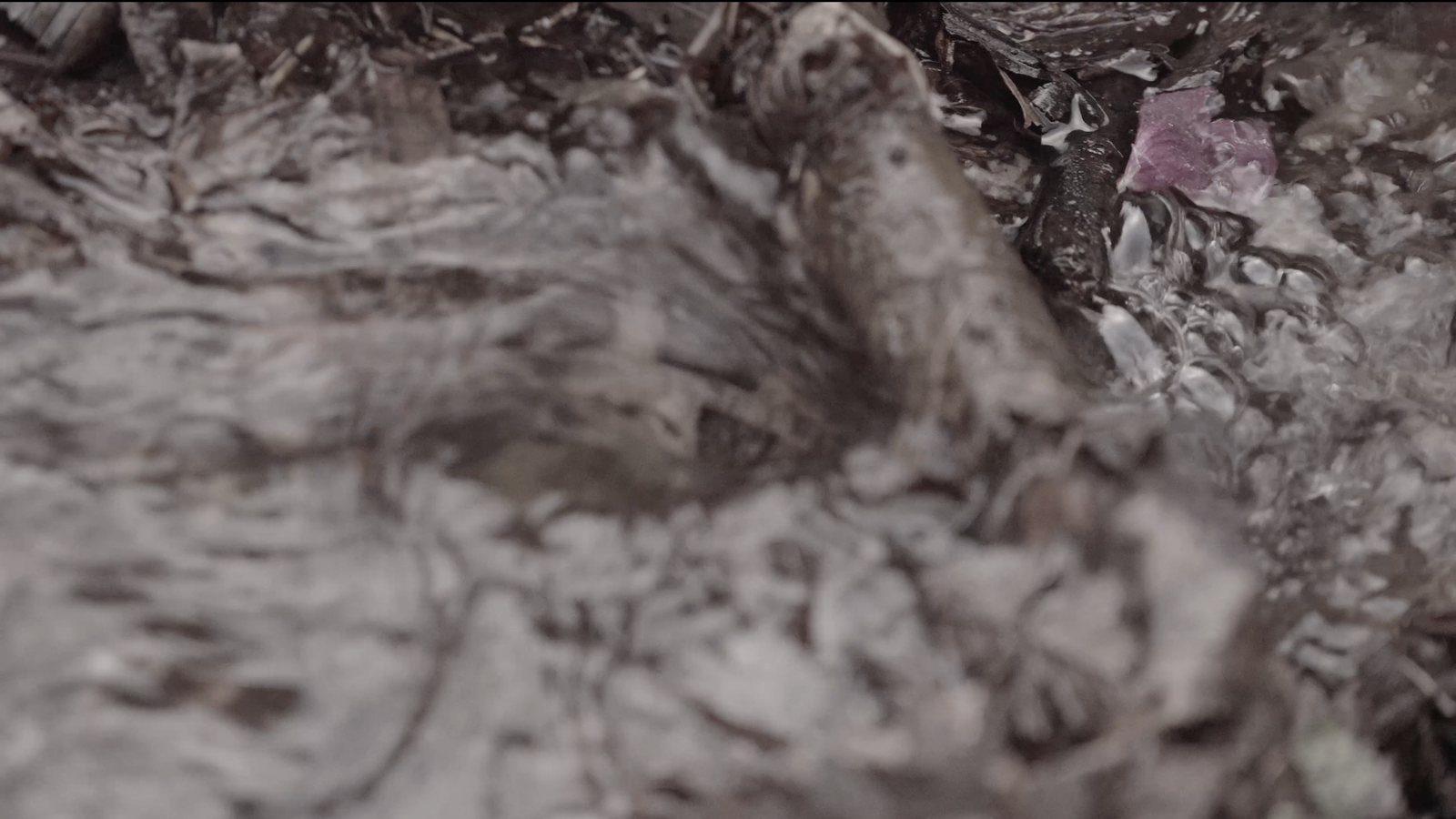
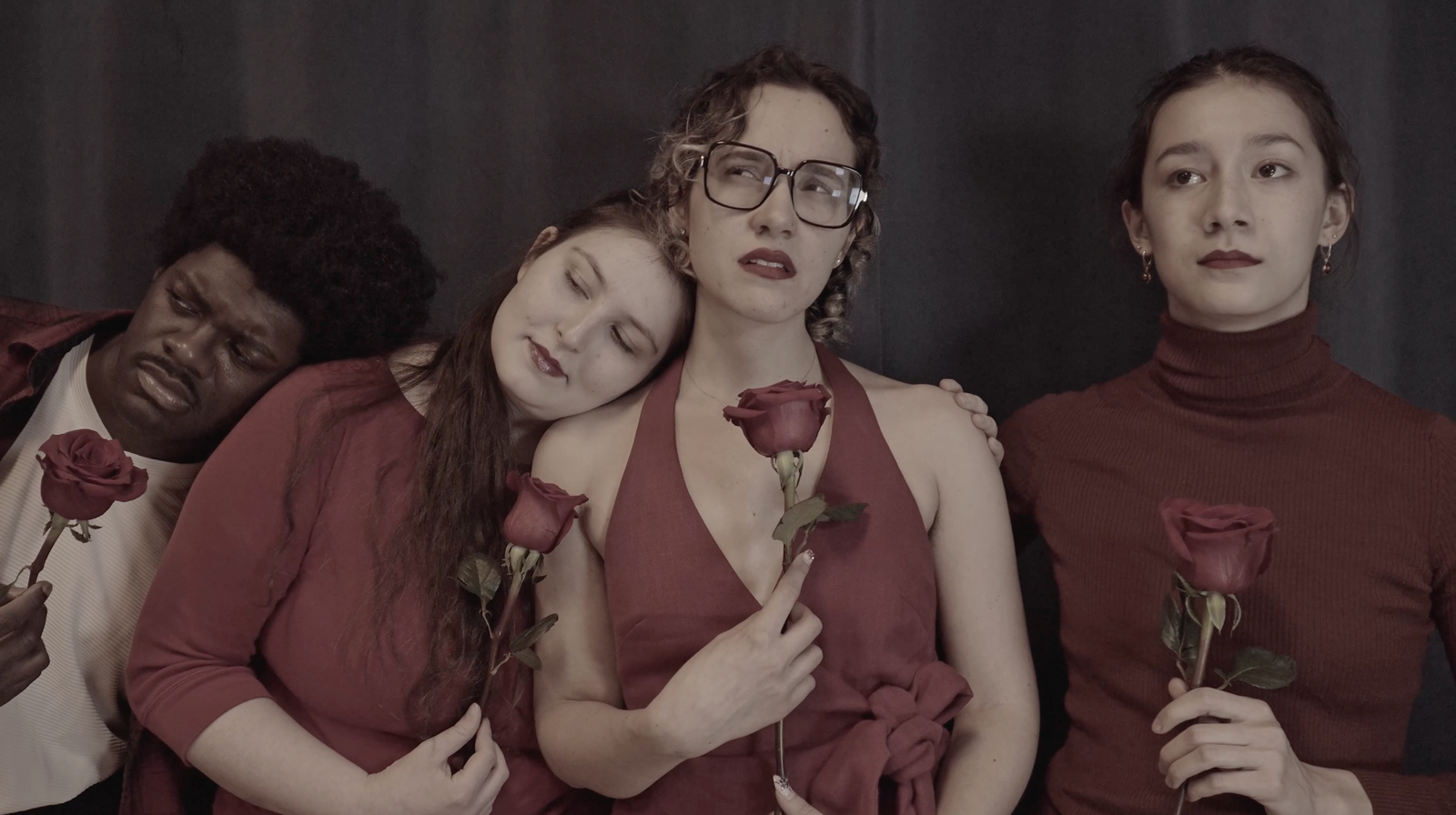
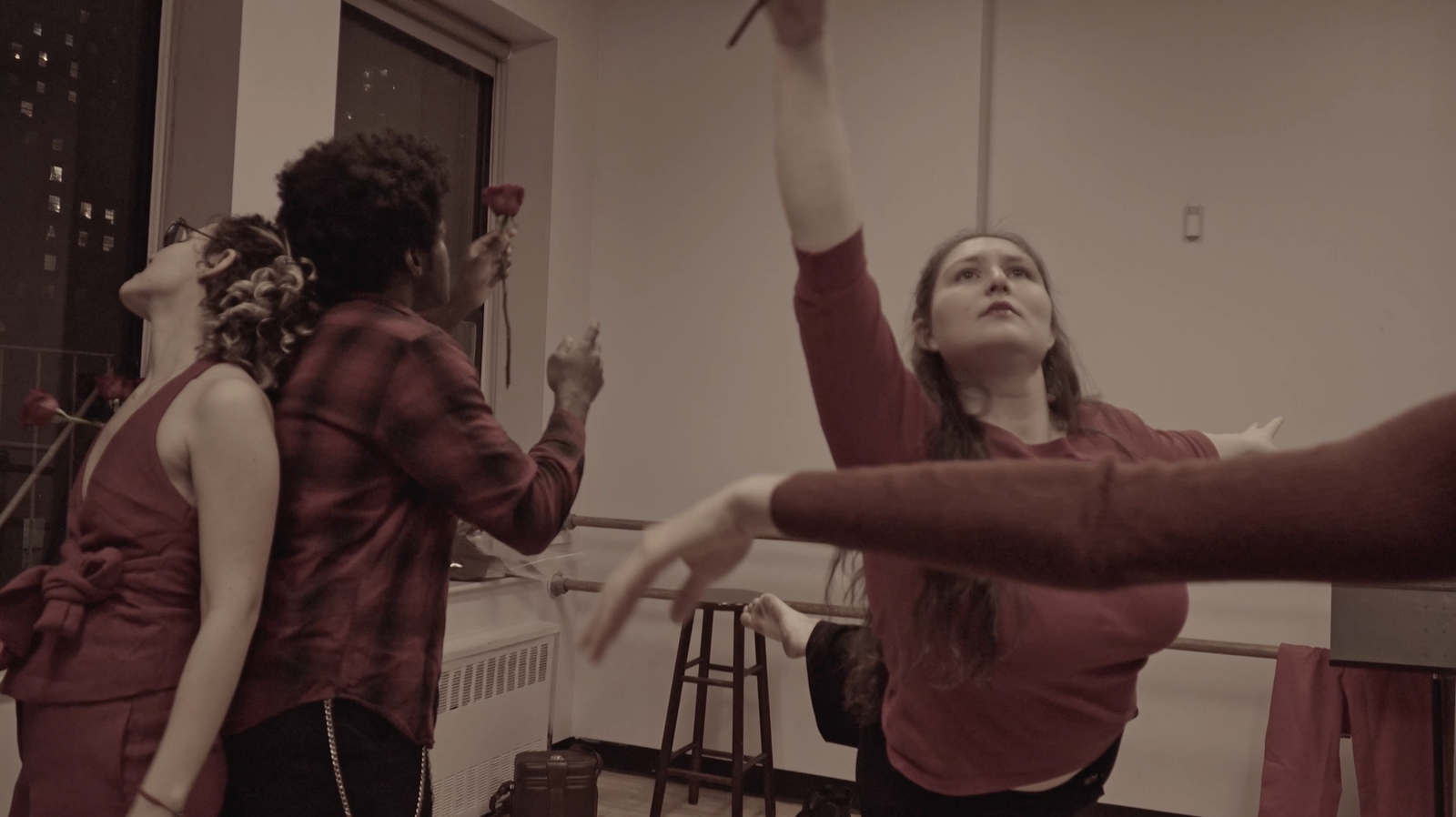
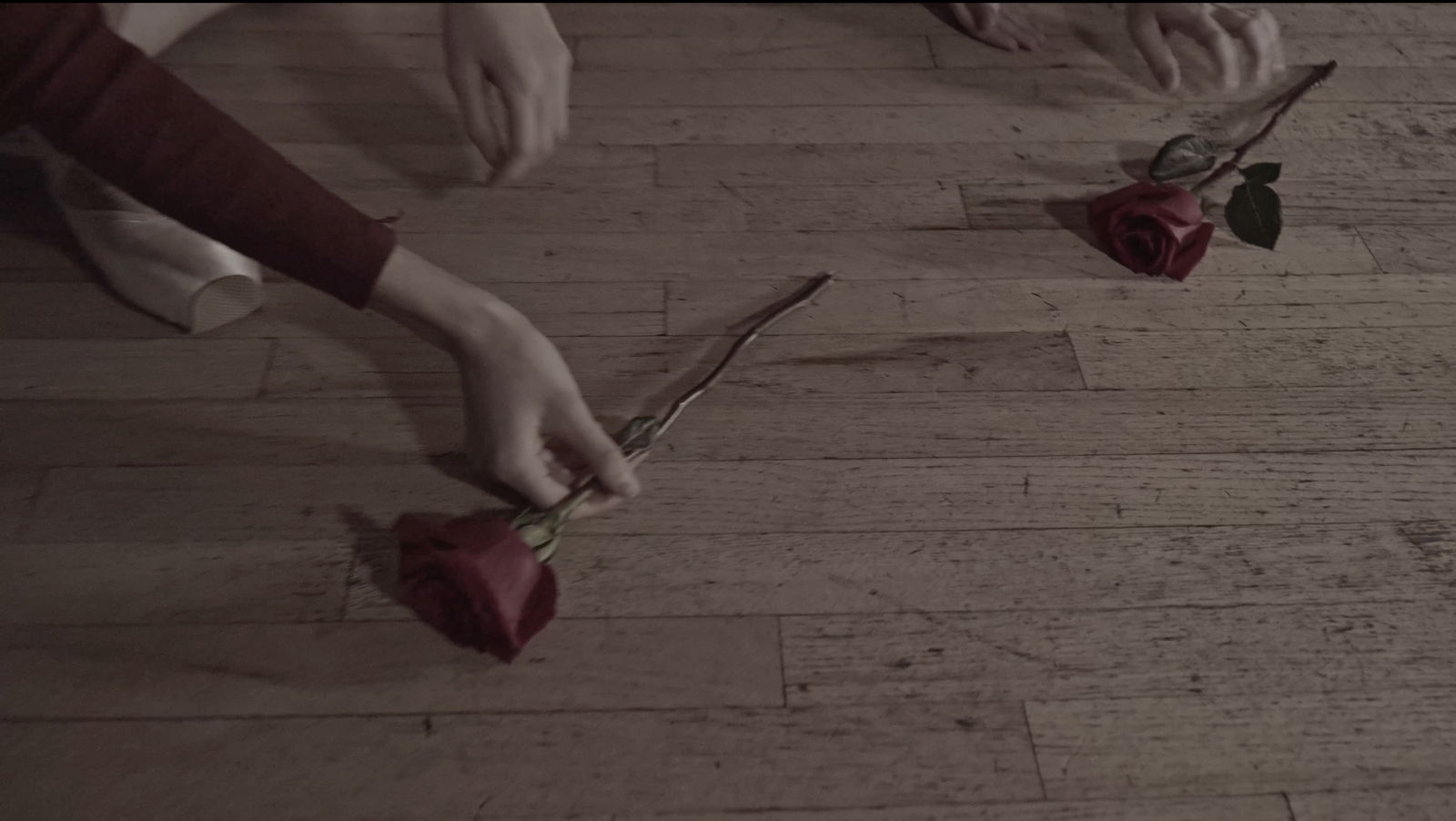
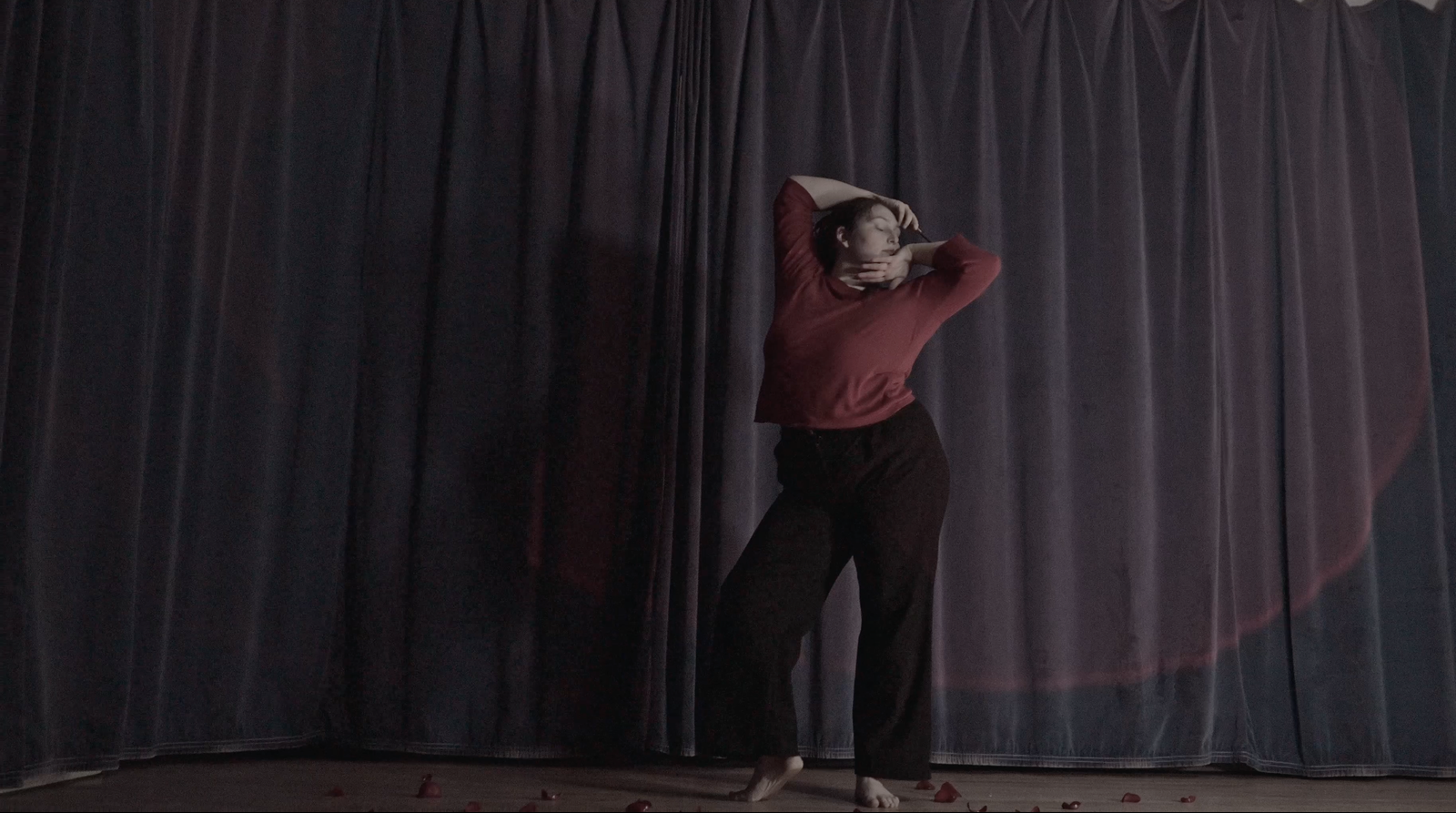
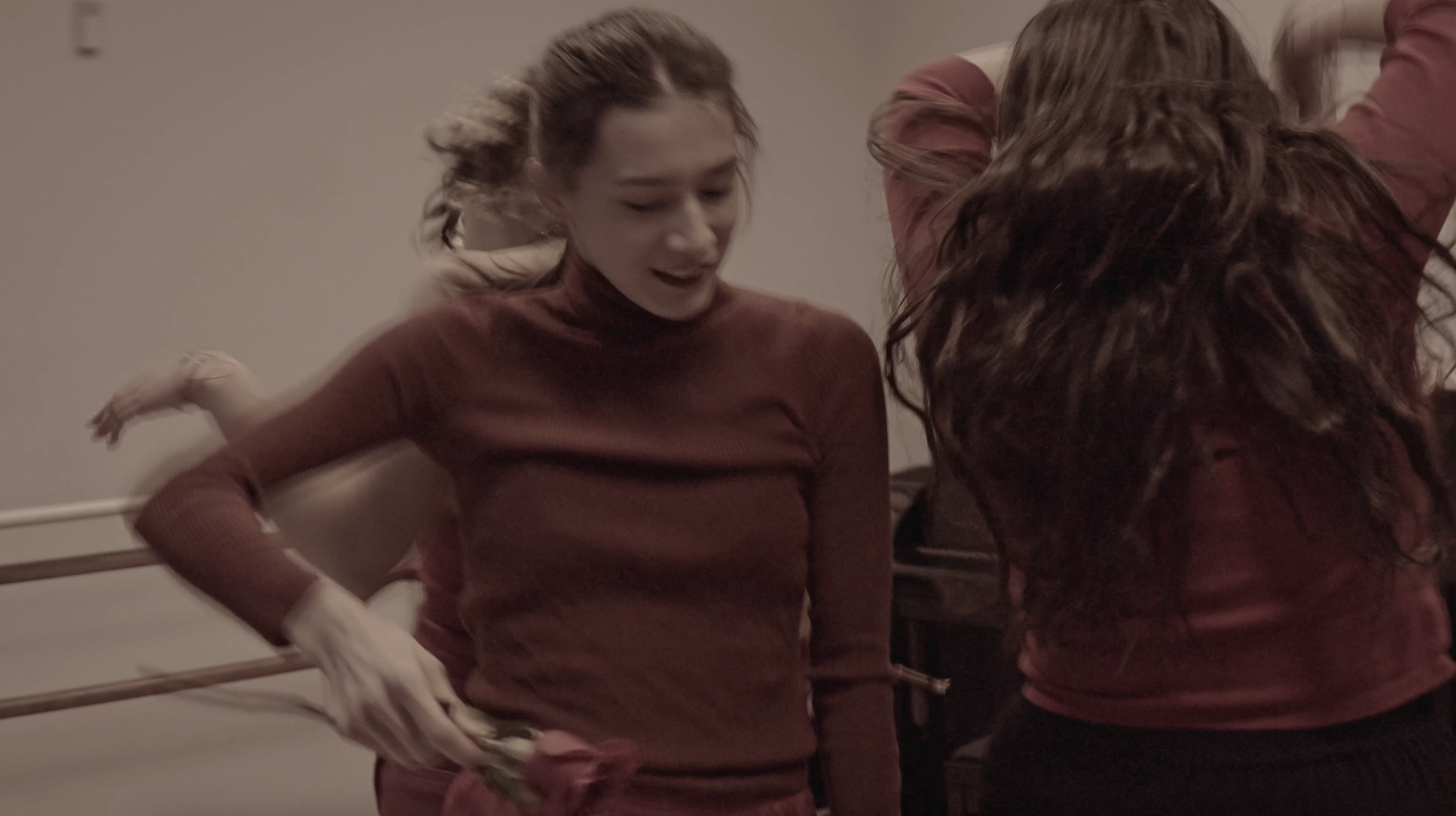
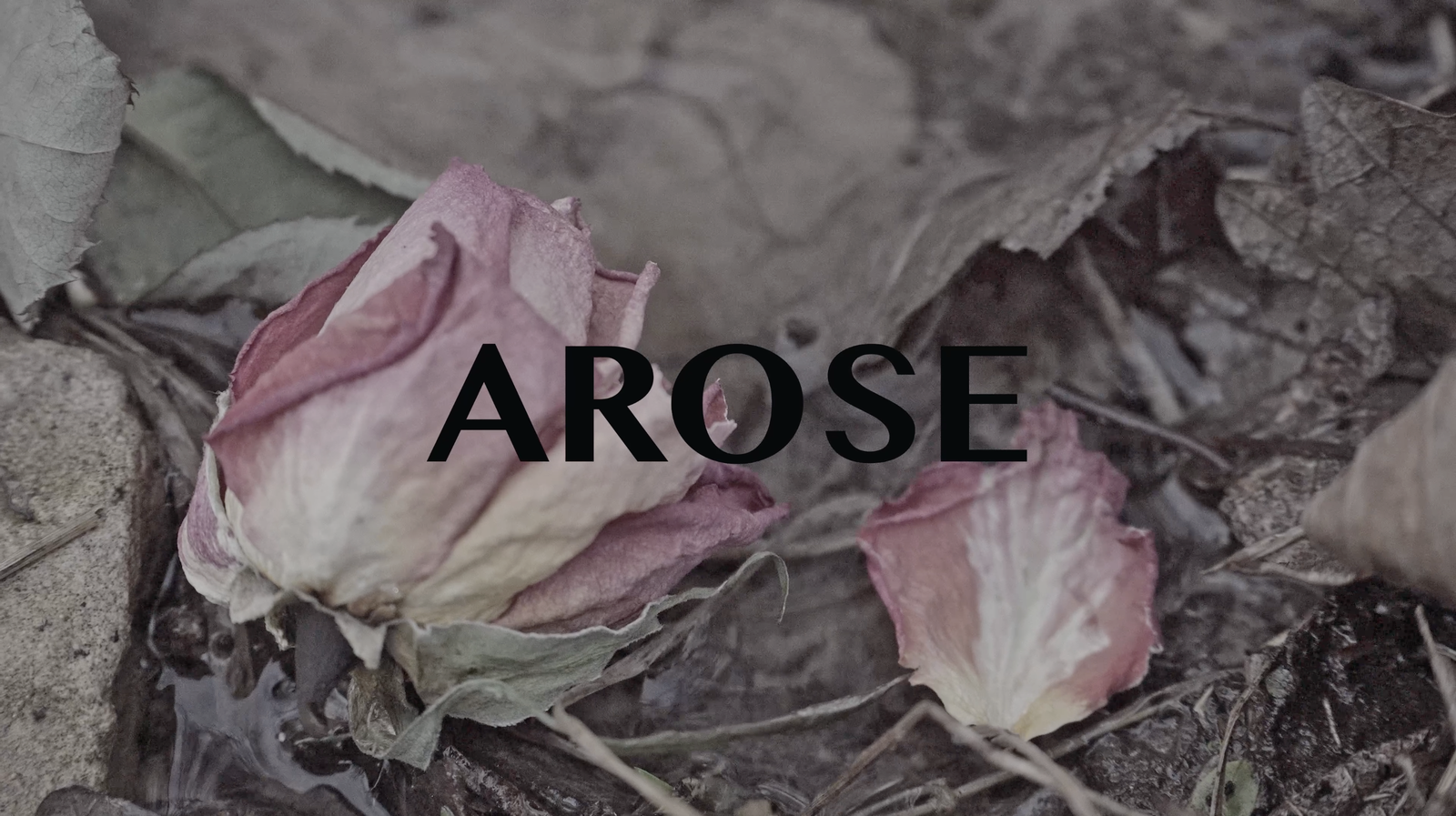
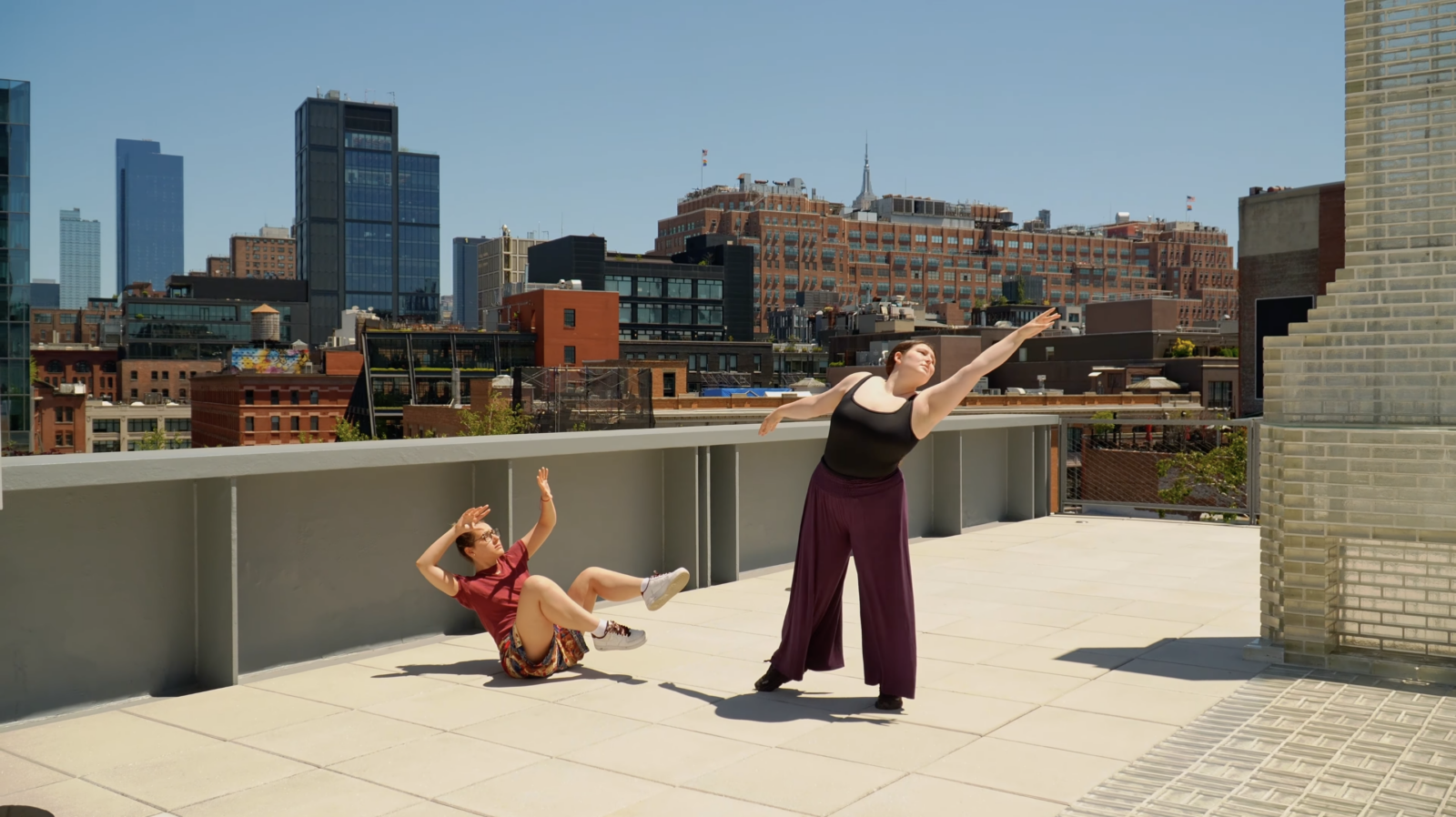
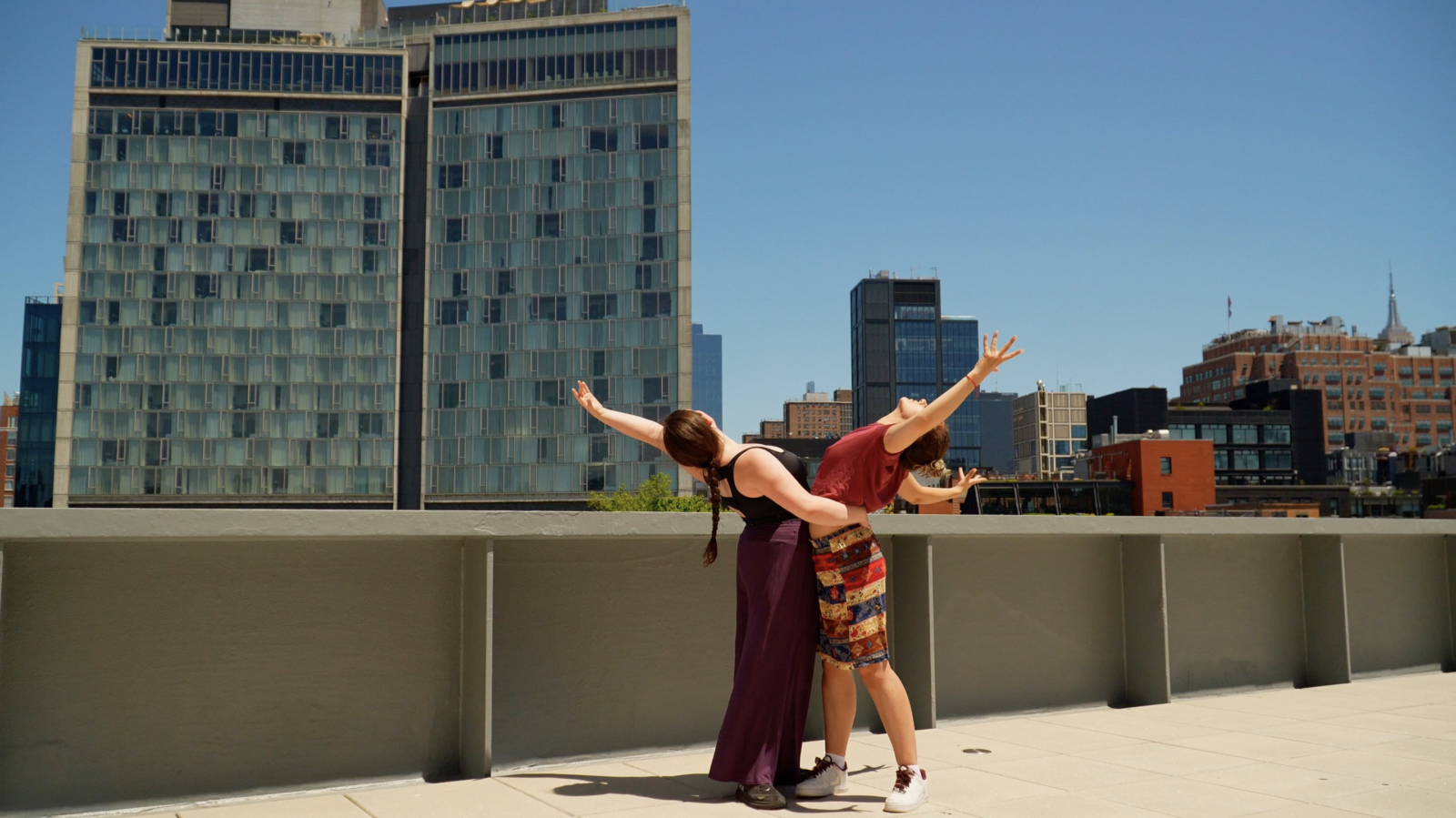
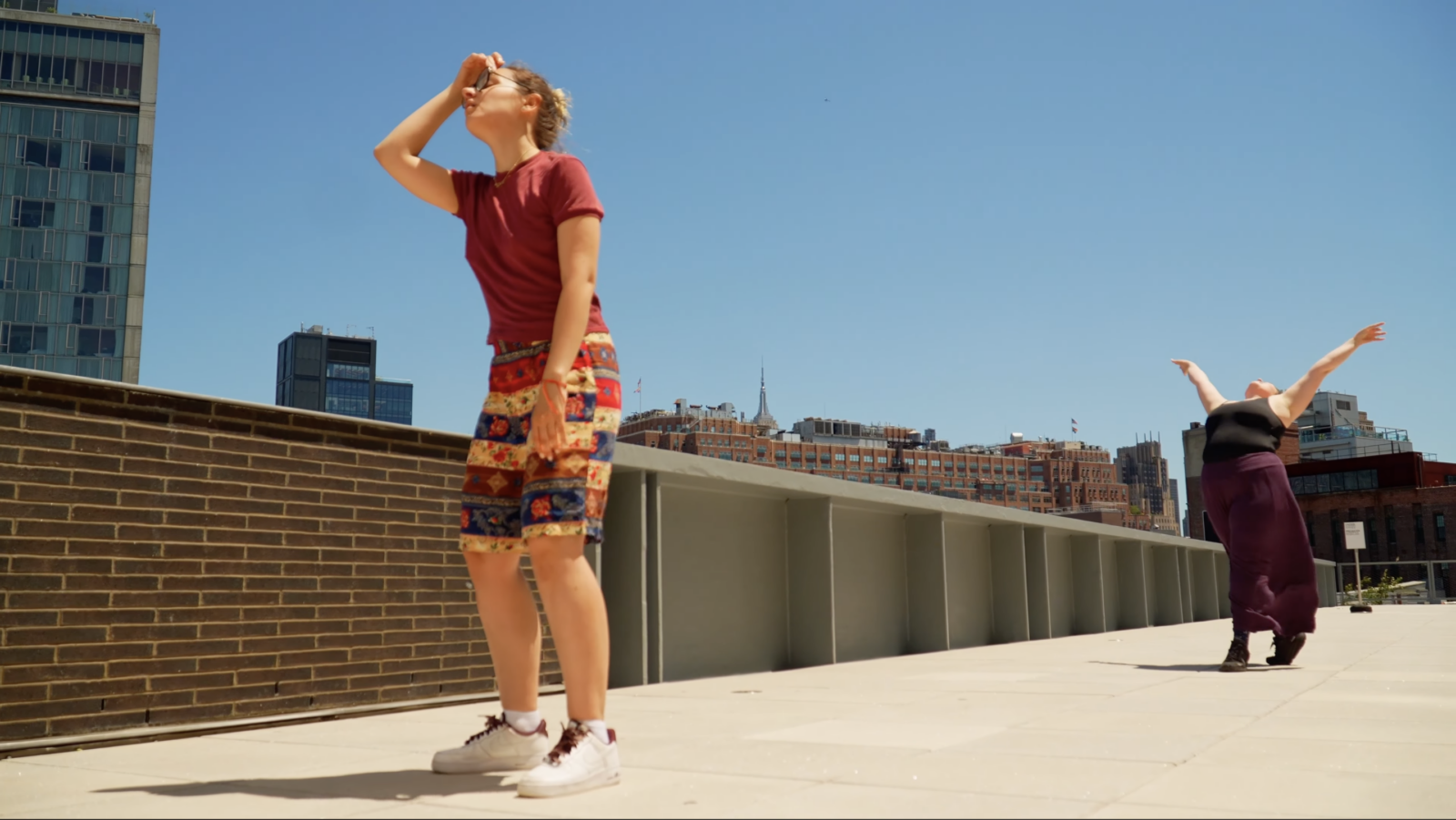
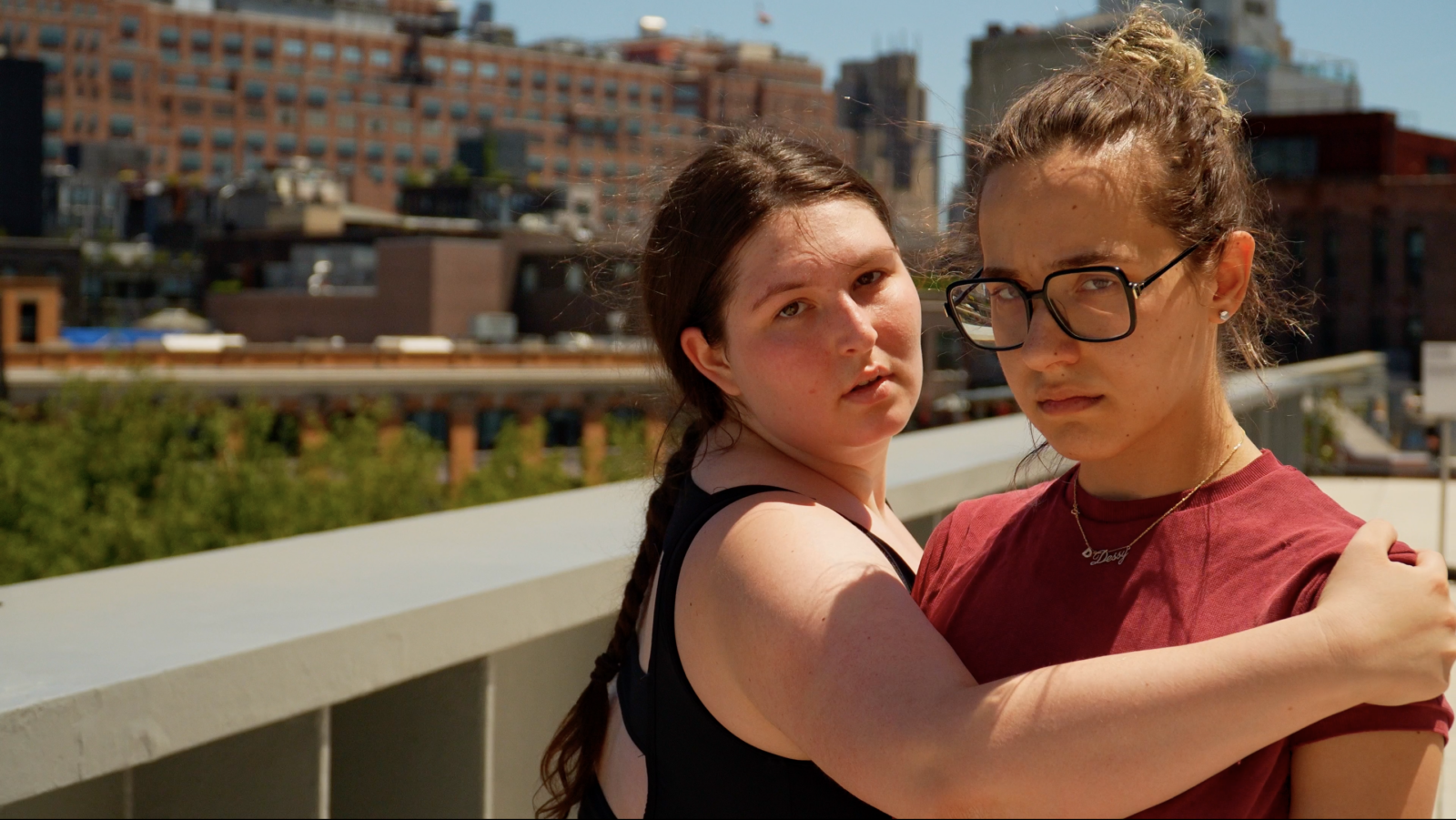
Arose is a 4.5-minute screendance featuring four dancers, who hold red roses and wear matching red garments. They bring to life the imagery of rose petals floating down early spring creeks. Arose features emotive ensemble and solo movement, pointe ballet, and poetry onscreen from within an enchambered space. Arose distinctly combines the word’s dualmeaning of arising, and of roses themselves, through three motifs: first, enchamberment within the studio, set, frame, and temporal moment; secondly, a somnambulist heart-led directionality; and third, the potent waters of first spring.
The film’s red theme foregrounds the heart as a vessel of spiritual and logical clarity: two performers recite “Arose, I from deep slumber, long a somnambulist, awakened by the tender beat of my own heart.” Each dancer “arose” to a clarity, that emerges from the values of the present moment rather than future vision. Buddhist philosopher Lau Tzu said, “the longest journey you will take in life is from your head to your heart.”
A creek visually conveys the forward momentum of gravity: evoking linear and cyclical time amid the dancer’s journeys through love and loss. Rose petals flow downward through the stream, representing unity and separation, and succumbing to the ebb and flow of biological rhythms. The rose’s supposed stillness when rooted contrasts with its uncontrolled flow through water in this film. There is a ‘loss of purity’ as the petals become disparate and individuated, representing how lived experience fragments and dissolves the self as the modernist illusion of separation shatters, and the intersubjective ecology of being is embraced. Gravity acts as a form of fate, necessitating acceptance of change, even when we think we are rooted — contesting notions of perpetual stillness as a more ‘valuable’ or ‘pure’ meditative essence than movement. While Arose evokes the vernal qualities of spring such as thawing, growth, and renewal, it also points to the inevitability of decay, in that “all things must fall.”
The dancers’ beguiling emotional passion and distance draws upon how the heart’s guidance has been at times historically misconstrued as romantic idealism or dreamlike confusion — a Neptunian malefic. Yet born from those chaotic waters is the goddess Aphrodite, who facilitates humanity’s era-transcendent need to grapple with both love and war. Sensorial pleasures and inner sparks ask with Venusian clarity how to move through the world in heart-centered ways: how we dance as though it is possible for everything to work out, and how to move with vulnerability and passionate resolve as stepping stones to harmony.
In Arose, a dance studio is strewn with red clothes, roses, and kitsch elements to create a feeling of enchamberment. The dancers’ movements embody the metaphorical significance of somnambulism, meaning “sleep walking,” within leading a heart-led life. Sleepwalking — motivated by unconscious will — foregrounded the turn of the century ideation on dream interpretation and psychoanalysis. The separation between conscious and subconscious becomes at once cleared and blurred by the somnambulist. Sleepwalking was prominent theme within the Symbolist and Romantic movements of the late 19th century, which also inspire this film’s elements of melodrama, simplicity, and mystery.
Arose draws its initial poetic inspiration from two films by the avant-garde filmmaker Maya Deren. Her most well-known work Meshes of the Afternoon, made in 1943, is a hallmark of bringing feminist introspection to cinema, through floral and domestic symbolisms, and states of trance, that are drawn from in this film. Arose also is in no small part inspired by Deren’s unfinished 1951 dance film, Ensemble for Somnambulists, which is a seven-minute silent black-and-white film that features five dancers who move through trancelike states in orbital rotations amid a twinkling cosmic background.
CREDITS
Directed, filmed, written, and edited by Lily Selthofner
Choreographed by Lily Selthofner in collaboration with the cast
Onscreen performers:
Adara Allen – dancer
Nadia Benes – dancer
Jalen Ford – dancer, actor
Desislava Kreminlieva – dancer, actor
Music: Gates Pass – Composed and Performed by Rory Bricca
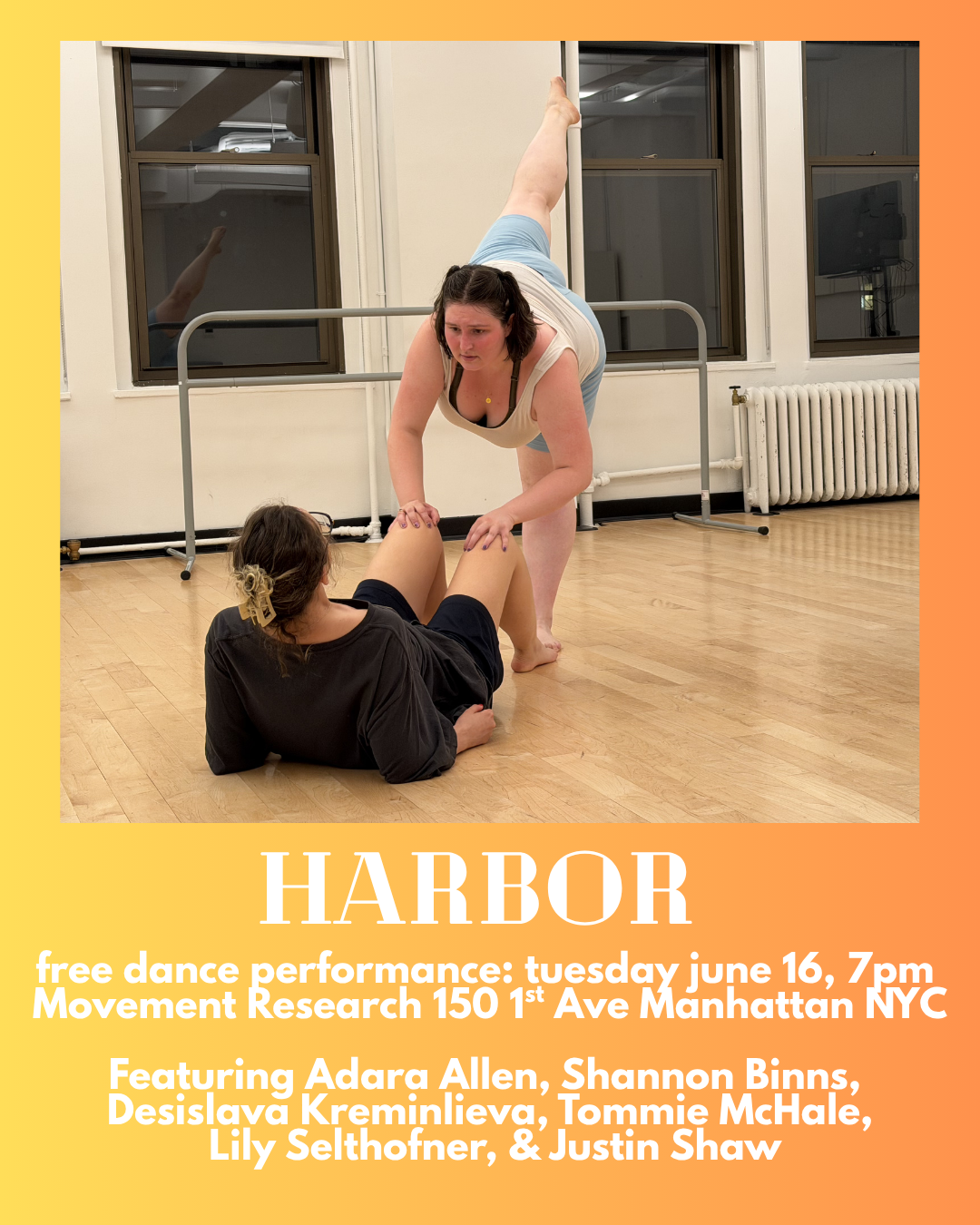
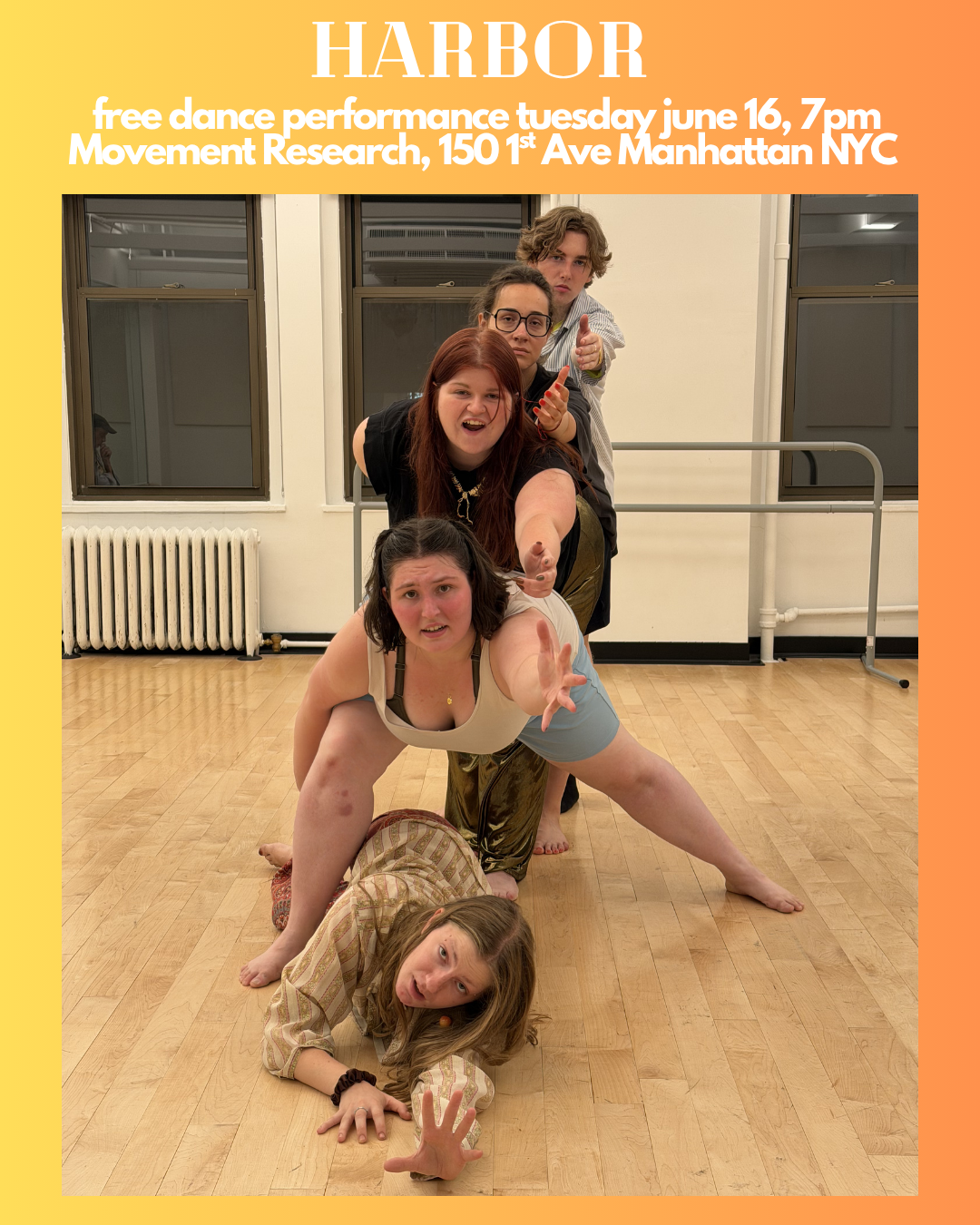
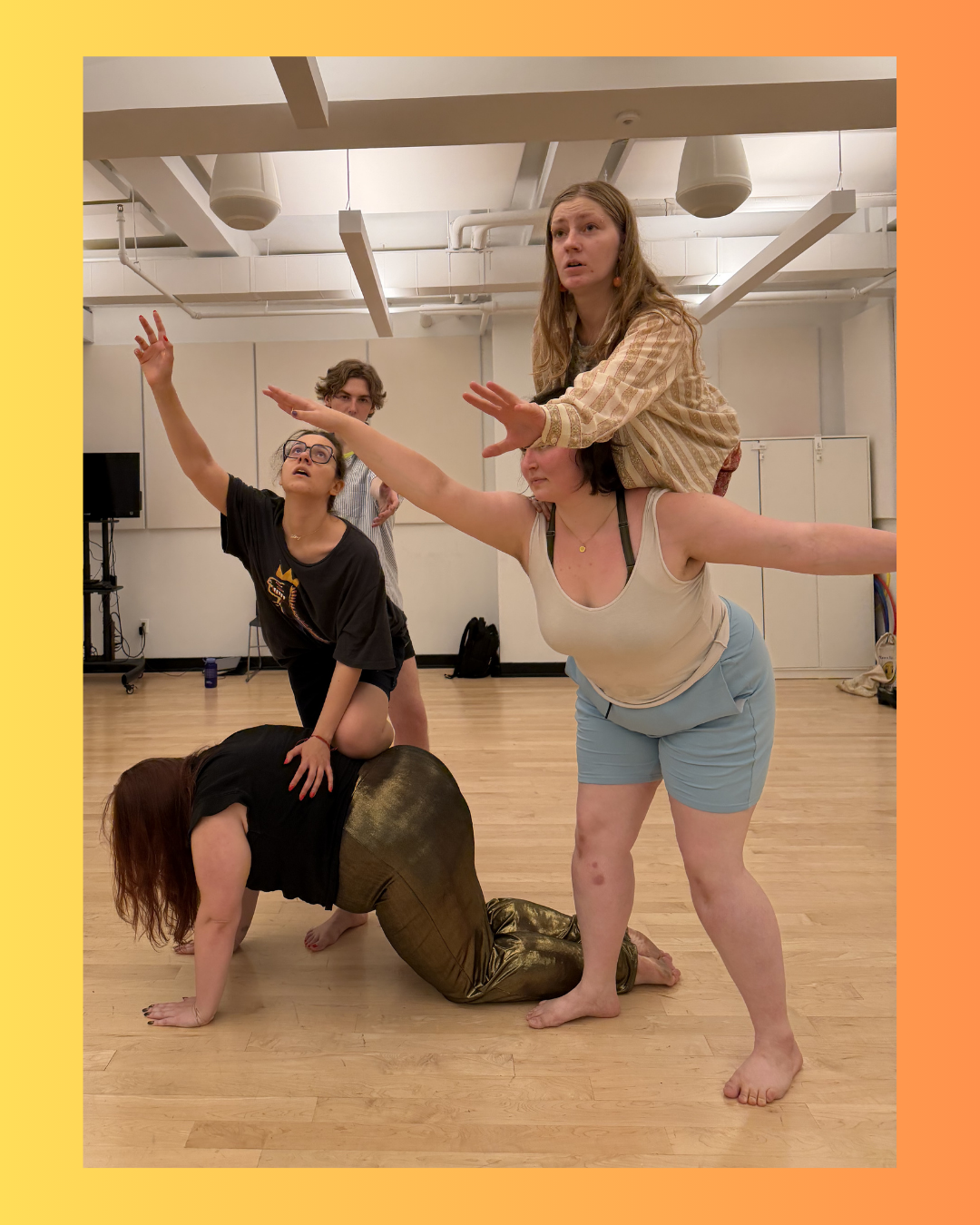
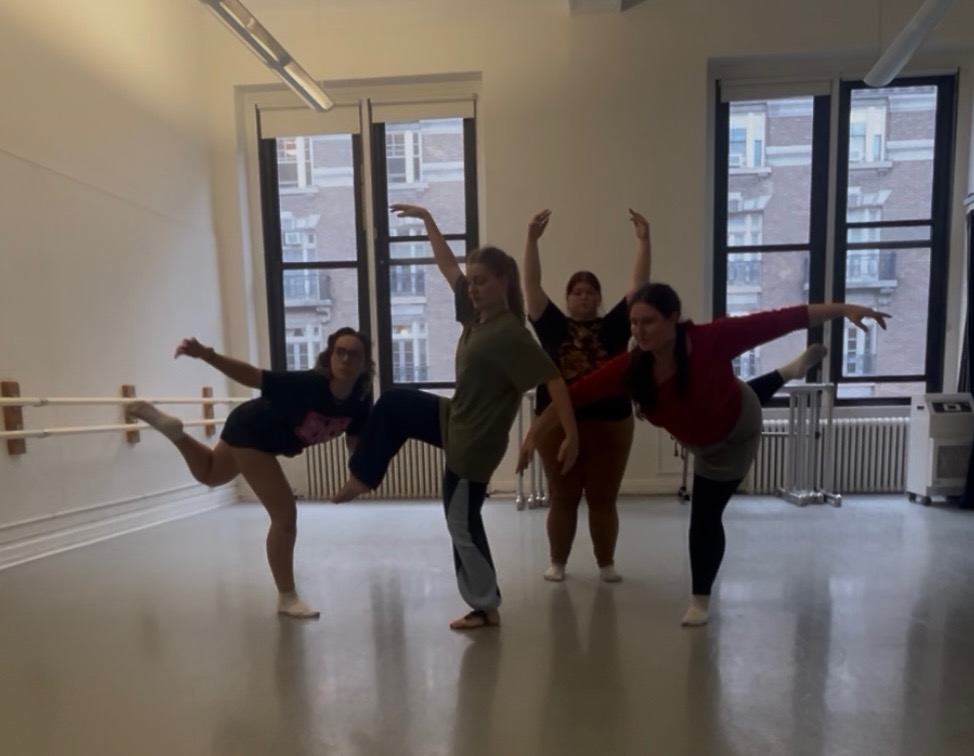
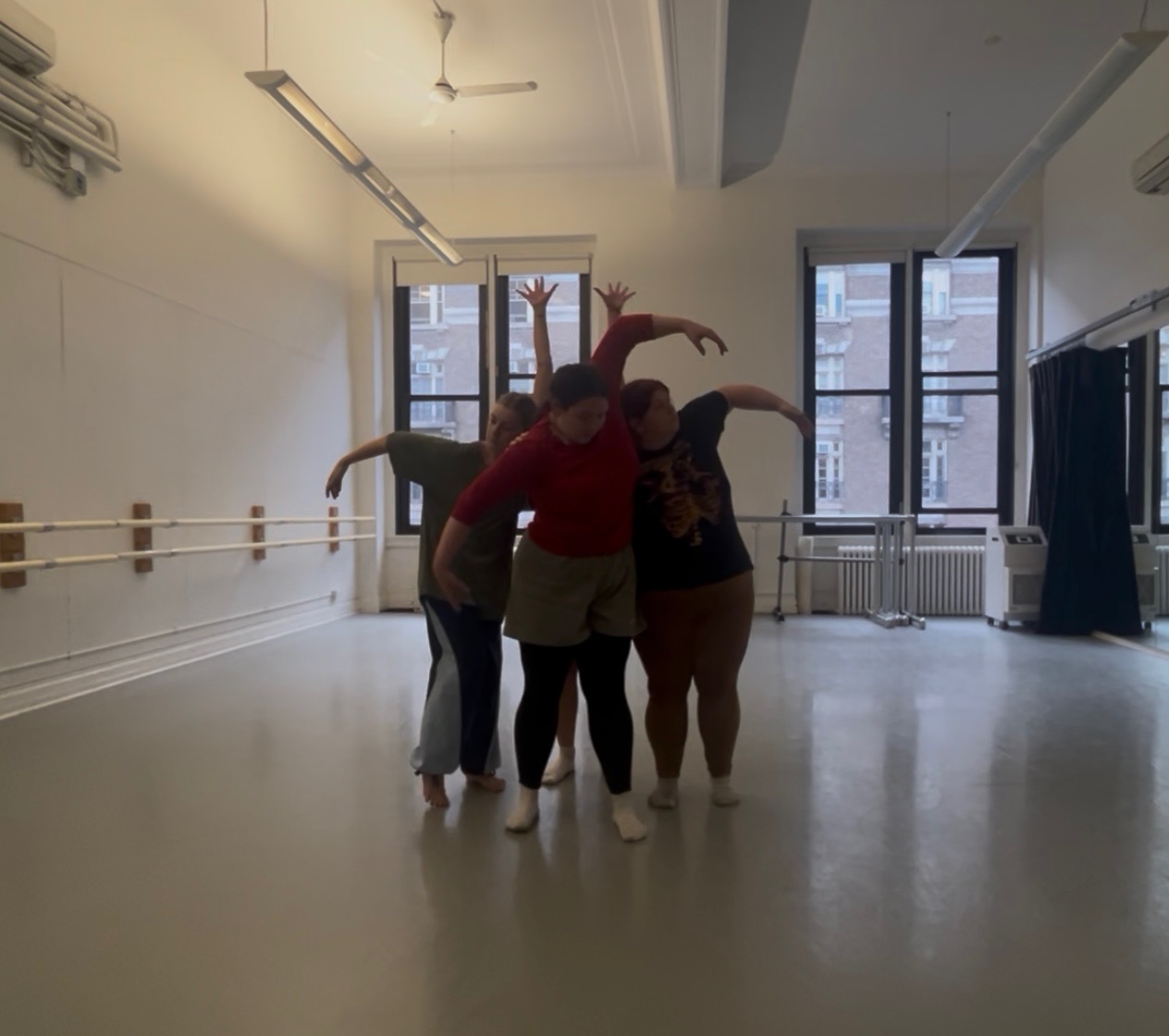
Harbor – June 2026 Performance – Open Dance Ensemble – Movement Research Open Performance Series
Photos from rehearsals
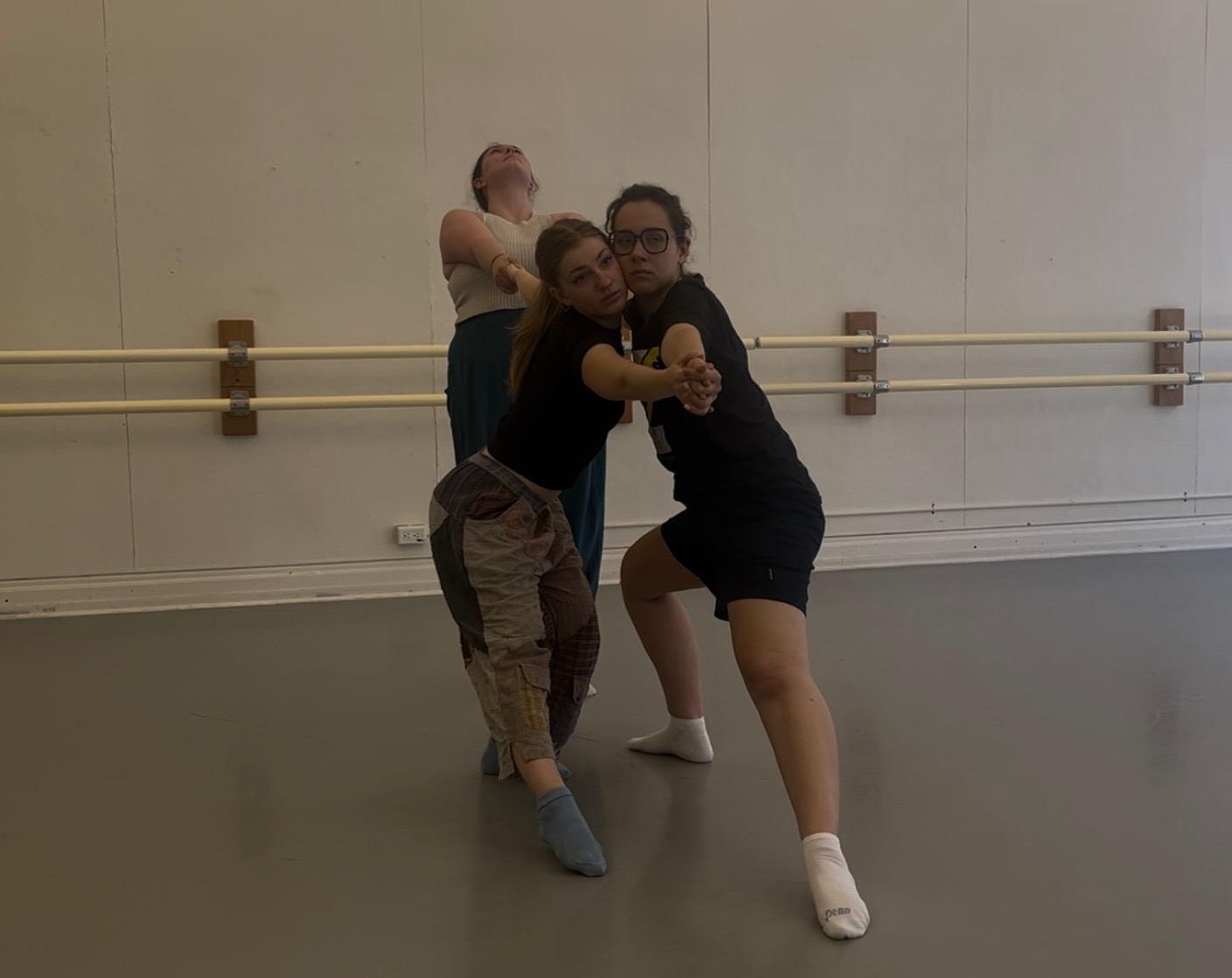
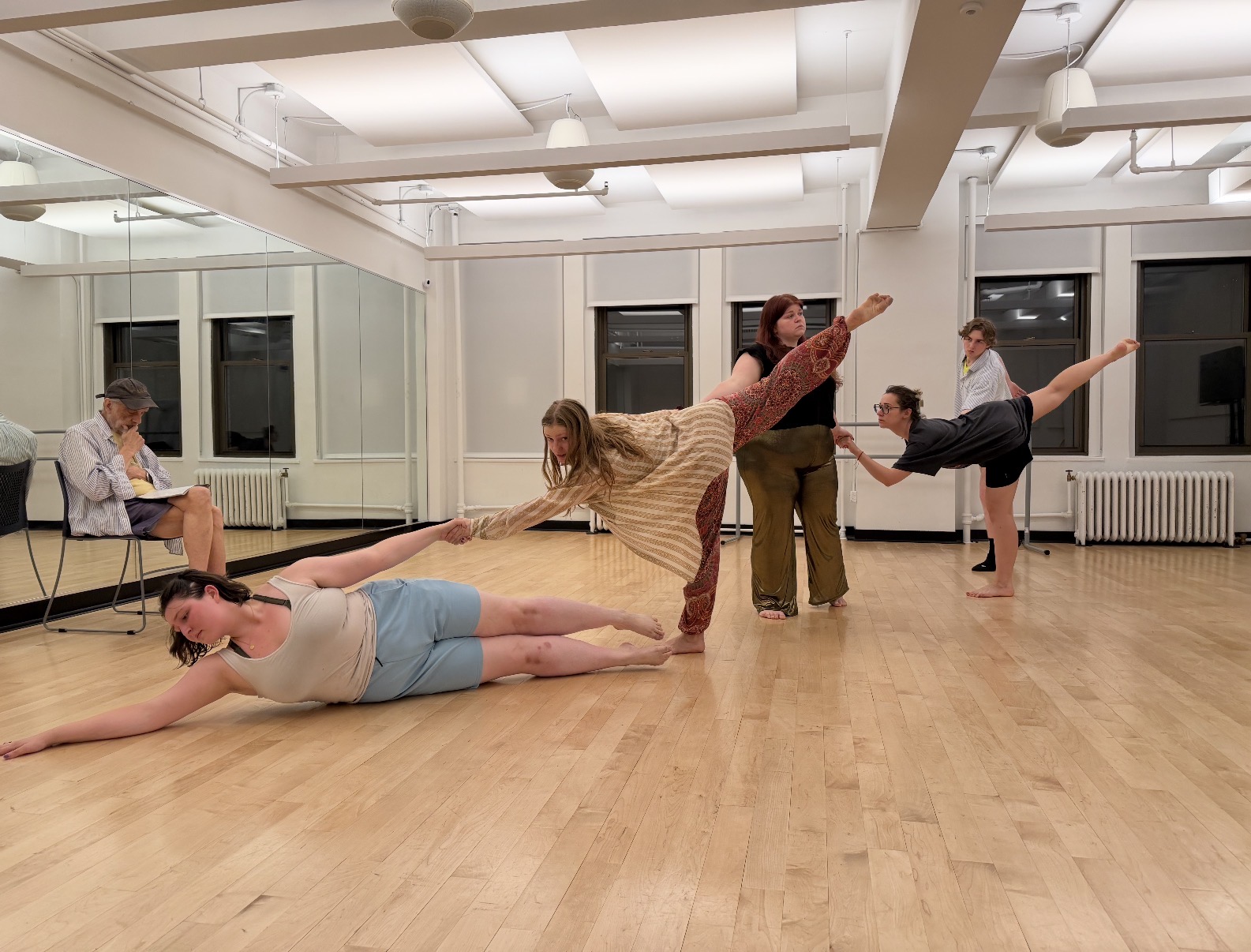
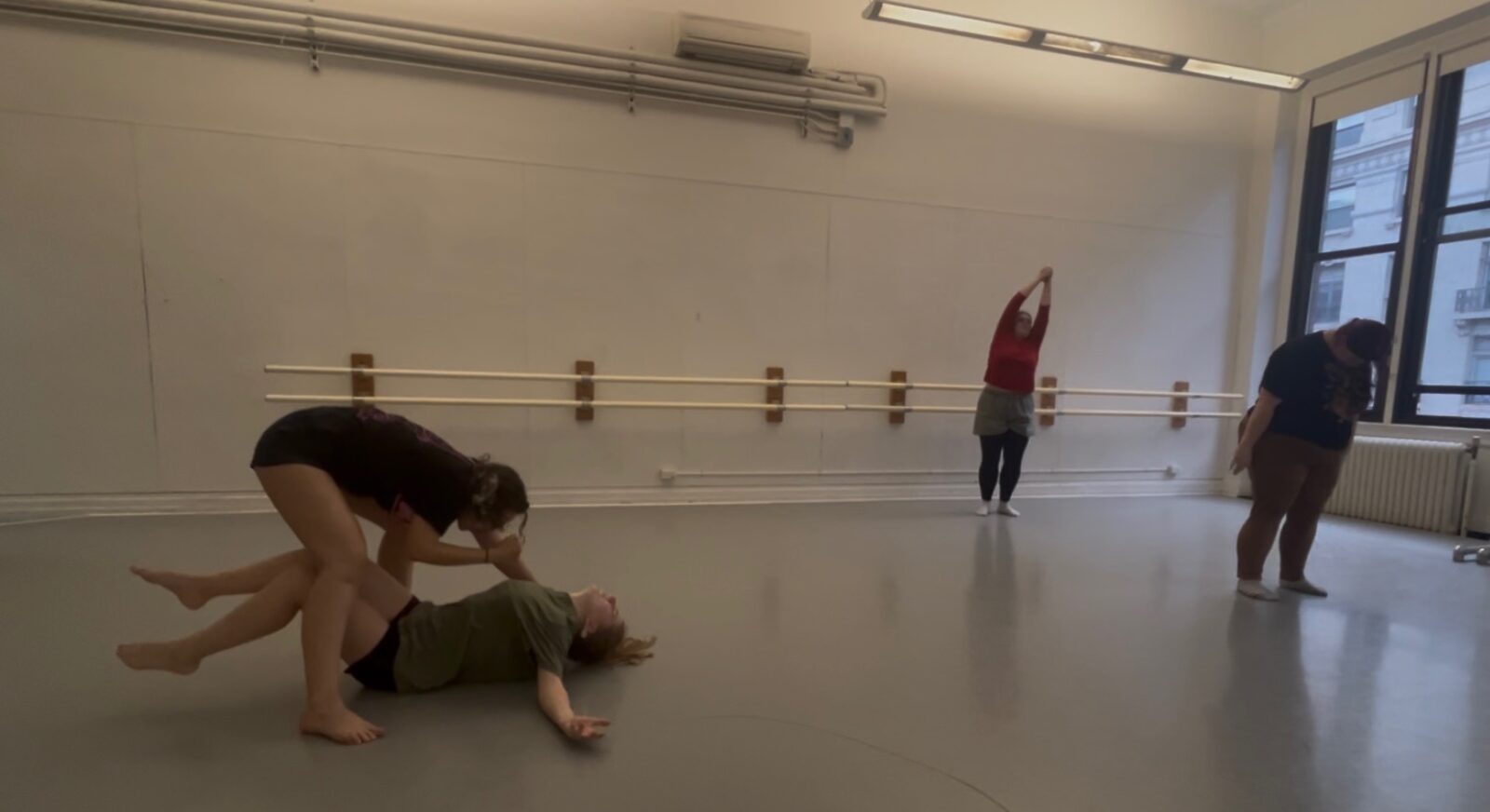
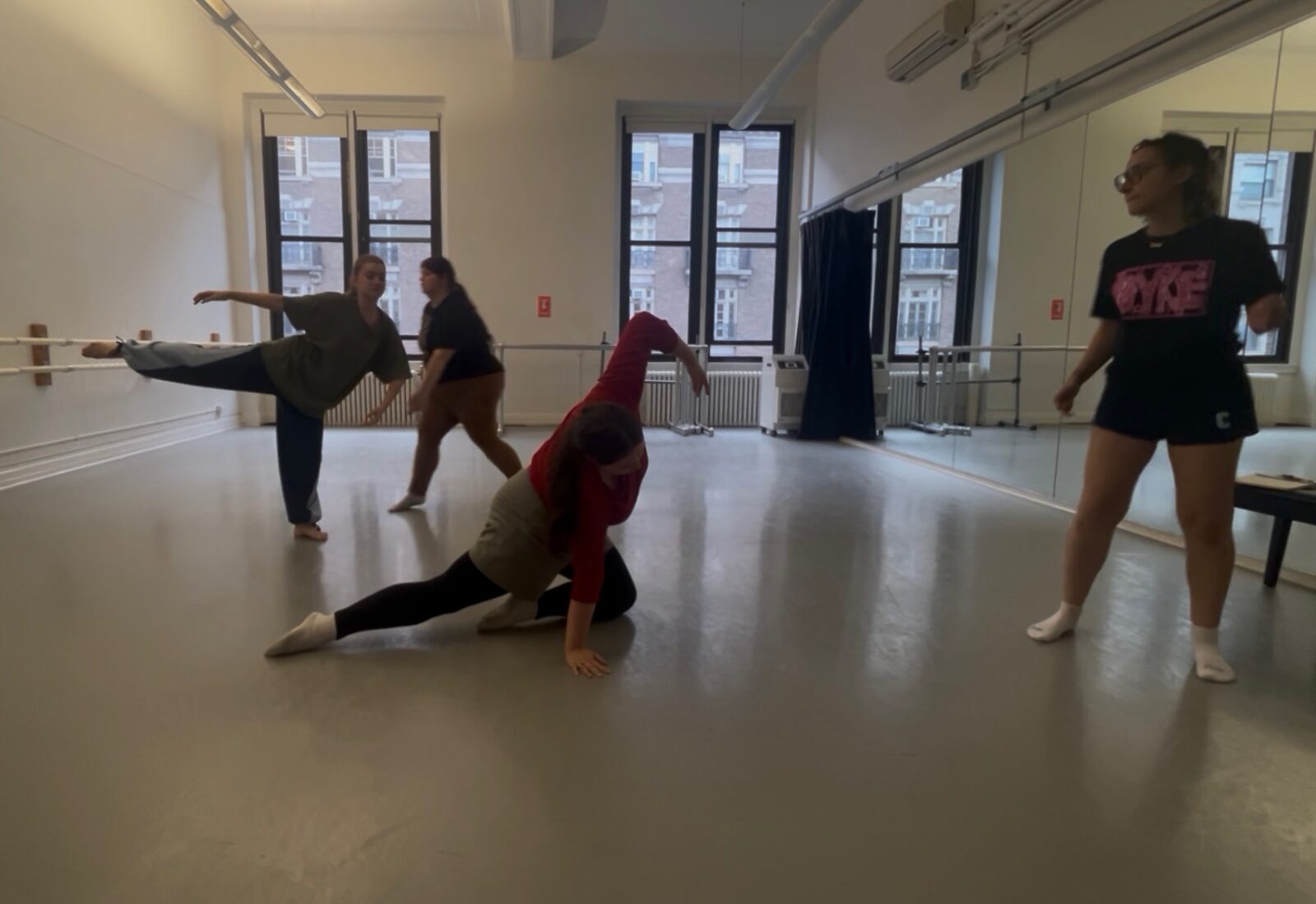
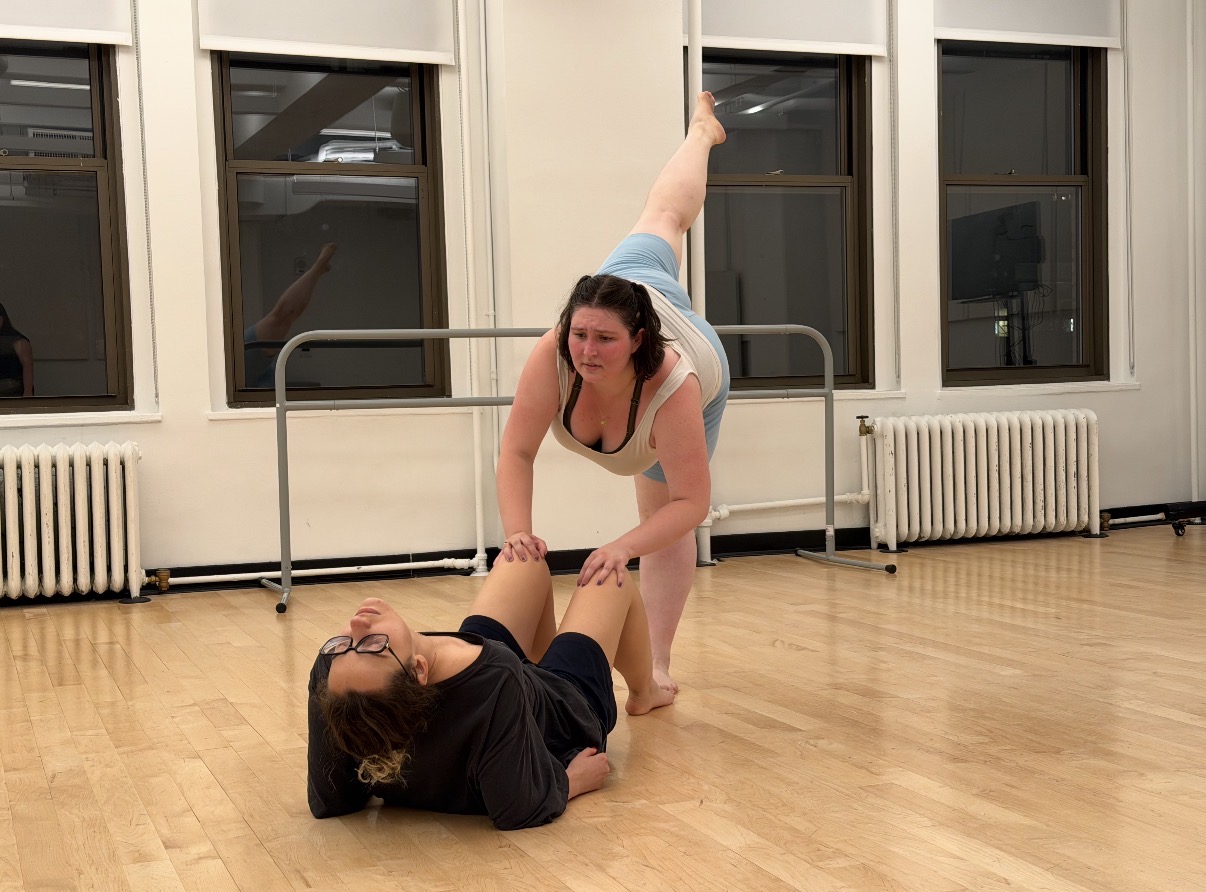
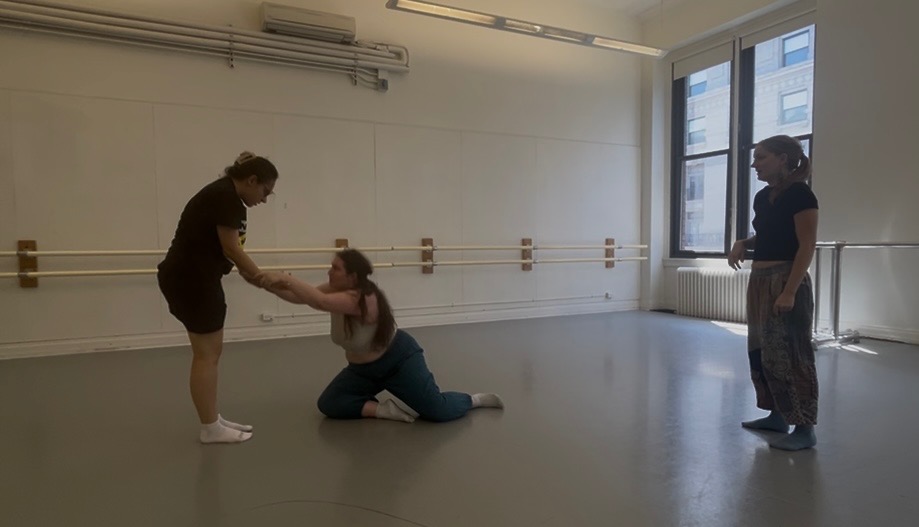
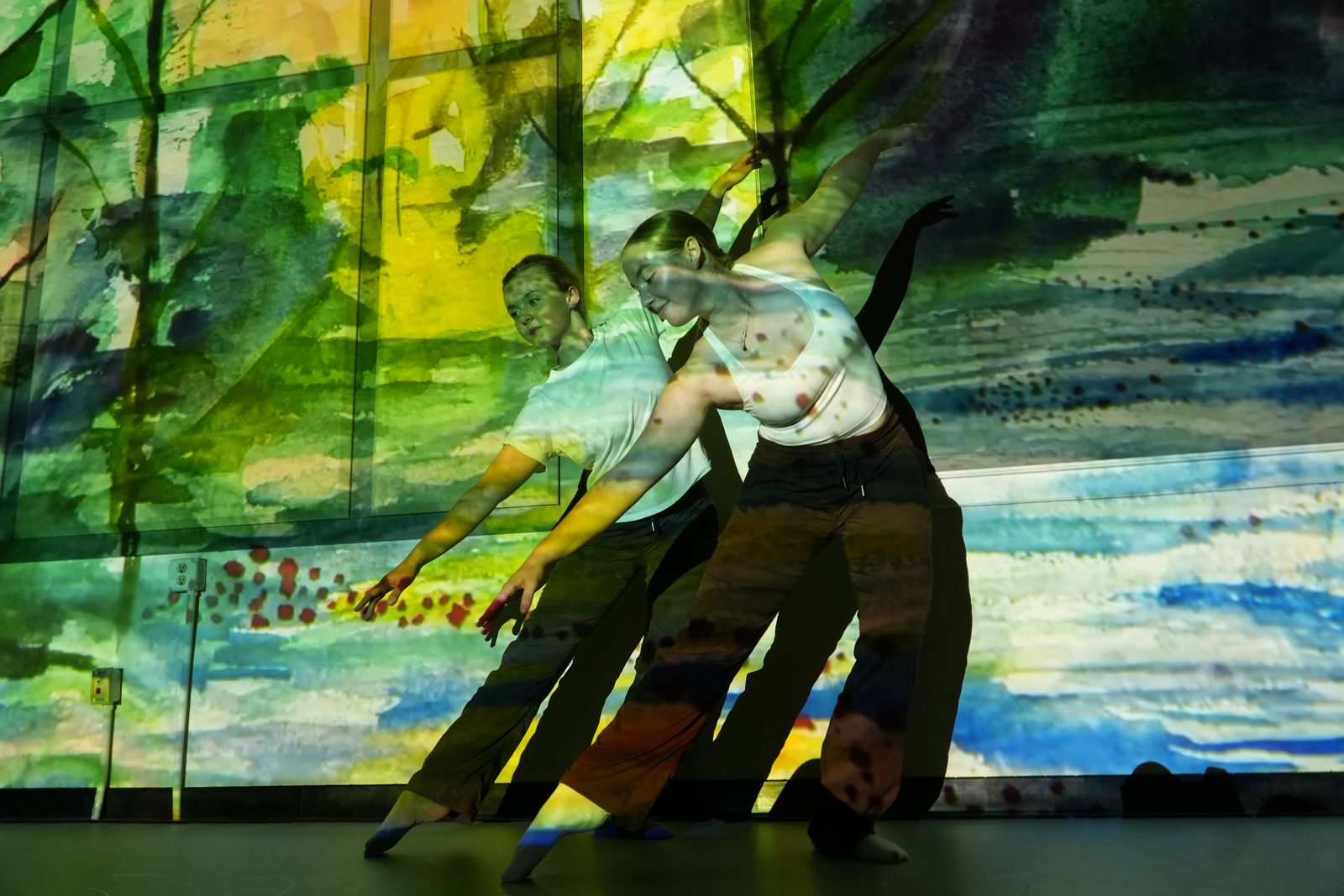
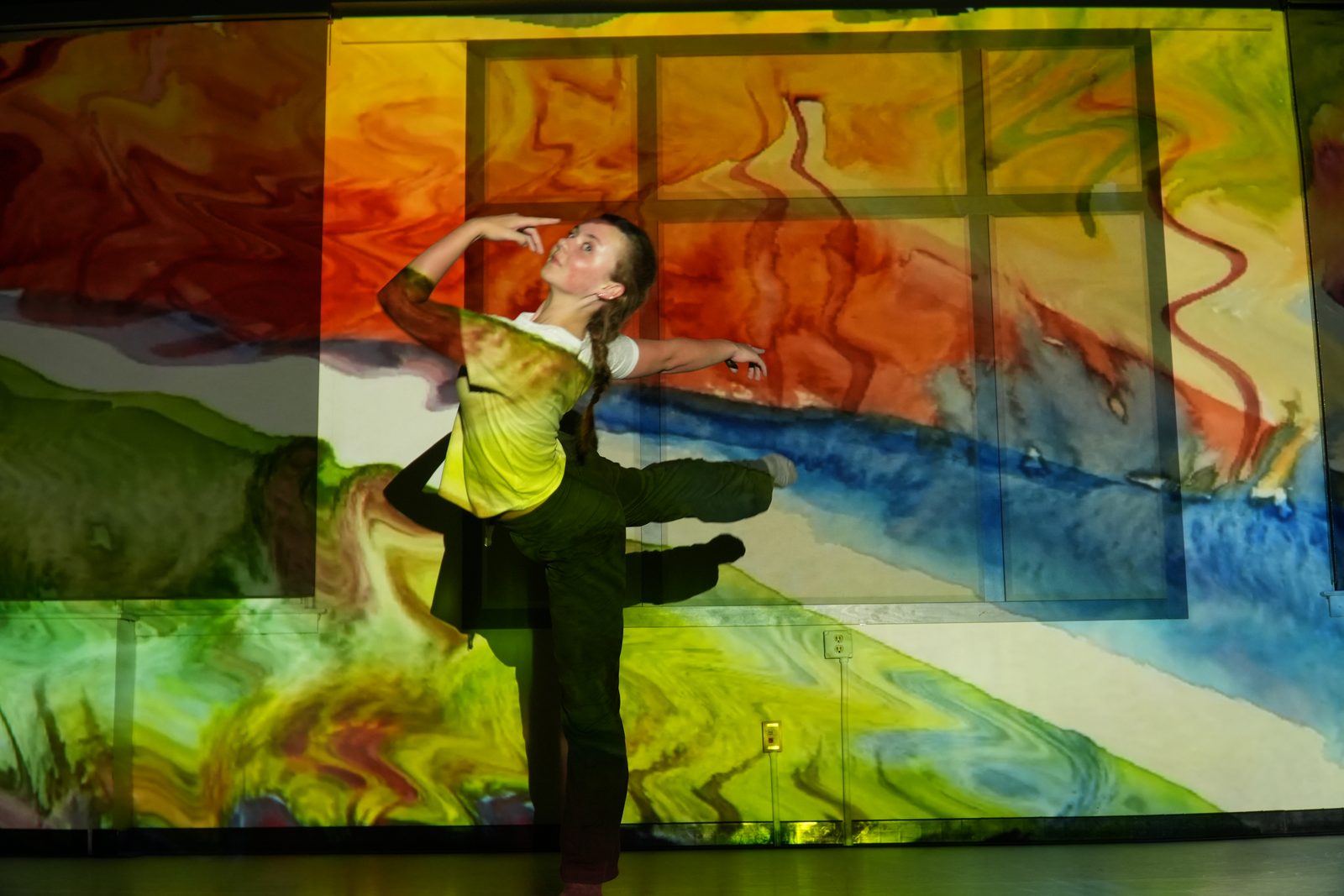
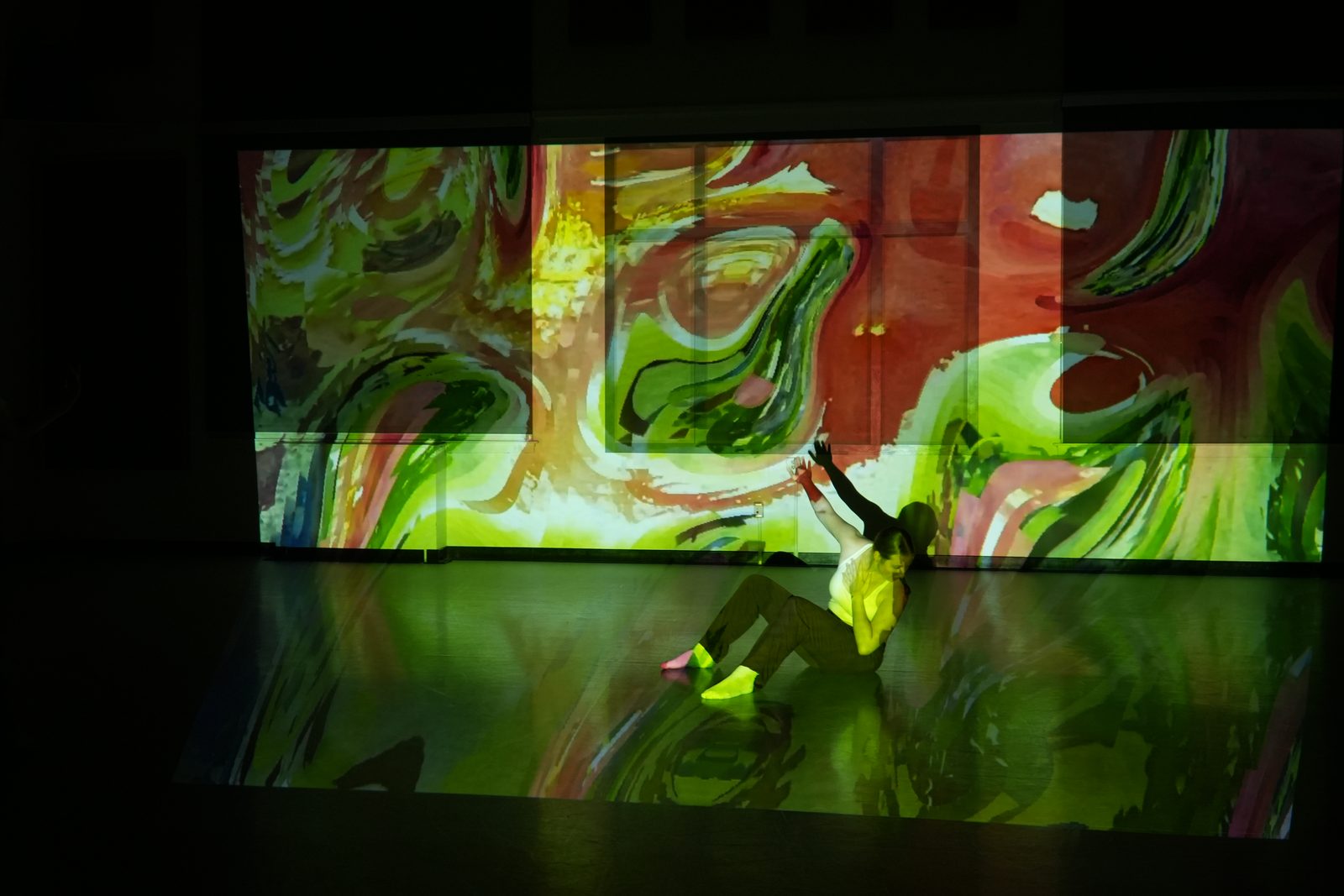
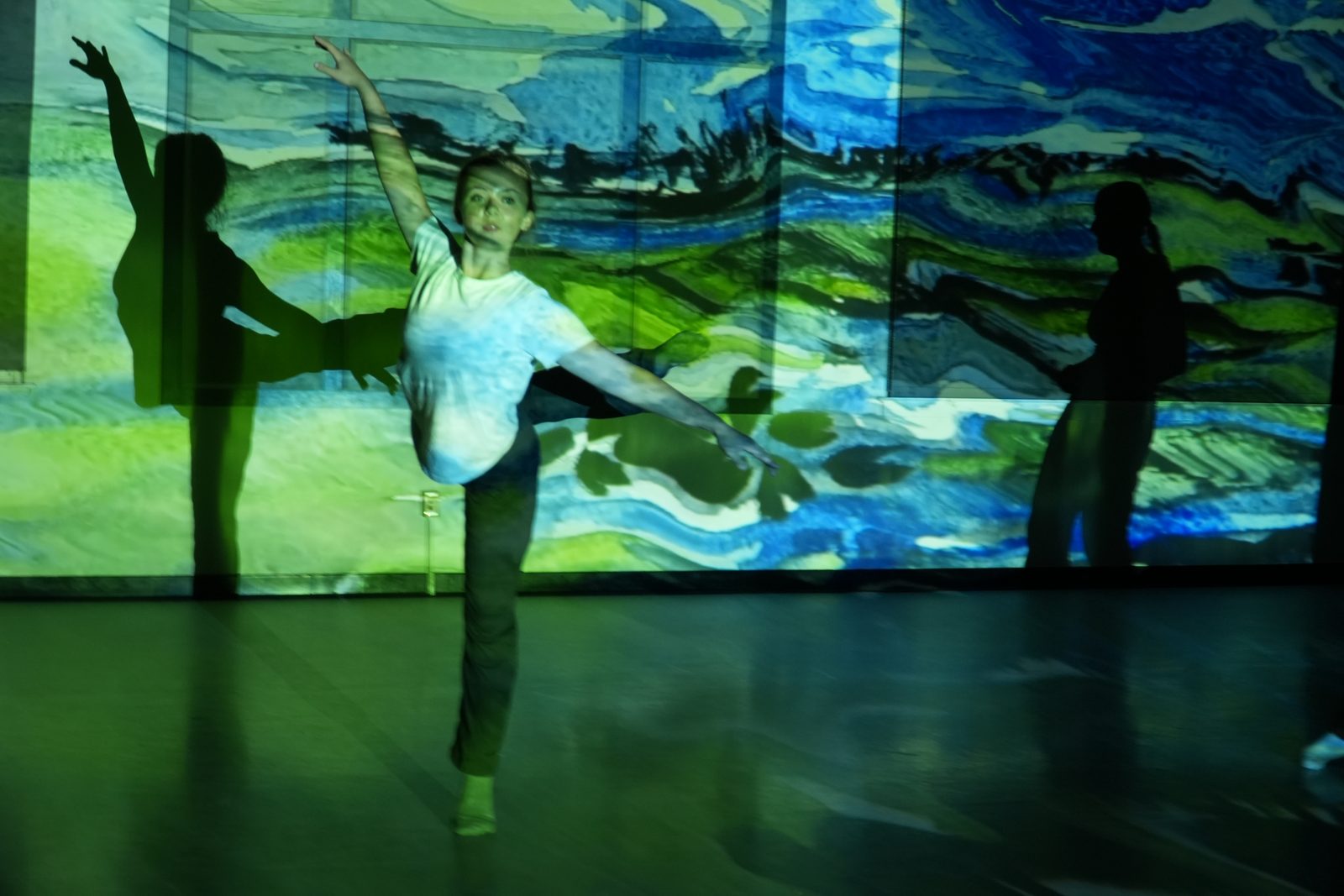
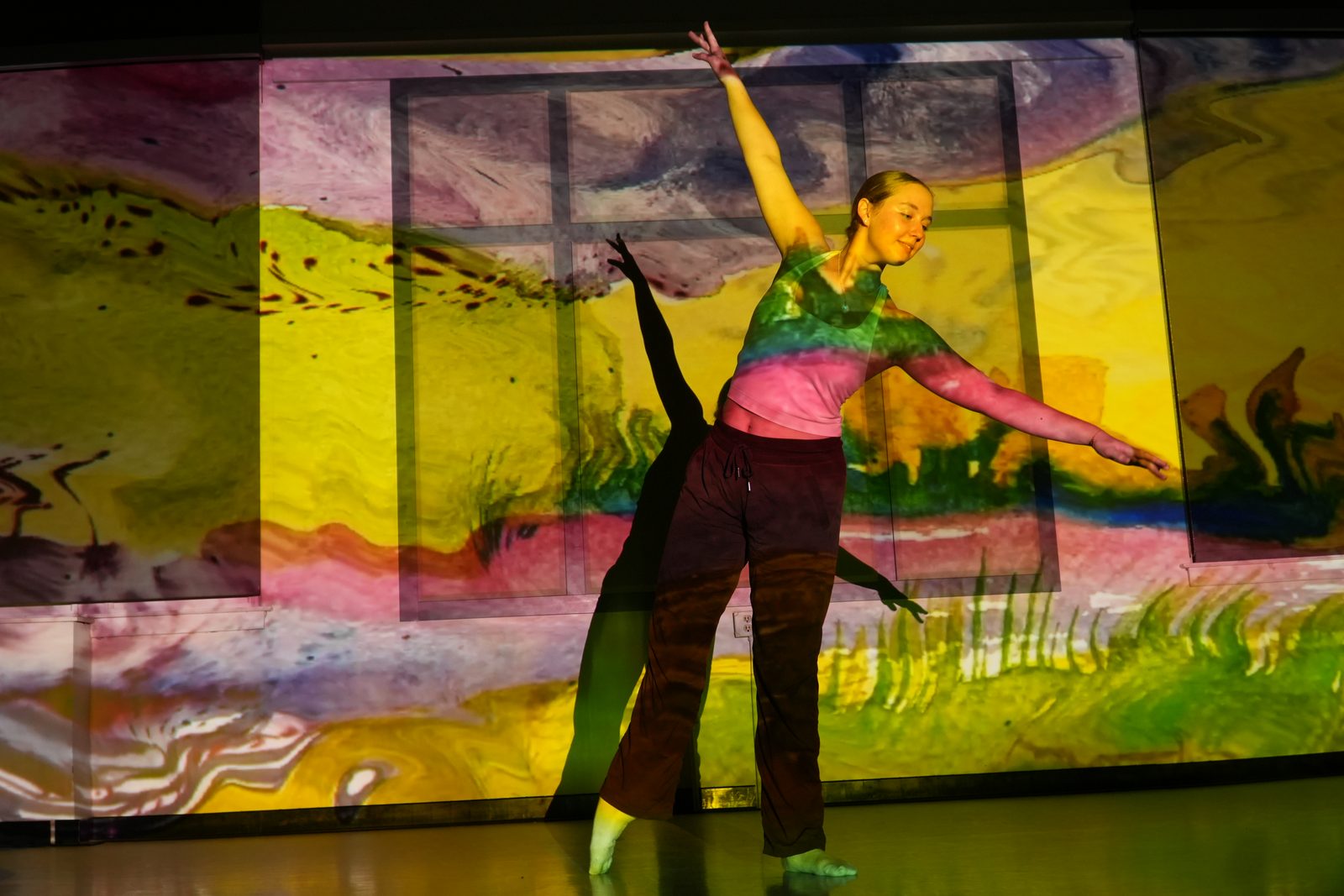
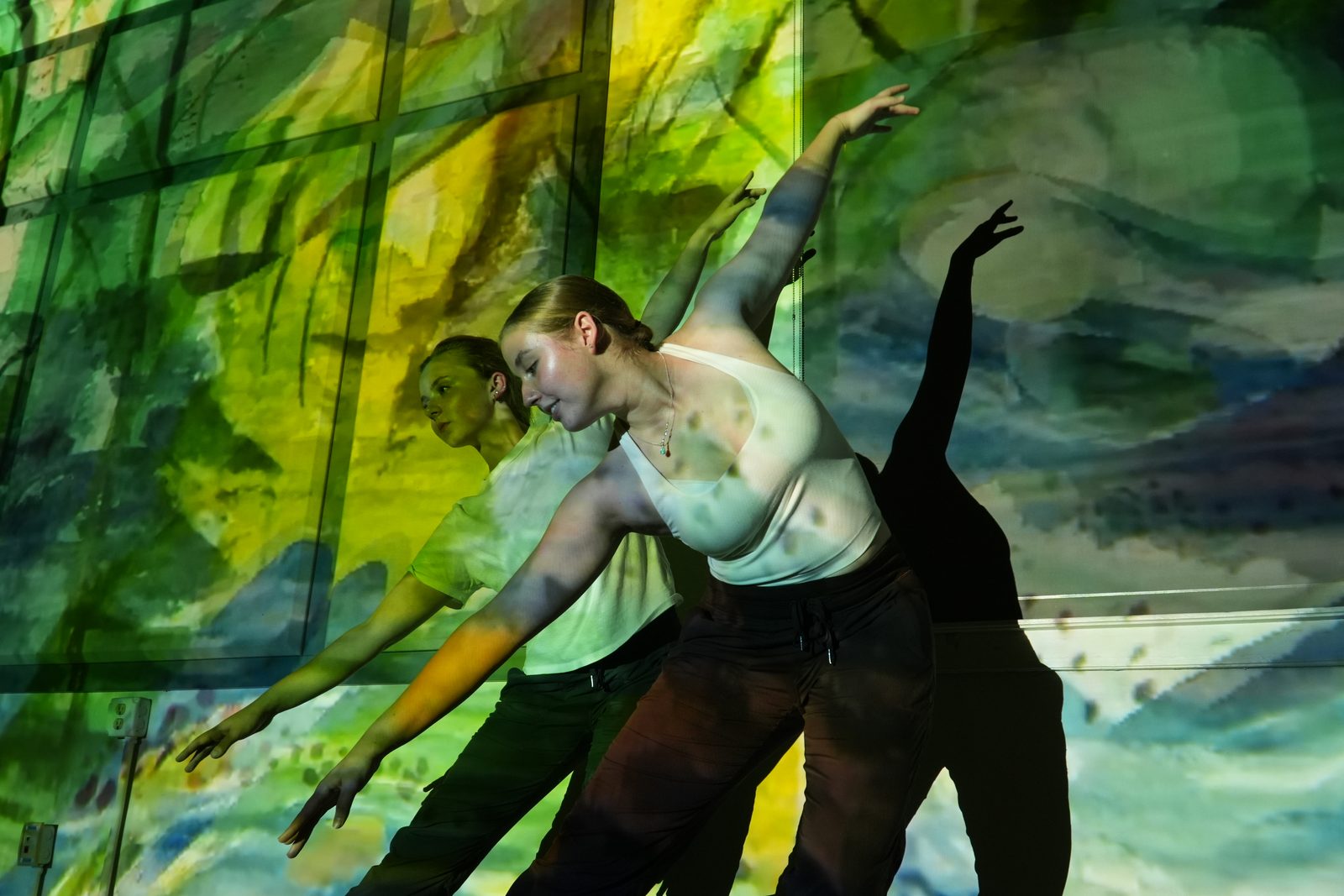
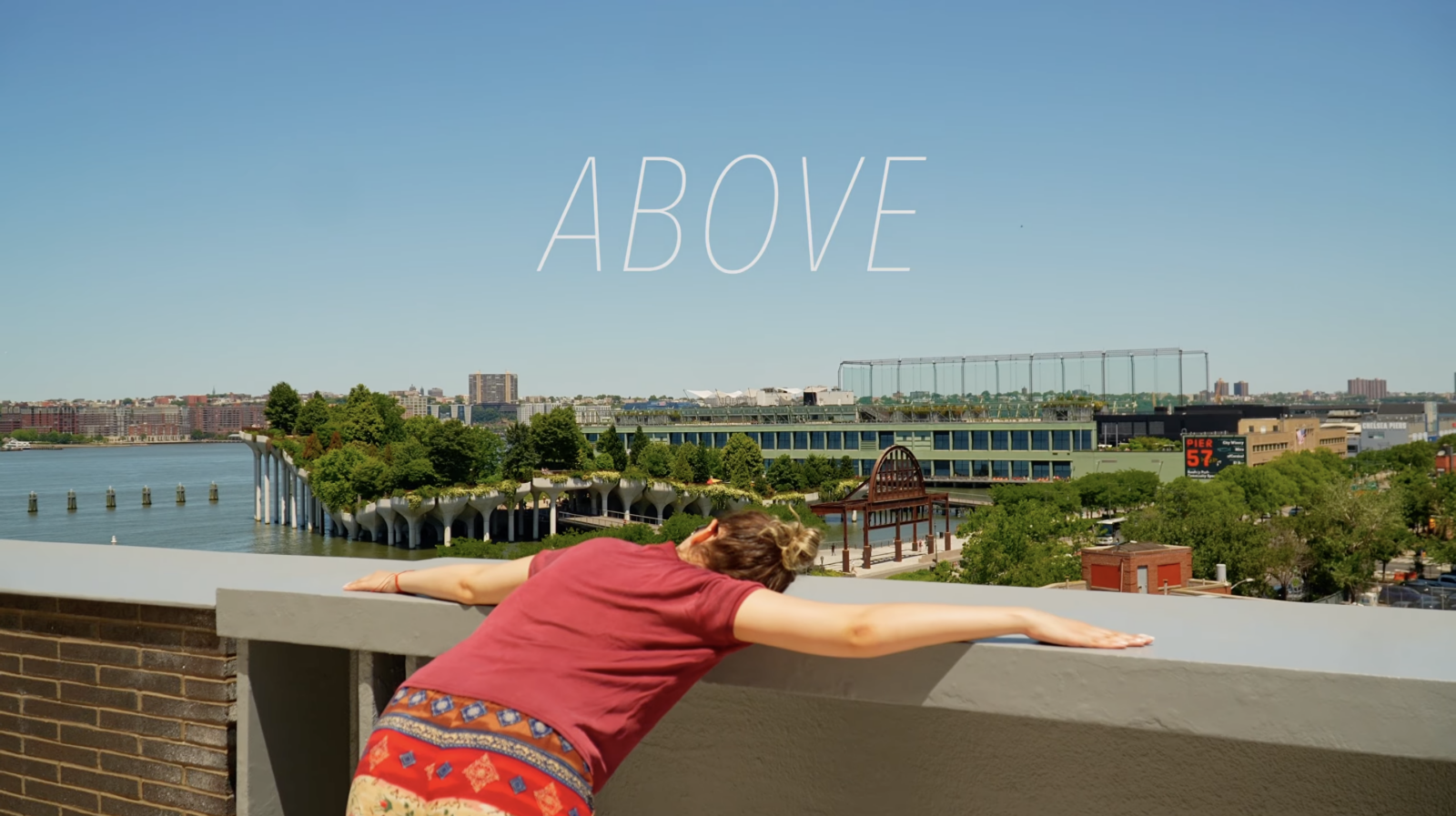
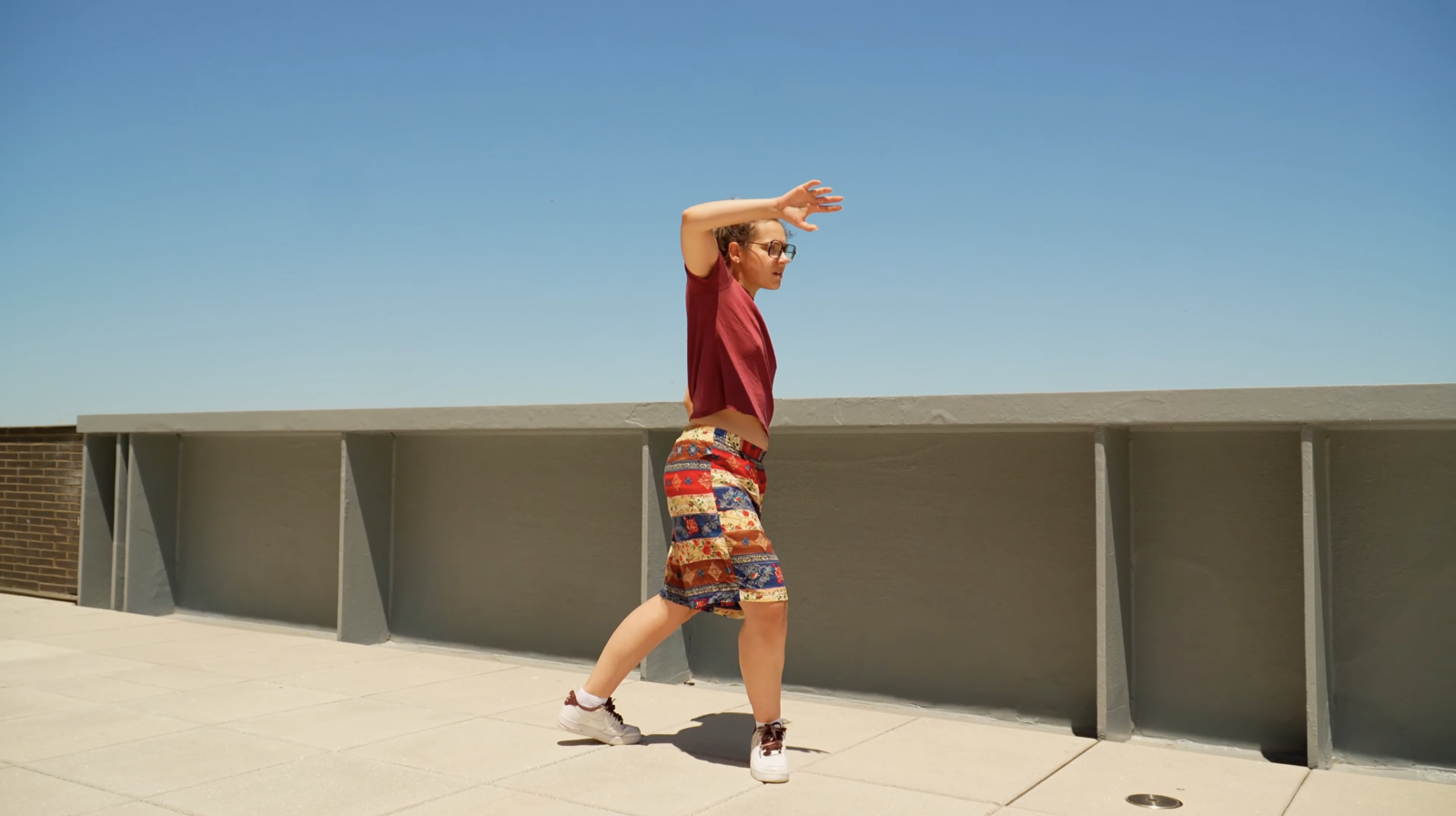
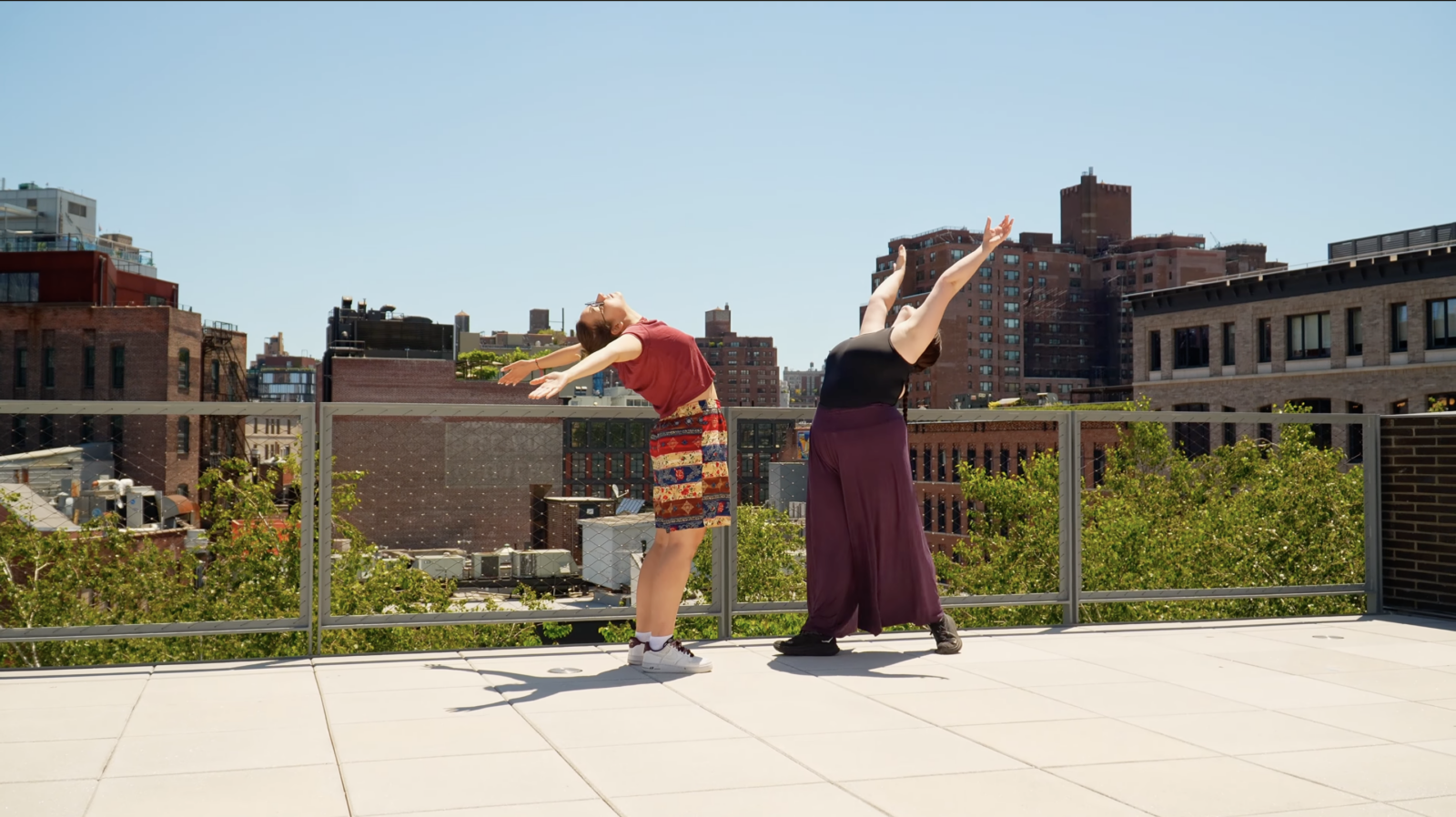
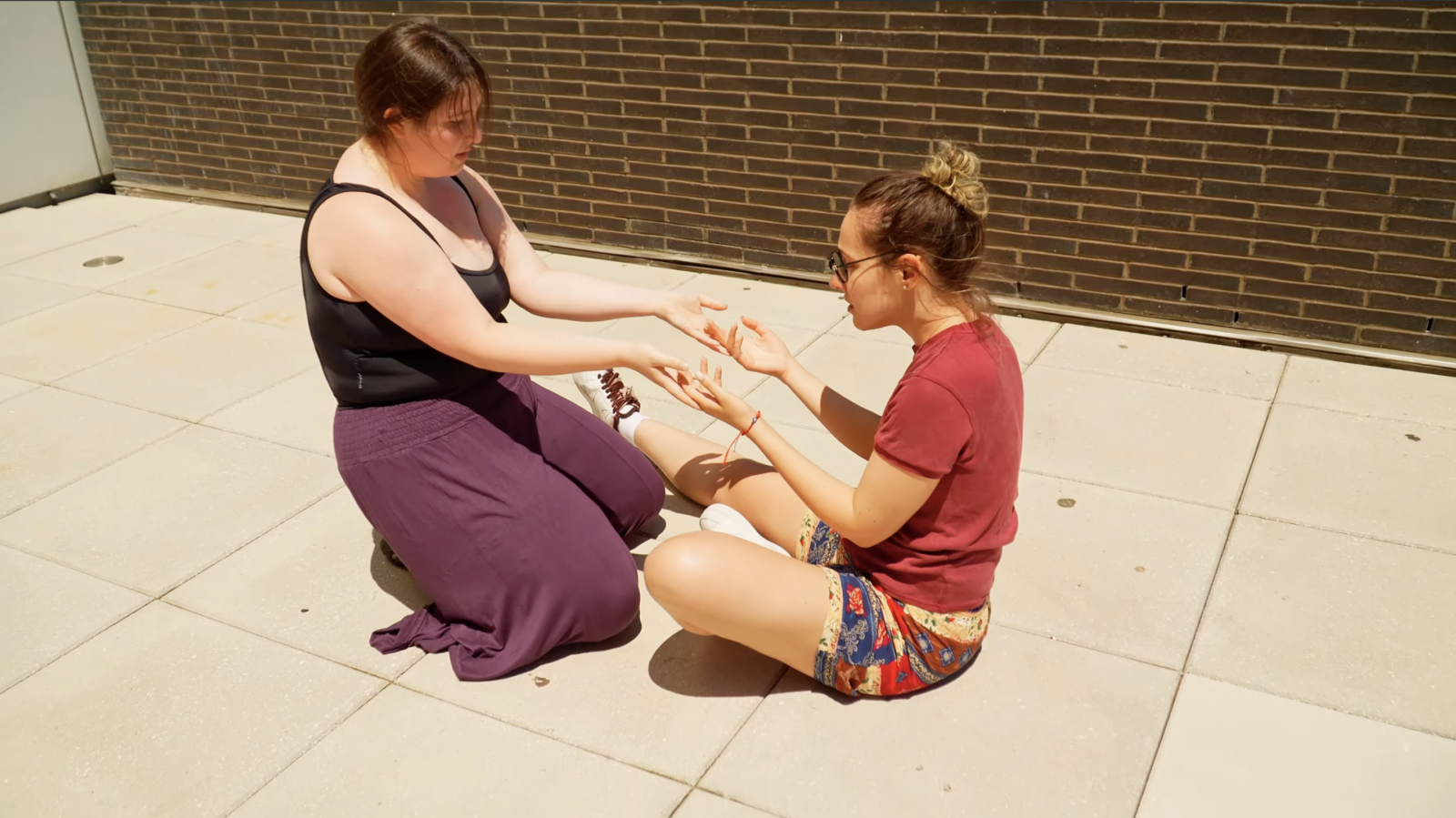
Above is a 10-minute screendance featuring two dancers whose introspective yet dramatic movements tell a story about seeing and being seen. In Above, motifs such as architecture, metal, water, sky are grounded through the film’s choreography, as well as a poem, Encroached, recited by one of the protagonists, about vulnerability through exposure to the elements. The film symbolizes the associations between sentimentality and materiality through the evolving relationship between the dancers. Onscreen, they look toward vast horizons, into the gaze of each other, and into the lens to meet the eyes of the onlooking audience, to see the world anew from high vantage points of architectural remnants.
The music is Fantasy of the Forest by Rory Bricca, a piano piece about how our own fate is tied to that of the planet. Fantasy of the Forest is featured in “Palette to Purpose,” a multi-sensory art exhibit to fundraise for environmental advocacy and cataract surgery, with the motivating question prompting the artists being “What is your ecological vision?” Bricca’s composition features “beautiful major triads in the right hand being interrupted by a dissonant bass melody,” to “capture this juxtaposition between the beauty of nature and the terrifying power that our species has to destroy it.” Bricca’s piano piece is divided into five movements, which guide the film’s edit: “Somber clouds shifting across the sky, An open hand enshrouded by darkness, Tightly bound red string of fate, A radiating glimmer of hope appears, and The world lies in our hands.” // On Rory Bricca’s Piano composition
Directed, Choreographed, Filmed, & Edited by Lily Selthofner
Dancers: Adara Allen and Desislava Kreminlieva
Piano composed and performed by Rory Bricca – Fantasy of the Forest
Poem Encroached written by Lily Selthofner, performed by Desislava Kreminlieva
Written Statement, Corresponding Poetry and Paintings
The archer’s motions of preparation, release, and impact are meditative philosophies that guide our movements through achieving our goals. Aim Skyward turns toward hope and healing by being our brightest, most authentic selves. Its dynamic soundtrack of eight songs guides an emotional arc that corresponds to the blooming flower and the arrow’s flight. The choreographies are situated alongside three onscreen quotes from “The Way of the Bow” by Paulo Coelho. This film is inspired and supplemented by my own poem, “Sky-born,” as well as two paintings, “Blossom Essence” and “Where Air Meets Water,” below.
Aim Skyward weaves in subtle references to the history of NYC’s beloved Bethesda fountain, with the sculpture Angel of the Waters being the first public art commission in New York City by a woman, Emma Stebbins. An angel holds a flower with four dancing cherubs, figures that represent the qualities of peace, health, purity, and temperance, which the dancers in Aim Skyward bring to life. Rainbow textiles and loving choreography correspond with the statue’s queer history, including speculation that Emma Stebbins modeled the angel after her partner, Charlotte Cushman. Further, this film features dance in Central Park’s famous Sheep Meadow, a place of solace for countless New Yorkers where the iconic city skyline meets vivacious greenery and frolicking crowds.
A second pair of dancers first enter to the soundtrack of a documentary about photosynthesis from the 1940s, called “Gift of Green.” Aim Skyward coalesces into a montage of blooming flowers, digitally remixed on Hydra, a live coding visual synth, to illuminate their auric and kaleidoscopic essences. This approach is inspired by the watercolors of Swedish artist Hilma af Klint’s Nature Studies, her detailed botanical drawings with abstract diagrams made to reveal “what stands behind the flowers,” toward her conviction that studying nature uncovers truths about the human condition. In all, Aim Skyward draws from the works of Hilma af Klint, Paulo Coelho, and Emma Stebbins to guide the viewer through the arrow’s archetypal flight.


Accompanying paintings diptych: Blossom Essence, and Where Air Meets Water
metallic acrylic gouache on paper, 5"x 7"
developed as part of the research process for Aim Skyward
Sky-born

Archer, in premise near
arrow flutters forward–

bitter poison
lost to wind
as runner’s breath
and distant cries
in thin-winged descent.

Skyline softens
in veined constellations
O heliotrope bloom, steady my draw–
guide me toward fletched doves
who roost in wind-worn rafters
along vine-tangled roads

Summon me back
to the soil of care, yielding humility.
Cirrus petals catching dawn
innocent precipice of rainbow

quiet drawback, taut string and arms
aim my fashioned weapon, breathy
release into circular destiny
arc of uncharted return

Read the poetry chapbook Sky-born is excerpted from, Revenant // Windswept
Process notebook fragments:

"On the ground, I wondered if gravity would hold me here forever, or if Earth's circular momentum would take me away. The remaining, grief stricken, look towards the sun as a final trajectory. Only flowers know the littleness of a day; our eyes die to their time."

"I almost have enough memories to be happy. If only I could revisit them without losing the present. If only I could stay present without them slipping away. Arrows fly forward without hesitation, but with a preparation akin to underground root networks.

"Trees draw down their green through winter; what looks like withering returns energy to trunk and root, fueling generative rest and sheltering insects in fallen leaves. A flower bloom emerges from unseen strength: the stalk, like an arrow, grows against the wind; the archer is stronger for it. Plants reveal that the breath, beauty, and nutrients of life dance toward connection, toward intention. Bodies and choreographies, moving forward through time, are always informed by seasonal elements."
Featuring performers Adara Allen, Nadia Benes, Marissa Caldera, Sally Thistle, John Trunfio
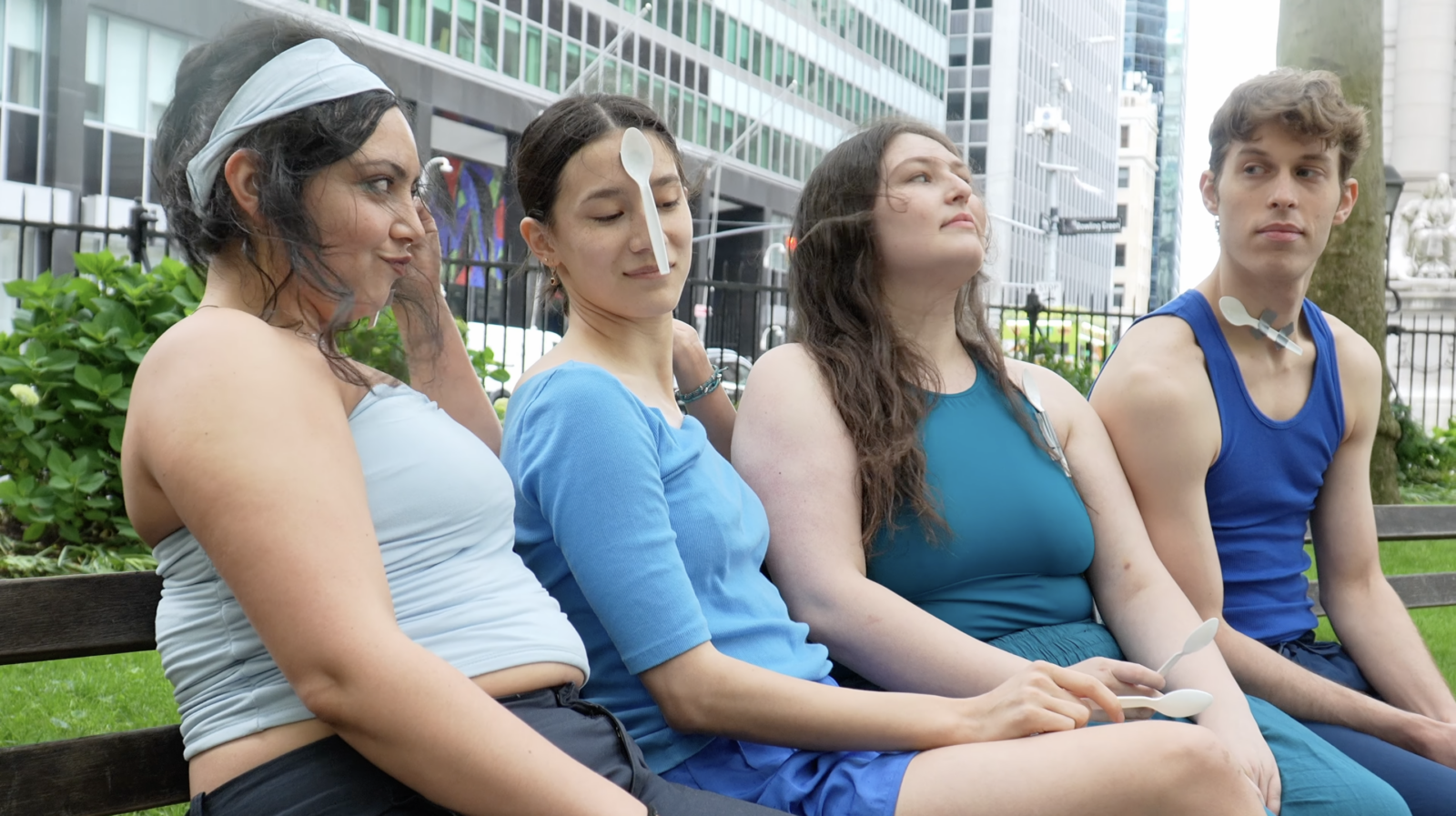
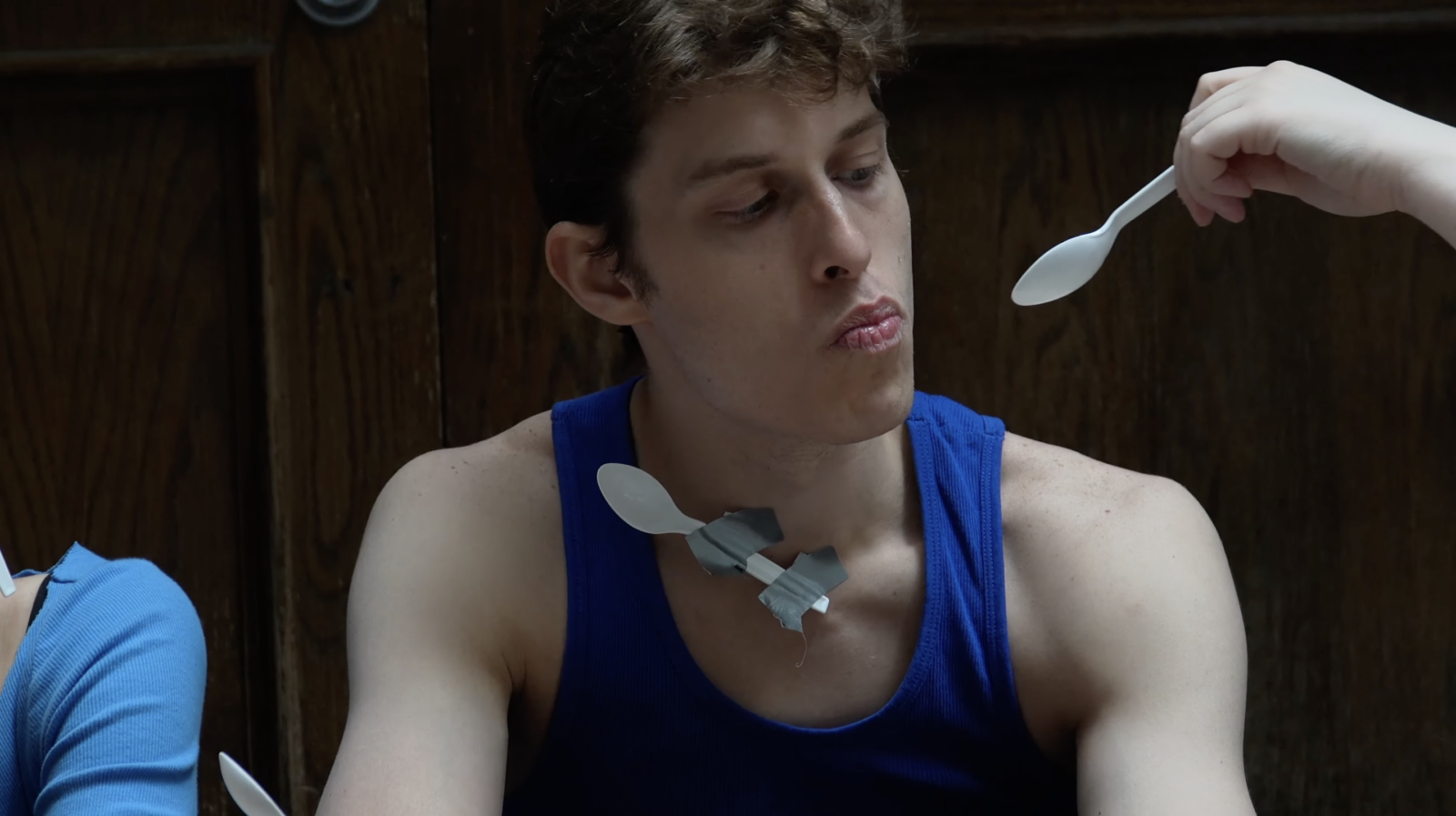


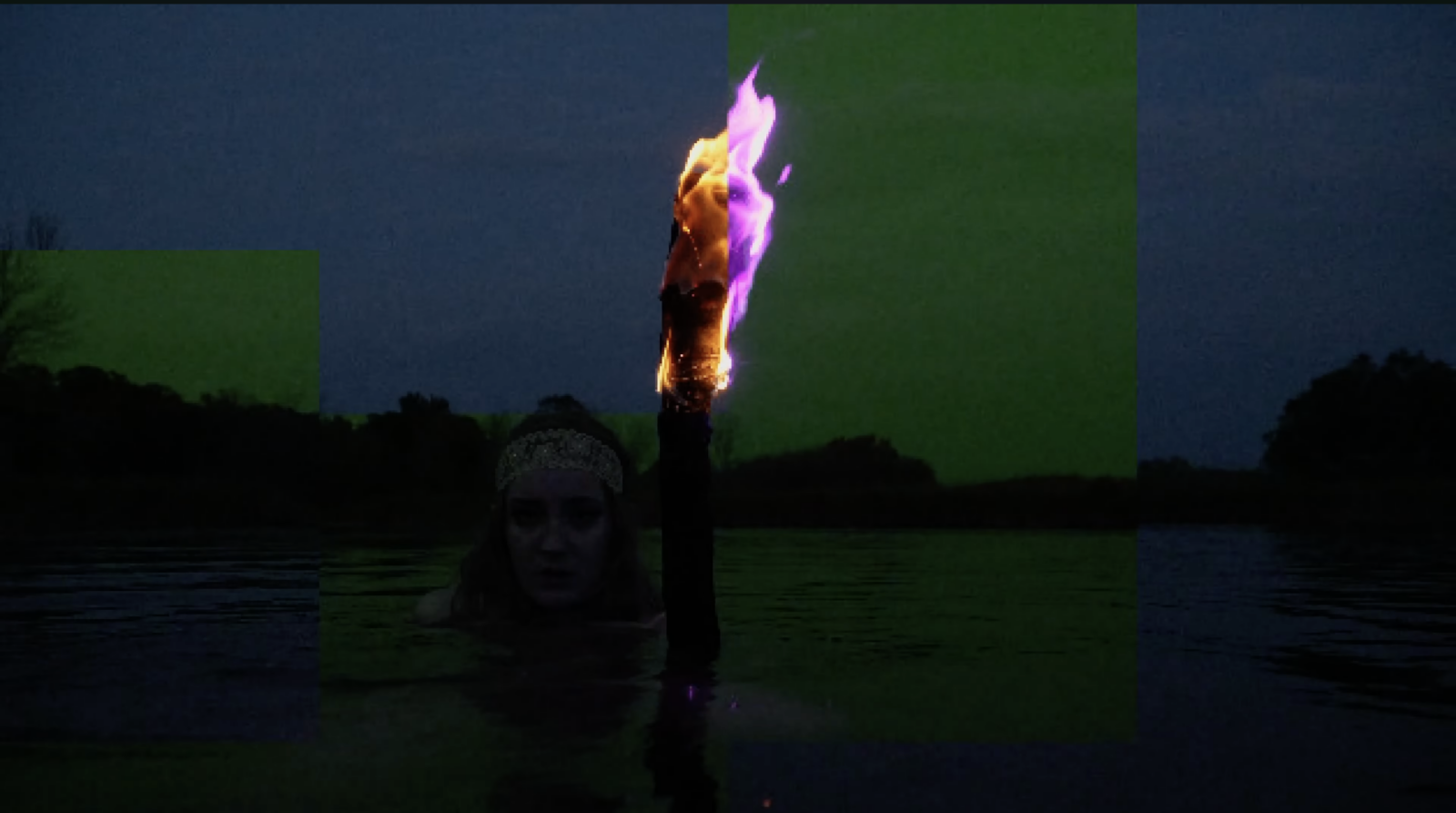


SPOONFED is a screendance responding to the discovery that the average human brain contains a plastic spoon’s worth of microplastics. Through eco-absurdism and psychedelia, six dancers express the polluted body through vogue and contemporary dance, to mirror society’s paradoxical responses of ignorance, dissociation, helplessness, dismay, and resistance. The polluted body is a filmic archive that evidences today’s pollution, power, and complicity, at the precipice between ecological repair and unsalvageable plasticity.
SPOONFED takes on the metacognition of material substances, with our brains as the host, asking why we live in cognitive dissonance with pollutants, rather than embodied harmony with nature. These creative epistemologies are paradoxically both futile, and necessary, to drive climate healing. SPOONFED portrays the dual modern meanings of ‘neuroplasticity’ by satirically juxtaposing the uncomfortable tensions between corporate-political greed and artistic, scientific, and cultural complacency and resistance. This film is a critical investigation on why plastic pollution has escalated to this severity, with no end in sight.
Symbolism of Spoons
‘Single-use’ plastic spoons as bodily adornment makes our internal contamination visible as the physical consequences of industrial toxicity and systemic complicity. These materials critique systems of pollution, while revealing the slippage between consumption and embodiment. What is more absurd than plastic spoons on faces is the fact that no substantial research or healing is implemented to address the rapid accumulation of plastic in our brains and bodies. Life goes on with indifference, scientists and politicians lag decades behind the necessary research and policy to combat plastic distribution. On the surface, SPOONFED represents the “consumption” of plastics through food and consumerism. Taking on an even deeper meaning, this film addresses the “consumption” of drugs, art, and online content on health and justice as modes coping with the realities of pollution. Further, the present consequences of being ‘fed’ controlled narratives, and ‘fed up’ with the damage of monopolized pollutant systems, are made visible through choreographies of spoon-feeding.
The spoon is also a powerful symbol evoked by those with chronic illnesses to represent the different energetic limitations one faces due to pain and fatigue caused by disease. Activist resistance to medical neglect at the hands of plastic pollution stands within a long history of struggle for accessibility and care at large in the realm of health justice. The spoon’s potency as a metaphor is only added to by the sicknesses that micro-plastics create in bodies. It is ironic that science communication’s quippy spoon metaphor on plastic predominates discourse when impactful research on how to remove micro-plastics is still far off, having very real bio- and eco-logical consequences.
With the rapid increase of plastic accumulation, found more in our brains than any other organs, Terrence Mckenna’s point that “we do not have centuries of gently unfolding time” to halt mankind’s self- and planetary-destruction rings especially true.
Symbolism of the Torch
The figure in the white dress carries a torch and moves between the archetypal dualities of day and night, and of land and water. This figure carries the fire of resistance, purification, pre-plastic ritual memory, and future’s potential healing. The torch is symbol of hope and transformation. Her eternal flame makes visible the revolutionary surge of non-extractive embodiment and harmonious eco-relations pulsing within each of us.
The primordial symbol of a torch is placed on equal grounds with the contemporary plastic spoon by satirizing the artist-revolutionary. Artists have, as Mckenna says, largely failed to perform their societal role of “upholding a moral vision.” The torch represents the sheer futility of honest efforts to fight against the material consequences of greed and control. It represents the dissonance around these shortcomings and inabilities of not only artists, but also of scientists, politicians, and activists to slow the momentum of environmental destruction. For example, eco-corporatism and government infiltrations of social movements are power systems that seek to define the very meaning and value of humanitarian work, while simultaneously perpetuating and profiting from the oppression at hand. These monoliths render resistance ineffective, while minimizing and normalizing the root issues in the publics in a brainwashing ‘feedback’ loop of ‘spoonfed’ pollutants and narratives.
Political theorist Hannah Arendt understood freedom and action as one, and individual freedoms as modernly being governmental. SPOONFED prods at this ‘elephant in the room:’ the exploitation of activist bodies by governing bodies, with a 50% increase in brain plastics from 2016-2024, as an alarming example.
Audio: “Message to Artists“
Terence McKenna’s 1990 “Message to Artists” asserts the value of creativity as planetary intervention. His words ring timelessly true; Mckenna positions artists as required respondents to planetary crises. He says that artists must intervene where science, industry, and governance have failed to respond or research. Mckenna’s vision is for art to innovate at the cruxes between the sectors that cause and perpetuate climate pollution, through real-izing “the good, true, and beautiful.” He urges the importance of meeting the world of nature through psychedelic creativity to forge new healing pathways.
Thirty five years after he gave this speech, whole new worlds of meaning emerge looking back on his words from a time of unprecedented ‘neuroplasticity.’ SPOONFED’s glitchy crossroads place discourse directly on the absurd essentialist ultimatum between criminalized healing drugs and normalized toxic pollutants. The disregard and controversies surrounding these are productively revealing as societal mirrors on taboo bodily substances. The satirical nature of SPOONFED provokes an unsettling discomfort, scrying into contemporary lack of agency, and even awareness, regarding issues in our own bodies. Layers of deeply genuine sentiments, with the juxtaposition of cliches, exaggerations, and paradoxes, portray multi-sensory post-post-ironic critique of the infrastructural and environmental shortcomings of our civilization.
Location: NYC’s Wall Street
The six dancers pose around Wall Street’s famous Charging Bull statue, to emphasize the connection between economic growth and plastic waste. They ironically dance right outside of the Trump tower in NYC, wearing blue, yet not interacting with the building nor making the location filmically clear — reclaiming not only Trump’s land but also his control of narrative by treating his name and building as irrelevant. SPOONFED combats this administration’s propagandistic mis- and dis-information, that have furthered global bodily violence and pollution, by re-centering the grave realities of the scale of complicity and ineffectiveness of environmental regulations in the US. SPOONFED also touches on how Americans are too often naive to how US industrial wastefulness causes disproportionate damages in health and wellness for global populations.
Method: Screendance as Political Response
SPOONFED exhibits merely a small slice of the value of art as research. In particular, this film employs screendance as a method to make unprecedented global challenges visible and politically compelling. As a screendance, this work brings the primordial poetics of the body, like the flame, to meet the modern introspective and documentary capacities of film. In SPOONFED, screendance is used to track contamination, dis-ease, and the imaginative capacity of flesh and spirit to respond in eco-logical harmony. This film’s discursive merit comes from conveying a poignant, critical arc of emotional expressions that reckon with the complexities of living in environmental destruction, toward the goal of underscoring how cultural, intellectual, and policy responses to counteract bodily pollution are marginalized and discredited. Screendance here is a mode of critique that makes visible the embodied, lived realities of pollution’s invisible absurdities. These sorts of works can resonate and catalyze healing in individual, ecological, and institutional bodies — influencing both community practices and policy outcomes. Health is deeply tied to harmonious bodily relations with our environment; we co-create healing with one another, landscapes, and materials from plastics to psychedelics.
Elemental Embodiments: Character Symbolisms
The six dancers wear shades of blue and dance in ensemble. The color palette references that the human body is primarily composed of water, and signals alignment with aquatic ecosystems that are also heavily polluted by plastics. These bodies form a collective, fluid unit that mirrors and disrupts normative movements of “consumption” — just as their spoon adornment ruptures ignorance of the body’s plastic pollution.
While the dancers in blue are quintessentially exploring what it means to be aware of internal pollution in the present — the solo personages, in a white dress and yellow jumpsuit, represent the teetering futures between freedom from plastic, destruction at its hands, or something in between as nature adapts. This uncertainty is digitized via glitch aesthetics that mimic eco-delia: the transcendental, psychedelic-esque experience of emotionally and somatically meeting nature’s aliveness. These mythic personages convey transcendental emotions, as the states of consciousness of higher dimensions associated with psychedelics, art, and nature — healing modes becoming increasingly inaccessible thanks to plastic in our brains.
The figure in the yellow jumpsuit appears in natural spaces and performs with clear plastic utensils. She represents nature’s longstanding elemental cognizance of our pollutant crises outside of human epistemologies. She also represents how humanity must reckon with ancient ecological relations in a new light — and let nature’s coherence prophetically usher our transformation in the wake of crises. Confined to the pictorial through quick cuts, her fragmentation represents the limitations of ‘the new’ nature and humanity. Built from timeless archetypal myths that emerged from ancient eco-delic relations, alive within embodied knowledge, and altered by plastic’s ubiquity in biological systems, the clear plastic utensils sway in the breeze like plants in her hands.
Together, the watery and firey personages of SPOONFED show how dance is an elemental transmutation, that choreographically builds from mythic archetypes in the universal unconscious to address contemporary crises, as symbolized by the plastic spoon. This satirical investigation asks, will Mckenna’s “birth of a new kind of humanity” be one of embodying the transformative healing wildfire of the eternal flame? Or one of embodying plastic, that dwindles our conscious experience to cogs in our own, and the Earth’s, ecological collapse?
Hello, thank you for watching! This is an overview of my major collaborative art direction projects 2022-2024.
To learn more about the projects shown here, visit these links:
Afterlives: An Album of Interviews, Poetry, Music, Dance, and Nature
For more information about Afterlives
Director/Producer/Interviewer: Lily Selthofner
Cinematography by Charlie Caestecker, Noah Hanson, Julia Haynes, and Lily Selthofner
Editing by Lily Selthofner and Ray Baker
Music by Rory Bricca, Noah Hanson, Daniel Weitz, Austin Krentz, Maria Shaughnessy, and Soul Online
Poetry by Jessa Faye Moverman and Lily Selthofner
Poetic Narration by Ray Londowski, Desi Kreminlieva, Eric Butler, Lauren Calvin, and Lily Selthofner
Dancing by Lily Selthofner, Kai Nakayama, and John Trunfio
Painting by Ray Atlas
Interviewees: The People of Washington Square Park, Al and Lisa Baker, Leslie Polk, Eric Butler, Lauren Calvin, Josh Selthofner, Elizabeth Lee, Dylan Blue, Katherine Francis, Jessa Faye Moverman, Julia Haynes, Noah Hanson, and more


Acqua Alta: Show Description, Cast List, Poster
Acqua Alta show program booklet
Director, Choreographer, Dancer, Writer: Lily Selthofner
in collaboration with the cast
Dancers:
Adara Allen
Marissa Caldera
Nina Kulkarni
Lynn Wilcox
Dancer and Singer: Maddy Manning-Bi
Dancer and Narrator: Moksha Akil
Cellist and Guitarist: Daniel Weitz
Narrator: Eric Butler
Composer and Pianist: Rory Bricca
Composer and Musician: Jane Meenaghan
Singer and Musician: Makae Brieschke
Lighting: Isabelle Cowen, Sophia Ling
Costuming: Lily Selthofner, Adara Allen, Barnard Costume Closet
Venezia Scalzo film credits
Director, Dancer, Poet, Voice, Editor:
Lily Selthofner
Cinematographer: Anna Kasun
Composer and Pianist: Rory Bricca
Makae Brieshke – Vocal Composer and Singer
Special Thanks to Elizabeth Leake
– – – – – – – – – – – – –
This project was made as a part of the Student Artist in Residence program of the Movement Lab in the Milstein Center of Barnard College
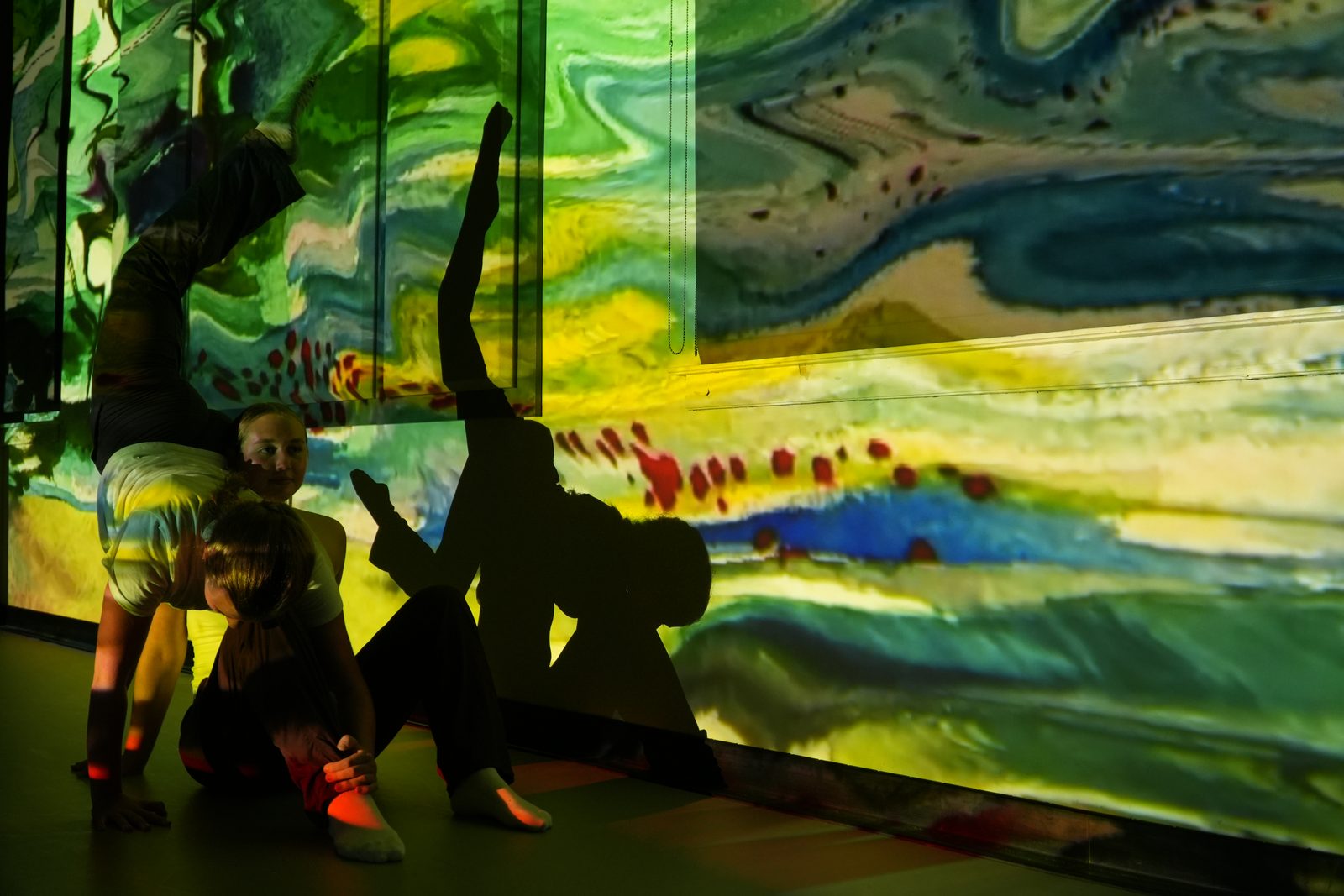
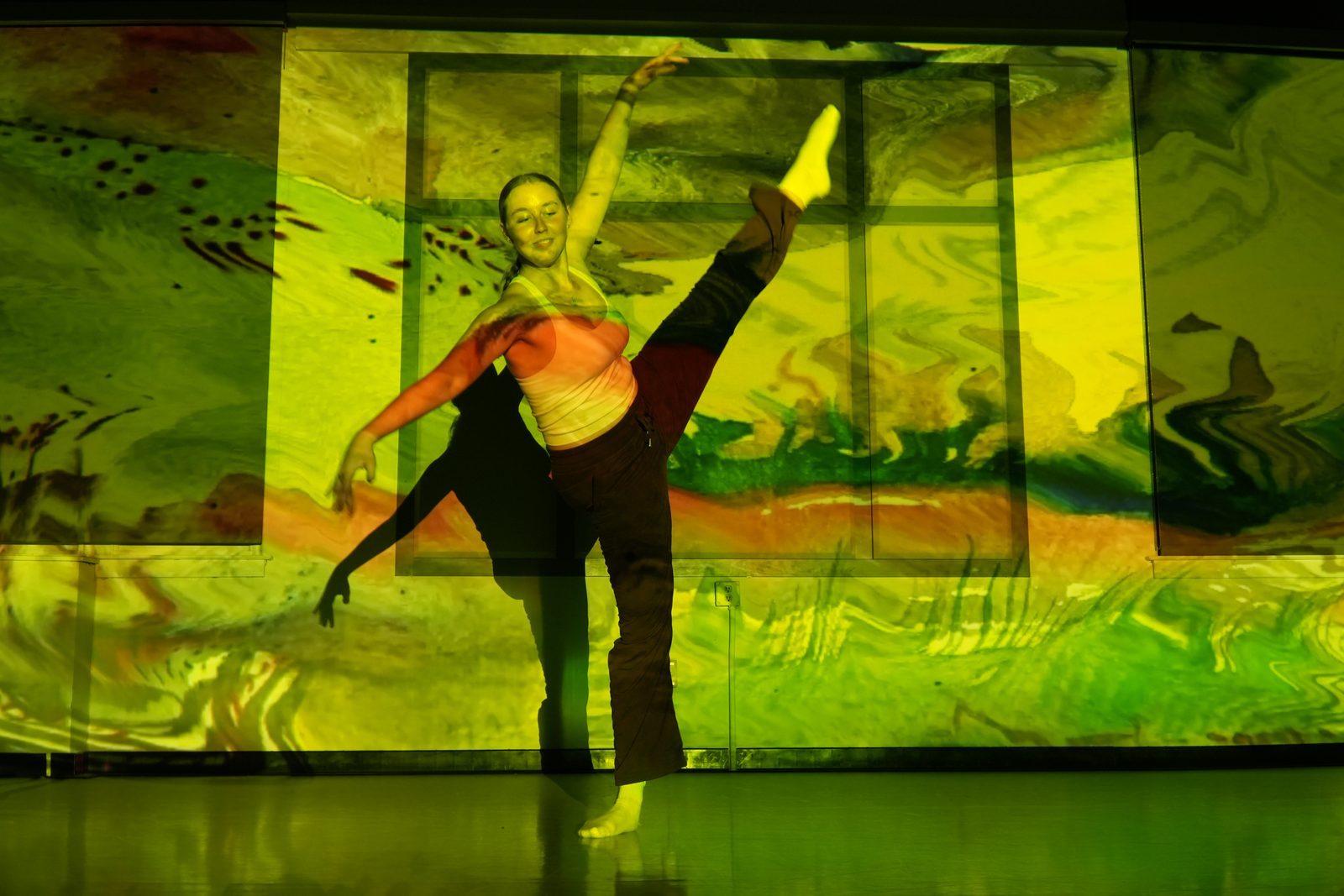
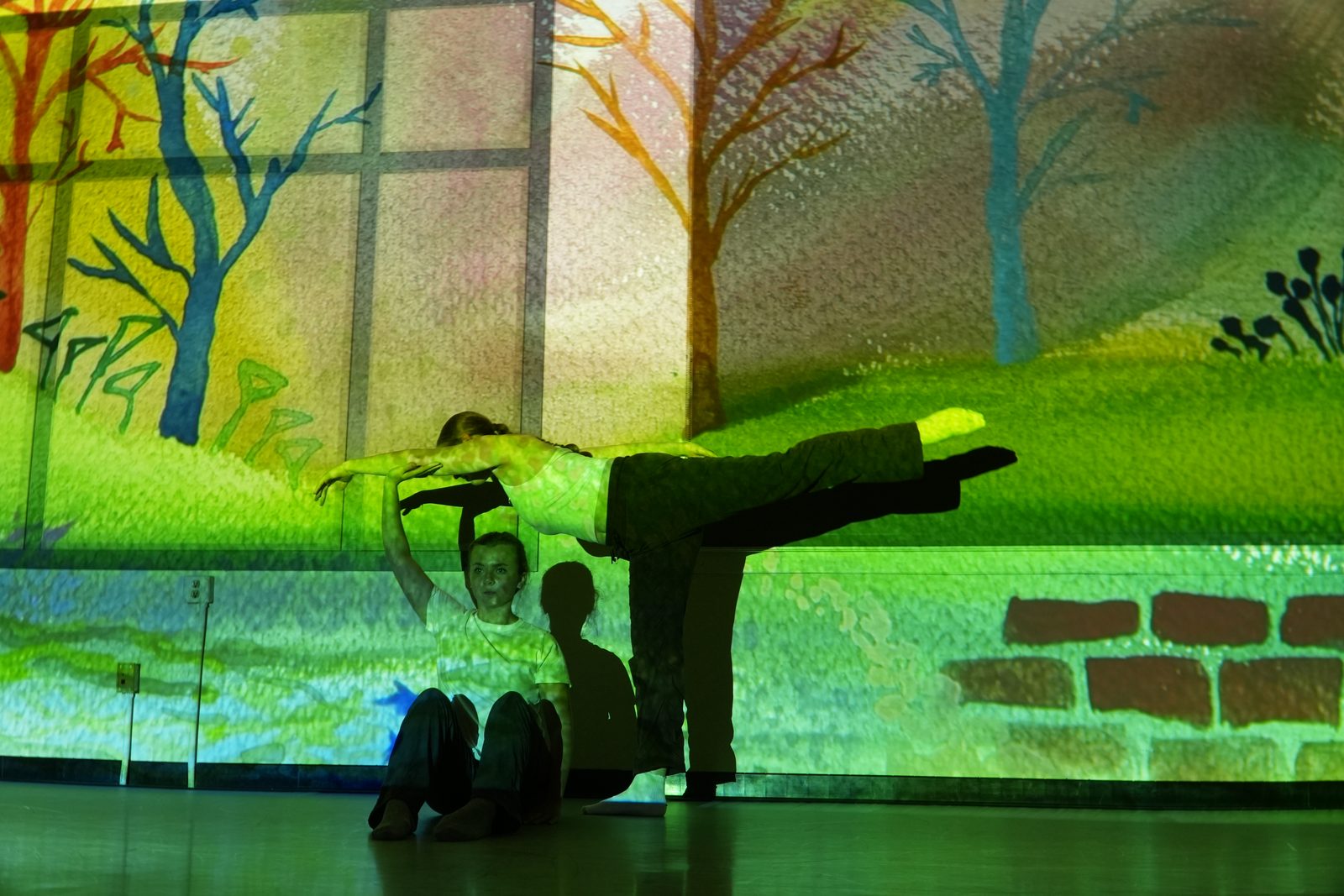
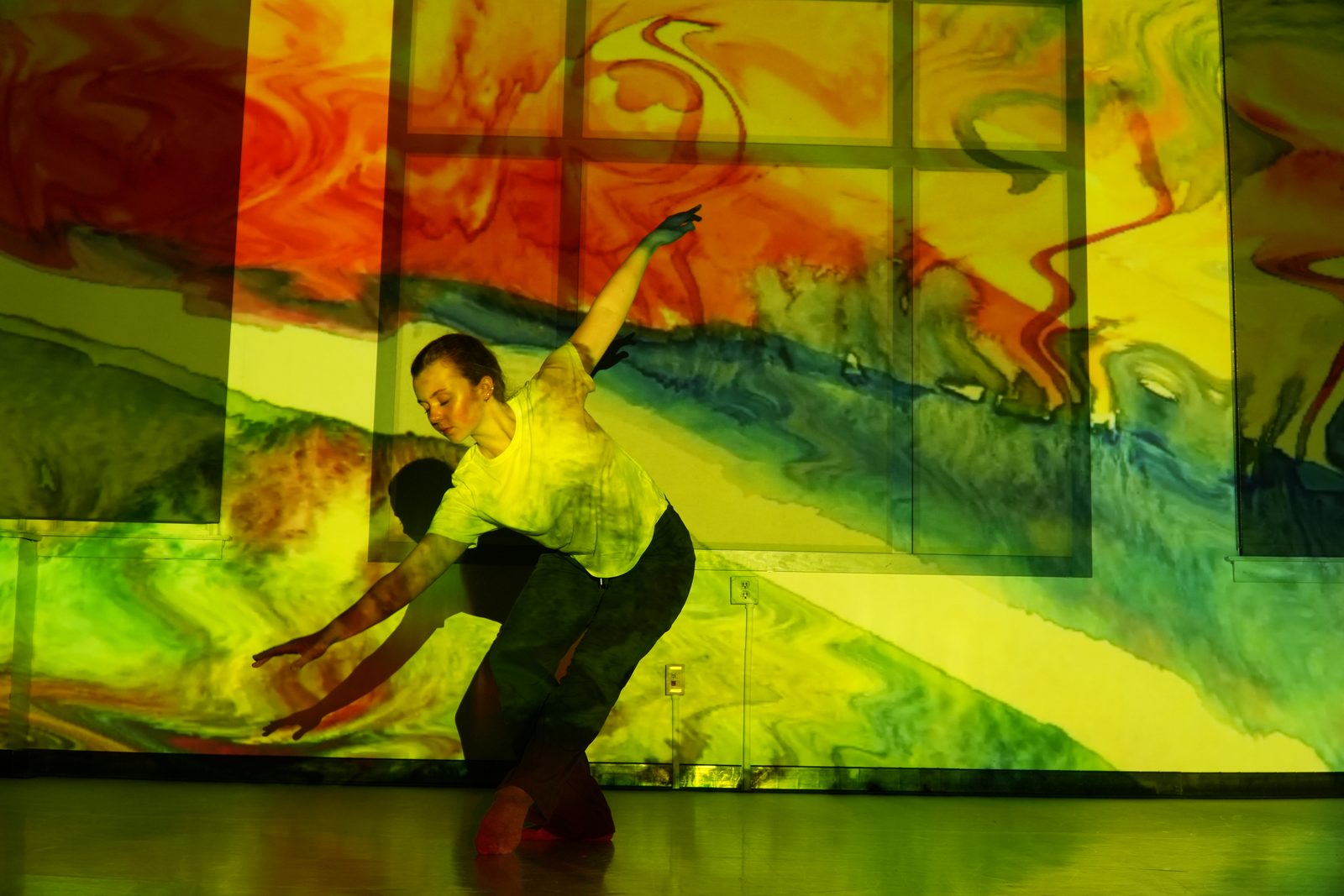
Acqua Alta is an interdisciplinary experimental performance art piece that wades through the waters of Venice, Italy, featuring a cast of eight student performers. Acqua Alta uses live ballet and contemporary dance, with live cello, opera in Italian and English, and spoken word accompaniment, as well as film, text, and visual arts, to bring contingent narrative vignettes into a labyrinth flow. Venice’s waters suffuse and lull as a linguistic, corporeal, and reflective motif: mortal and eternal, void and full, mundane and sacred, beautiful and putrid. Desire is mechanized as the decadent pain of acceptance — surrounded by undrinkable water, yet still finding solace and nourishment in the grandiosity of the everyday. Intimate and oceanic, Acqua Alta winds through Venetian canals, provokingly juxtaposed forms, emotions, and experiments of truth.

Ultimate Catharsis combines contemporary dance, original music, and multimedia elements in an evening-length performance exploring themes of personal, artistic, social, and collective transformation. Through innovative integration of movement, text, and technology, the work creates space for meaningful reflection while celebrating resilience and community. Featuring fifteen artists including dancers, musicians, and performers, the piece demonstrates the power of interdisciplinary collaboration in addressing complex contemporary themes.
Ultimate Catharsis 1
Created and Directed by Lily Selthofner
Edited Show Recording
Friday, March 29 and Saturday, March 30, 2024 in the Movement Lab at Barnard College – ninety minutes
Cast
Lily Selthofner – Creator/Director, Actor/Narrator, Dancer, Singer
Justine Dugger-Ades- Actor/Narrator and Dancer
Desislava Kremenlieva – Actor/Narrator and Dancer
Adara Allen – Dancer
Nadia Benes – Dancer
Marissa Caldera – Dancer
Asia Gross – Dancer
Eirik Peterson – Dancer
Daniel Weitz- Cellist and Singer
Maria Shaughnessy- Harpist
Justin Shaw – Guitarist
Ray Baker – Drummer
Izzy Pacenza – Saxophonist
Featured Audio:
Rory Bricca – Composer/Pianist
Jane Meenaghan- Composer/Instrumentalist
Sophia Ling – Lighting Design
Shannon Binns – Lighting, Sound, and Projection Operation, Photographer
Time Stamps:
0:00 – Intro – Opening Pointe Solo (Lily)
3:58 – 8th Dimension: Poem and Dance
5:08 – Love Poem for a Flower: Monologue and Pointe Solos
6:48 – Science 1 (Astrology Monologue – 4/8/12 Houses)
9:45 – Portals (poem/dance)
11:50 – Anon 1 (poem)
13:04– Improvised Dance Solos
21:30 – The Story of How I was Born (TW)
23:53 – I am My Own Eyes / To the Creatures of the Earth – poems
26:33 – Water and Ducks: Choreographed Ballet Pointe Quartet
34:34 – Gestural Improvised Solo
35:37 – Hospital 1: Catharsis of contemporary issues (TW)
39:07– Love Poem for Time – Poem and Dance
42:40 – 8th House – Poem and Dance
43:51 – Skeleton: Choreographed Contemporary Quartet
48:12 – Intermission
48:27 – Redemption? On the Science of Storytelling (TW)
50:10 – Hospital 2: On Relational Violence (TW)
53:42 – Noise Section: On Infidelity (TW)
55:26 – Noise Section 2: On Emotional Abuse (TW)
56:56 – Hospital 3: ‘Emotional Catharsis’ (TW)
58:20 – Don’t Forget You’re Precious (Song by Alabaster Deplume)
59:52 – Eclipse Solo (Lily) (Song – Before the Beginning by John Frusciante)
1:04:52 – Dinosaur Section
1:05:50 – Versace on the Floor (Song by Bruno Mars)
1:08:24 – Following the String of Soul Map (Yearning/Yarning) – Dance
1:11:16 – Open – Palm Lines: Poem and Dance
1:12:22 – On Healing – Poem and Dance
1:12:51 – On Evil – Poem and Dance
1:13:39 – On Darkness – Poem and Dance
1:14:34 – Choreographed Modern Quartet – Strings
1:20:13 – Be Nice to People – Dance Duet (song by Alabaster DePlume)
1:21:30 – On Forgiveness, Love, Freedom, and Letting Go – Poetry and Dance
1:23:52 – On God: Talking to the Moon (Song by Bruno Mars)
1:26:23 – Love Poem for a Tree
1:28:13 – On Loss and Values – Poetry and Dance
1:29:32 – Tableau Vivant – Dance
1:31:43 – The Key, Bows